
Sign up to save your podcasts
Or

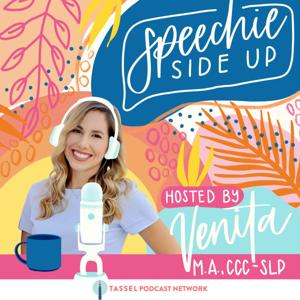

In this Behavior Connect podcourse, we are joined by Cari Ebert, a Pediatric Speech-Language Pathologist to discuss challenges discussing autism, defining neurodiversity, and identifying affirming provider traits and parent takeaways.
Cari explains why autism conversations are hard: outdated ableist training and deficit language, uncertainty because autism traits fluctuate, anticipating caregiver denial, and fear of not having answers; she suggests focusing on the next six months and using “social learning differences” while building rapport.
She defines neurodiversity as natural brain differences and neurodiversity-affirming practice as strengths-based support that fixes environments, not children, and discusses ableism and neurotypical/neurodivergent terms.
Cari also addresses ABA, citing a 2024 meta-analysis finding no evidence intensive behavioral therapy improves outcomes, and emphasizes supports for regulation, connection, communication, autonomy, and accommodations.
Key provider traits include amplifying autistic voices, presuming competence, using neutral language, honoring all play and multimodal communication, and prioritizing environmental accommodations; she also discusses gestalt play/language processing and recommends Rachel Dorsey, highlights “Sincerely Your Autistic Child,” and shares that diagnosis is not an emergency and parents should love and accept the child in front of them.
 View all episodes
 By Venita

4.9
129129 ratings
In this Behavior Connect podcourse, we are joined by Cari Ebert, a Pediatric Speech-Language Pathologist to discuss challenges discussing autism, defining neurodiversity, and identifying affirming provider traits and parent takeaways.
Cari explains why autism conversations are hard: outdated ableist training and deficit language, uncertainty because autism traits fluctuate, anticipating caregiver denial, and fear of not having answers; she suggests focusing on the next six months and using “social learning differences” while building rapport.
She defines neurodiversity as natural brain differences and neurodiversity-affirming practice as strengths-based support that fixes environments, not children, and discusses ableism and neurotypical/neurodivergent terms.
Cari also addresses ABA, citing a 2024 meta-analysis finding no evidence intensive behavioral therapy improves outcomes, and emphasizes supports for regulation, connection, communication, autonomy, and accommodations.
Key provider traits include amplifying autistic voices, presuming competence, using neutral language, honoring all play and multimodal communication, and prioritizing environmental accommodations; she also discusses gestalt play/language processing and recommends Rachel Dorsey, highlights “Sincerely Your Autistic Child,” and shares that diagnosis is not an emergency and parents should love and accept the child in front of them.
157 Listeners

2,540 Listeners

112,279 Listeners

56,636 Listeners

113 Listeners

370,410 Listeners

99,763 Listeners
130 Listeners
6,401 Listeners

29,319 Listeners