
Sign up to save your podcasts
Or

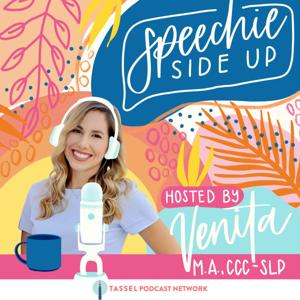

In this Behavior Connect podcourse, we interview Iris Wong, a speech-language pathologist with 15 years’ experience who pivoted into executive functioning (EF) work after recognizing her and her children’s neurodivergence; she is also an author and owner of EFToolkit.
Iris describes EF as brain-based skills developing over decades and reviews skills such as inhibition, working memory, emotional control, flexibility, sustained attention, task initiation, planning, organization, time management, goal persistence, metacognition, and stress tolerance, noting EF grows naturally but may be asynchronous in neurodivergent people; she mentions assessments like the BRIEF and tools by George McCloskey and Tara Sumter.
She explains PDA (also called pervasive drive for autonomy) as a commonly autism-related profile not in DSM-5, characterized by sensitive nervous systems, anxiety-based demand avoidance, masking, and a drive for equality, with educational fit often requiring flexibility.
ADHD presentations (inattentive, hyperactive/impulsive, combined) are reviewed and she emphasize EBP’s triangle, including caregiver/client perspectives, and share neuro-affirming strategies like collaboration, menus/visual supports, relationship-first safety, and shifting away from deficit language.
 View all episodes
 By Venita

4.9
129129 ratings
In this Behavior Connect podcourse, we interview Iris Wong, a speech-language pathologist with 15 years’ experience who pivoted into executive functioning (EF) work after recognizing her and her children’s neurodivergence; she is also an author and owner of EFToolkit.
Iris describes EF as brain-based skills developing over decades and reviews skills such as inhibition, working memory, emotional control, flexibility, sustained attention, task initiation, planning, organization, time management, goal persistence, metacognition, and stress tolerance, noting EF grows naturally but may be asynchronous in neurodivergent people; she mentions assessments like the BRIEF and tools by George McCloskey and Tara Sumter.
She explains PDA (also called pervasive drive for autonomy) as a commonly autism-related profile not in DSM-5, characterized by sensitive nervous systems, anxiety-based demand avoidance, masking, and a drive for equality, with educational fit often requiring flexibility.
ADHD presentations (inattentive, hyperactive/impulsive, combined) are reviewed and she emphasize EBP’s triangle, including caregiver/client perspectives, and share neuro-affirming strategies like collaboration, menus/visual supports, relationship-first safety, and shifting away from deficit language.
157 Listeners

2,540 Listeners

112,279 Listeners

56,636 Listeners
113 Listeners

370,410 Listeners

99,763 Listeners
130 Listeners
6,401 Listeners

29,319 Listeners