
Sign up to save your podcasts
Or

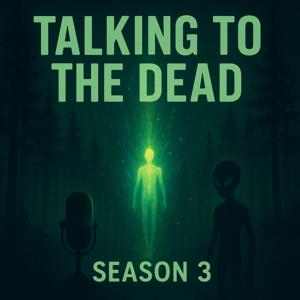

In this episode of Talking to the Dead, I dive into one of the most provocative documents circulating today — the so-called Rhea narrative, a whistleblower-style account describing ancient interstellar oversight, hidden human history, and a looming cosmic conflict.
I compare its themes to one of the most mysterious and politically inconvenient ancient texts ever written: The Book of Enoch.
From “Watchers” descending to monitor early humanity, to secret knowledge given and withheld, to a world shaped by beings older and more advanced than us — the parallels are striking, unsettling, and strangely familiar.
Whether Rhea’s claims are allegory, disclosure, or myth-making for the modern age, I ask the deeper question:
Why do these stories keep returning, across cultures, across eras, and now across our timelines?
 View all episodes
 By Philip Skitch
In this episode of Talking to the Dead, I dive into one of the most provocative documents circulating today — the so-called Rhea narrative, a whistleblower-style account describing ancient interstellar oversight, hidden human history, and a looming cosmic conflict.
I compare its themes to one of the most mysterious and politically inconvenient ancient texts ever written: The Book of Enoch.
From “Watchers” descending to monitor early humanity, to secret knowledge given and withheld, to a world shaped by beings older and more advanced than us — the parallels are striking, unsettling, and strangely familiar.
Whether Rhea’s claims are allegory, disclosure, or myth-making for the modern age, I ask the deeper question:
Why do these stories keep returning, across cultures, across eras, and now across our timelines?