
Sign up to save your podcasts
Or

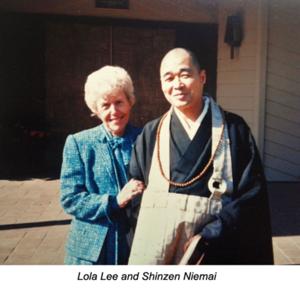

Zen Roshi, Lola McDowell Lee draws on the Dhammapada to emphasize a core principle of spiritual success: vigilance, or watching. The fool is careless and enslaved by desire. The master has firm resolve.
Man is the only creature on Earth with the ability to choose. Unlike animals and plants, whose lives are determined by nature, humans possess a mind that allows for conscious choice.
Man is not born a true being but a becoming. He is a state of perpetual movement between opposing attitudes and emotional states. This becoming is marked by a continual search, an inner groping.
Lola calls it “faith without an object.” This search for something greater raises the perennial philosophical question: Who are you?
Lola discusses philosopher Jean-Paul Sartre, who calls man a “project"—one who creates himself by his own effort. Man is born an opportunity, a possibility, who must become actual.
The crucial action is making an aware choice, choosing one’s life with full consciousness, rather than simply letting decisions happen passively, out of convenience, desire, or external pressure. Also, not choosing is a choice.
Lola discusses two schools of thought: the Essence-Central School, which holds that man is born with a ready-made essence that merely needs to unfold (like an acorn becoming an oak), and Existentialism, which maintains that man is born as pure existence, and his essence must be actively created.
Lola recaps the core principles of Buddhism’s Four Noble Truths:
The First Truth is the fact of suffering (dukkha), which arises because life is constant change, and change can never satisfy the human desire for permanent pleasure.
The Second Truth identifies the cause of suffering as selfish desire—a constant "thirst" or fire that only burns brighter the more it is fed. This desire unrealistically expects life to satisfy every selfish whim, which is as absurd as expecting a banana tree to bear mangoes.
The Third Truth offers hope: because suffering has a cause, it has an end. Extinguishing the fire of selfish desire leads to a state of wakefulness and joy, known as Nirvana.
The Fourth Truth provides the solution: the Eightfold Path, which she explains in detail.
Finally, Lee illustrates the deeper meaning of the Middle Way using the story of the Buddha and a disciple, who was over-exerting himself in ascetic practice. The Buddha showed him a stringed instrument, explaining that to make music, the strings must be tuned "neither too tight nor too loose—it has to be just right." This is the path to enlightenment: balance between extremes.
Lee explains how we can take the Middle Way between the world of appearance and the world of inner states of consciousness. The ultimate goal of continuous self-watching is to withdraw energy from the inner "clamoring crowd" of confusion to nourish the "new man" within. Through constant mindfulness and attention to the present moment, a window opens, and one experiences life not as a pure, empty, and all-encompassing presence. Aug 29, 1987
 View all episodes
 By I & A Publishing
Zen Roshi, Lola McDowell Lee draws on the Dhammapada to emphasize a core principle of spiritual success: vigilance, or watching. The fool is careless and enslaved by desire. The master has firm resolve.
Man is the only creature on Earth with the ability to choose. Unlike animals and plants, whose lives are determined by nature, humans possess a mind that allows for conscious choice.
Man is not born a true being but a becoming. He is a state of perpetual movement between opposing attitudes and emotional states. This becoming is marked by a continual search, an inner groping.
Lola calls it “faith without an object.” This search for something greater raises the perennial philosophical question: Who are you?
Lola discusses philosopher Jean-Paul Sartre, who calls man a “project"—one who creates himself by his own effort. Man is born an opportunity, a possibility, who must become actual.
The crucial action is making an aware choice, choosing one’s life with full consciousness, rather than simply letting decisions happen passively, out of convenience, desire, or external pressure. Also, not choosing is a choice.
Lola discusses two schools of thought: the Essence-Central School, which holds that man is born with a ready-made essence that merely needs to unfold (like an acorn becoming an oak), and Existentialism, which maintains that man is born as pure existence, and his essence must be actively created.
Lola recaps the core principles of Buddhism’s Four Noble Truths:
The First Truth is the fact of suffering (dukkha), which arises because life is constant change, and change can never satisfy the human desire for permanent pleasure.
The Second Truth identifies the cause of suffering as selfish desire—a constant "thirst" or fire that only burns brighter the more it is fed. This desire unrealistically expects life to satisfy every selfish whim, which is as absurd as expecting a banana tree to bear mangoes.
The Third Truth offers hope: because suffering has a cause, it has an end. Extinguishing the fire of selfish desire leads to a state of wakefulness and joy, known as Nirvana.
The Fourth Truth provides the solution: the Eightfold Path, which she explains in detail.
Finally, Lee illustrates the deeper meaning of the Middle Way using the story of the Buddha and a disciple, who was over-exerting himself in ascetic practice. The Buddha showed him a stringed instrument, explaining that to make music, the strings must be tuned "neither too tight nor too loose—it has to be just right." This is the path to enlightenment: balance between extremes.
Lee explains how we can take the Middle Way between the world of appearance and the world of inner states of consciousness. The ultimate goal of continuous self-watching is to withdraw energy from the inner "clamoring crowd" of confusion to nourish the "new man" within. Through constant mindfulness and attention to the present moment, a window opens, and one experiences life not as a pure, empty, and all-encompassing presence. Aug 29, 1987