
Sign up to save your podcasts
Or


Have you ever had a migraine? If you even have to think about that question for a minute, you probably haven’t had one. Why? Because migraine suffers are in a class by themselves. The pain of a migraine is unlike anything else. And, you absolutely know if you get them.
Migraines are a classification of headache that tend to have an acute throbbing localized to one side of the head and often accompanied by nausea, vomiting, disturbed vision or extreme sensitivity to light. But for migraine sufferers, this description doesn’t even begin to describe their experience. It’s the absolute worst.
New research confirms that the risk of high-frequency migraines (10 or more a month) rose 60 percent during the transitional time into menopause marked by irregular periods. This time is called perimenopause.
Perimenopause poses a challenge with migraine predictability. When a women’s cycle is more regular she may be able to anticipate hormones surges which may cause migraines.
However, perimenopause, the beginning of the transition into menopause when your ovaries begin to fail, marks a new tumultuous time. Your predictable schedule may go out the window. Previously anticipated migraines may show up whenever they dang well please and your ability to anticipate their arrival becomes a memory. Crap.
 View all episodes
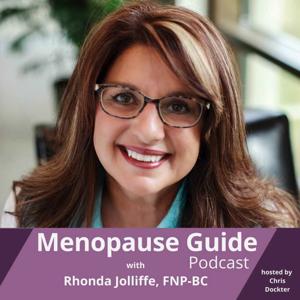
 By Rhonda Jolliffe, DNP, FNP-BC, CTNC - Menopause Expert

4.7
122122 ratings
Have you ever had a migraine? If you even have to think about that question for a minute, you probably haven’t had one. Why? Because migraine suffers are in a class by themselves. The pain of a migraine is unlike anything else. And, you absolutely know if you get them.
Migraines are a classification of headache that tend to have an acute throbbing localized to one side of the head and often accompanied by nausea, vomiting, disturbed vision or extreme sensitivity to light. But for migraine sufferers, this description doesn’t even begin to describe their experience. It’s the absolute worst.
New research confirms that the risk of high-frequency migraines (10 or more a month) rose 60 percent during the transitional time into menopause marked by irregular periods. This time is called perimenopause.
Perimenopause poses a challenge with migraine predictability. When a women’s cycle is more regular she may be able to anticipate hormones surges which may cause migraines.
However, perimenopause, the beginning of the transition into menopause when your ovaries begin to fail, marks a new tumultuous time. Your predictable schedule may go out the window. Previously anticipated migraines may show up whenever they dang well please and your ability to anticipate their arrival becomes a memory. Crap.

113,458 Listeners
340 Listeners

20,334 Listeners