Five Questions on Slow Thinking: How to Fail and Succeed
In this engaging segment from our latest interview with David Beaver, we dive deep into the concept of slow thinking. Discover what it means to "fail at slow thinking," why it's essential to apply slow thinking in critical moments, and practical tips for improving this skill. Beaver shares insights on how automatic responses can lead to missed opportunities for thoughtful decision-making and explores the balance between fast and slow thinking in various scenarios.
🔍 Highlights Include:
The pitfalls of automatic thinking and its impact on decision-making.
The importance of slowing down when it truly matters.
Practical advice for incorporating slow thinking into daily life.
Whether you're looking to enhance your decision-making skills or understand the nuances of cognitive processes, this video provides valuable insights into the art of slow thinking.
#SlowThinking #DecisionMaking #DavidBeaver #CognitiveScience #ThinkingBetter #MindfulThinking #CriticalThinking #Philosophy #Psychology #SelfImprovement #PhilPhails
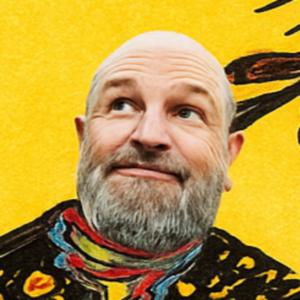
About David Beaver
Based in Austin, Texas for the last 18 years, I’m a professional academic working on the nature of meaning from linguistic, philosophical, social, psychological, and computational perspectives. I’m also passionate about dance, especially Contact Improv, a dance form that emphasizes curiosity, connection, and flow. I have two adult children, a son here in Austin, and a daughter now living in the UK. I grew up in the UK myself, and have joint US/British nationality. I worked for six years in the Netherlands before taking up an academic job at Stanford in California. Nine years later, I moved to Austin, Texas for my current post at UT. As a professor at UT, I’m based in the Linguistics Department, where I currently have the role of Graduate Advisor, and am secondarily a faculty member in the Philosophy Department. I am the director of UT’s Cognitive Science program, which I hope will be accepting majors very soon. The work of a professor is sometimes described as 50% research, 50% teaching, and 50% service work, to which I might add that at least 50% of any professor’s time is spent complaining about the other three. As well as journal articles and book chapters, I’ve published three books, most recently “The Politics of Language” (Princeton University Press) with my coauthor Jason Stanley. I especially enjoy collaborations that take me into neighboring disciplines, such as AI, psychology, political philosophy, and sociology. I believe that linguists have more to learn from dance than dancers do from linguistics.
About Phillip Jones
👨👧👧 Single dad | 🧠 Neurodivergent & Proud | 🛤️ Path Seeker
After a lifetime of personal growth—through self-help, therapy, and endless learning—I'm embracing my unique journey. No more chasing 'normal.' Here to celebrate the quirks, the trials, and the joys of being authentically me. 🌟
Leaving the software world behind, I'm forging a new trail with "Phil Phails," a show that revels in the messiness of life and learning. Catch my latest adventures and dad moments on Austin Public and YouTube. Let’s redefine success together. #PhilPhails
The Fool's journey is a tapestry of learning, woven with threads of naivety and the vibrant colors of experience. Each step is a dance between innocence and wisdom, a transformation that beckons the curious souls to witness the unfolding of a human in bloom. Embrace this odyssey with open arms, for the path of the unknowing is a canvas for growth, and every traveler a masterpiece in progress.
👉 Follow me on Social Media:
Instagram: https://www.instagram.com/phil_phails/
Facebook: https://www.facebook.com/profile.php?id=61554806110103
TikTok: https://www.tiktok.com/@philphails
Patreon: https://www.patreon.com/PhilPhails4u
Reddit: https://www.reddit.com/user/philphails/
Twitter: https://twitter.com/philphails
🔔 Subscribe: https://www.youtube.com/@PhilPhails-ms3pn



 View all episodes
