
Sign up to save your podcasts
Or

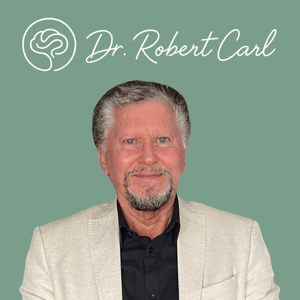

How to fall asleep on a plane without frustration, and how can you train your body to rest even at thirty five thousand feet? In this session you will understand why the nervous system resists sleep in unfamiliar environments and how neuroscience reveals practical ways to guide it back to calm. You will discover that sleeplessness in flight is not weakness but a protective reflex — and that it can be retrained. We will explore the hidden mistakes that keep you awake midair, from forcing sleep and ignoring signals to relying on alcohol or caffeine. You will learn the neuroscience of in-flight sleeplessness, including how cabin pressure, light exposure, and cortisol work against melatonin. From there, we move into four science-based tools that calm the system: controlled breathing that lowers vigilance, sensory protection with mask and earplugs, light management that resets your circadian rhythm, and precise melatonin timing that cues night to every cell. Finally, you will experience a five-minute in-flight sleep ritual that layers these tools into a simple sequence — breath, warmth, visualization, body scan, and a backward count from three hundred by threes — designed to quiet racing thoughts and invite natural rest. With these practices, sleep on planes becomes possible, and the same skills can open the door to deeper calm in daily life.
---
How well do you manage anxiety? Discover your personal anxiety profile in just 3 minutes and get a science-based first step to reclaim your calm: https://drrobertcarl.com/quiz
 View all episodes
 By Dr. Robert Carl
How to fall asleep on a plane without frustration, and how can you train your body to rest even at thirty five thousand feet? In this session you will understand why the nervous system resists sleep in unfamiliar environments and how neuroscience reveals practical ways to guide it back to calm. You will discover that sleeplessness in flight is not weakness but a protective reflex — and that it can be retrained. We will explore the hidden mistakes that keep you awake midair, from forcing sleep and ignoring signals to relying on alcohol or caffeine. You will learn the neuroscience of in-flight sleeplessness, including how cabin pressure, light exposure, and cortisol work against melatonin. From there, we move into four science-based tools that calm the system: controlled breathing that lowers vigilance, sensory protection with mask and earplugs, light management that resets your circadian rhythm, and precise melatonin timing that cues night to every cell. Finally, you will experience a five-minute in-flight sleep ritual that layers these tools into a simple sequence — breath, warmth, visualization, body scan, and a backward count from three hundred by threes — designed to quiet racing thoughts and invite natural rest. With these practices, sleep on planes becomes possible, and the same skills can open the door to deeper calm in daily life.
---
How well do you manage anxiety? Discover your personal anxiety profile in just 3 minutes and get a science-based first step to reclaim your calm: https://drrobertcarl.com/quiz