Body Neutrality.
Body neutrality is a contemporary body image approach that encourages individuals to adopt a non-judgmental stance toward their physical form, emphasizing its functional role as a vessel for daily activities rather than its aesthetic appeal or emotional valuation. Unlike body positivity, which promotes active love or appreciation of one's body regardless of shape or size, neutrality posits a middle ground between positivity and negativity, de-emphasizing appearance ideals to reduce psychological distress tied to societal beauty standards. Emerging in popular discourse around the late 2010s as a purportedly more attainable alternative to body positivity—critiqued by some for fostering unrealistic expectations or overlooking health realities—body neutrality lacks a robust empirical foundation as a distinct psychological construct, with no validated measurement tools and significant overlap with established positive body image components like acceptance and respect.
Proponents, often from therapeutic or wellness fields, advocate strategies such as mindfulness practices focused on bodily capabilities (e.g., movement or sensation) to cultivate this mindset, positioning it as inclusive for diverse body types and less prone to performative affirmation. However, scholarly examinations reveal nascent research, with studies primarily exploratory and centered on self-reported attitudes rather than causal outcomes like improved mental health or behavioral changes; for instance, correlations have been noted with higher self-esteem and gratitude, but without controls for confounding variables like baseline body composition or cultural influences. Critics argue it risks diluting evidence-based interventions for eating disorders or obesity-related comorbidities by prioritizing attitudinal shifts over physiological data, potentially reflecting broader trends in self-help literature amid institutional emphases on acceptance over intervention. Defining characteristics include its rejection of both self-loathing and obligatory positivity, yet its rise via social media hashtags like #bodyneutrality underscores a tension between grassroots appeal and scientific rigor, with content analyses showing frequent framing as superior to positivity without longitudinal evidence.
Definition and Principles.
Core Concepts and Functional Focus.
Body neutrality refers to a psychological and attitudinal approach toward one's body that emphasizes non-judgmental acceptance, minimizing the centrality of physical appearance in self-perception and daily functioning. Core to this framework is the view of the body as a neutral vessel or instrument for experiencing life, rather than a primary source of self-worth or identity tied to aesthetic ideals. This perspective seeks to reduce emotional investment in body image concerns, promoting mental detachment from appearance-based evaluations that can exacerbate distress, such as in cases of body dysmorphia or disordered eating.
At its foundation, body neutrality operates on principles of pragmatism and functionality, encouraging individuals to appraise their bodies based on capability and utility rather than form. Proponents argue that this shift fosters resilience against societal pressures from media and culture that equate value with thinness or conventional attractiveness, which empirical data links to heightened rates of anxiety and depression— for instance, studies indicate that up to 80% of women report body dissatisfaction influenced by such ideals. Unlike mandates to actively "love" one's body, neutrality permits ambivalence or indifference, acknowledging that not all bodies align with personal ideals without necessitating forced positivity, which some research suggests can feel inauthentic or pressure-inducing for those with chronic body-related trauma.
The functional focus distinguishes body neutrality by redirecting attention to physiological and experiential roles, such as mobility, sensory perception, and health maintenance, over visual or comparative metrics. This involves practical reframing, like valuing a body's ability to walk, breathe, or engage in activities independently of size or shape, which aligns with evidence from health psychology showing that competence-based self-efficacy correlates more strongly with well-being than appearance satisfaction. For example, therapeutic applications highlight appreciating digestion, circulation, or strength for daily tasks, decoupling self-esteem from mirrors or scales—a causal mechanism supported by cognitive-behavioral models. This emphasis on "what the body does" rather than "how it looks" aims for sustainable neutrality, though its long-term efficacy remains understudied relative to established body image therapies.
Distinctions from Body Positivity and Acceptance.
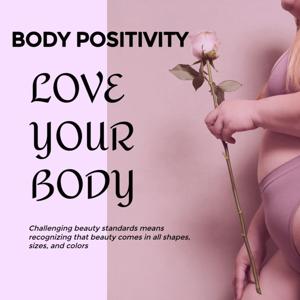
Body positivity emphasizes cultivating love, appreciation, and celebration of one's body regardless of size, shape, or societal ideals, often focusing on aesthetic validation and countering negative self-perception through positive reframing. This approach, which gained prominence in the 2010s via social media campaigns, encourages viewing the body as inherently worthy of admiration, sometimes extending to unconditional self-love that may overlook functional or health-related concerns. In distinction, body neutrality shifts away from emotional investment in appearance, promoting instead a detached, non-judgmental perspective that values the body for its practical capabilities—such as movement, sensation, or sustaining life—without requiring affection or aesthetic endorsement. This neutrality is positioned in research as a more attainable alternative to positivity's aspirational positivity, which some studies suggest can feel inauthentic or unattainable for individuals with persistent body dissatisfaction, potentially leading to disillusionment when positive feelings prove elusive.
Body acceptance overlaps with neutrality in fostering tolerance toward one's physical form but typically stops at acknowledging the body without disdain, maintaining a focus on reconciliation with appearance rather than transcending it entirely. Scholarly definitions frame acceptance as a foundational step involving reduced self-criticism and basic regard for bodily needs, yet it retains some implicit concern with how the body is perceived or "accepted" by self or others. Body neutrality, by contrast, explicitly de-emphasizes appearance as a metric of worth, conceptualizing the body as a neutral vessel or instrument for experiences and actions, which empirical analyses indicate may yield broader psychological benefits like diminished appearance-related anxiety without the pressure to generate esteem. For instance, a study found that exposure to body neutrality content was associated with improvements in self-objectification.
These distinctions highlight body neutrality's pragmatic orientation, rooted in reducing cognitive load from body-focused r umination, whereas positivity and acceptance often remain tethered to image improvement or emotional resolution. Critics of positivity, including in peer-reviewed discourse, argue it risks normalizing unhealthy conditions by prioritizing feel-good narratives over evidence-based health behaviors, a pitfall neutrality sidesteps by decoupling self-worth from morphology. Empirical gaps persist, however, with limited longitudinal data directly comparing outcomes, underscoring the need for caution in assuming neutrality's superiority without further validation.
This episode includes AI-generated content.



 View all episodes
