
Sign up to save your podcasts
Or

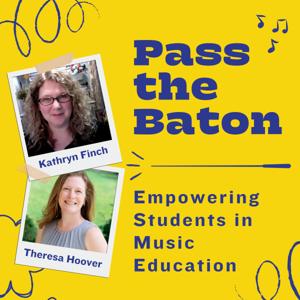

In episode 102 Theresa and Kathryn talk with Dr. Rhoda Bernard—singer, pianist, educator, and founding Managing Director of the Berklee Institute for Accessible Arts Education—to explore what truly accessible music education looks like in today’s classrooms. Rhoda shares her journey through music teacher identity and her deep work in designing arts education programs that meaningfully include learners with disabilities. She breaks down common barriers students face—both visible and invisible—and offers powerful mindset shifts to help teachers move from deficit-based thinking to asset-based, student-centered instruction.
Throughout the conversation, Rhoda provides practical, immediately usable strategies for increasing accessibility in any music setting, from general music to ensembles. She discusses the importance of multimodal teaching (especially visuals), anticipating barriers during planning, and “messing with the notation” to support diverse learners. Rhoda also illuminates how inclusive practices naturally foster student ownership, agency, and community—benefiting all musicians, not just those with disabilities. Her new book, Accessible Arts Education: Principles, Habits, and Strategies to Unleash Every Student’s Creativity and Learning, offers an even deeper dive into these ideas and features first-person perspectives from artists with disabilities. This inspiring conversation is full of tools and mindset shifts you can bring into your classroom tomorrow.
Connect with Rhoda and learn more:
Learn more about Pass the Baton:
 View all episodes
 By Theresa Hoover and Kathryn Finch, Music Educators
5
99 ratings
In episode 102 Theresa and Kathryn talk with Dr. Rhoda Bernard—singer, pianist, educator, and founding Managing Director of the Berklee Institute for Accessible Arts Education—to explore what truly accessible music education looks like in today’s classrooms. Rhoda shares her journey through music teacher identity and her deep work in designing arts education programs that meaningfully include learners with disabilities. She breaks down common barriers students face—both visible and invisible—and offers powerful mindset shifts to help teachers move from deficit-based thinking to asset-based, student-centered instruction.
Throughout the conversation, Rhoda provides practical, immediately usable strategies for increasing accessibility in any music setting, from general music to ensembles. She discusses the importance of multimodal teaching (especially visuals), anticipating barriers during planning, and “messing with the notation” to support diverse learners. Rhoda also illuminates how inclusive practices naturally foster student ownership, agency, and community—benefiting all musicians, not just those with disabilities. Her new book, Accessible Arts Education: Principles, Habits, and Strategies to Unleash Every Student’s Creativity and Learning, offers an even deeper dive into these ideas and features first-person perspectives from artists with disabilities. This inspiring conversation is full of tools and mindset shifts you can bring into your classroom tomorrow.
Connect with Rhoda and learn more:
Learn more about Pass the Baton:
78,614 Listeners
9,542 Listeners
10,411 Listeners

17,812 Listeners

87,332 Listeners

112,482 Listeners
132 Listeners

6,012 Listeners
47 Listeners