
Sign up to save your podcasts
Or

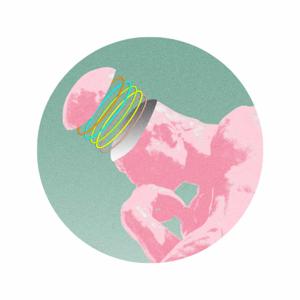

What does it mean to be spontaneous? In episode 161 of Overthink, Ellie and David get spontaneous. They look at Aristotle’s theory of spontaneous generation, at spontaneity’s role in politics, and at the dark side of spontaneity. How do different cultures and physical spaces enable or inhibit spontaneity? What is the relationship between spontaneity and human freedom? And is Lenin correct in arguing that leftists need to resist spontaneity in political organizing? In the Substack bonus segment, your hosts think through the relationship between spontaneity and habit, how spontaneity plays into the recording of Overthink episodes, and the habitual spontaneity of those with Tourette’s Syndrome.
Works Discussed:
Aristotle, Physics
Lucy Cooke, The Truth About Animals
Jonathan Gingerich, “Spontaneous Freedom”
Immanuel Kant, Critique of Pure Reason
Vladimir Lenin, What is to Be Done?
Highlight: Vladimir Lenin on Spontaneity
* Vladimir Lenin was a central figure in the Bolshevik party and played a prominent role in the 1917 Russian Revolution
* In the second half of the 1975, there was growing discontent with the Czar and conditions were getting worse for the people, so spontaneous uprisings arose
* Lenin asked how do we transform society? and how can spontaneous actions lead to collective change?
* He understood spontaneity as something that “comes out of the blue” in a way—nobody could have predicted that it would happen now rather than a week ago
* Spontaneously alone is not yet an organized struggle that is supported by a party and has revolutionaries devoted to it
* Consistent uprisings require consciousness
* Without consciousness, Lenin warns that just spontaneity would (1) make people only worry about what’s happening to themselves and their network and (2) cause reform, not a revolution
 View all episodes
 By Overthink Podcast
What does it mean to be spontaneous? In episode 161 of Overthink, Ellie and David get spontaneous. They look at Aristotle’s theory of spontaneous generation, at spontaneity’s role in politics, and at the dark side of spontaneity. How do different cultures and physical spaces enable or inhibit spontaneity? What is the relationship between spontaneity and human freedom? And is Lenin correct in arguing that leftists need to resist spontaneity in political organizing? In the Substack bonus segment, your hosts think through the relationship between spontaneity and habit, how spontaneity plays into the recording of Overthink episodes, and the habitual spontaneity of those with Tourette’s Syndrome.
Works Discussed:
Aristotle, Physics
Lucy Cooke, The Truth About Animals
Jonathan Gingerich, “Spontaneous Freedom”
Immanuel Kant, Critique of Pure Reason
Vladimir Lenin, What is to Be Done?
Highlight: Vladimir Lenin on Spontaneity
* Vladimir Lenin was a central figure in the Bolshevik party and played a prominent role in the 1917 Russian Revolution
* In the second half of the 1975, there was growing discontent with the Czar and conditions were getting worse for the people, so spontaneous uprisings arose
* Lenin asked how do we transform society? and how can spontaneous actions lead to collective change?
* He understood spontaneity as something that “comes out of the blue” in a way—nobody could have predicted that it would happen now rather than a week ago
* Spontaneously alone is not yet an organized struggle that is supported by a party and has revolutionaries devoted to it
* Consistent uprisings require consciousness
* Without consciousness, Lenin warns that just spontaneity would (1) make people only worry about what’s happening to themselves and their network and (2) cause reform, not a revolution