
Sign up to save your podcasts
Or

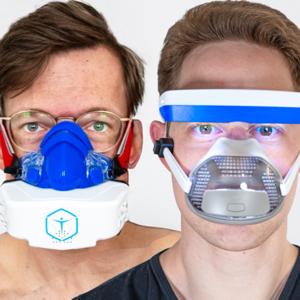

Rob and Stephan break down the three critical dimensions of wearables—hardware, algorithms, and UI/UX—to explain what truly drives accurate health and sports tracking.
📝Summary
Biological data scientists Rob and Stephan explore the three foundational pillars that determine the quality of health and sports tracking wearables: hardware, algorithms, and Apps (UI/UX). They begin by evaluating the maturity of physical sensors like PPG and accelerometers, noting that while hardware capabilities have largely plateaued in high-end devices, energy density and battery technology continue to improve. The conversation then shifts to the critical differentiating factor of algorithms, breaking them down into three levels of complexity: direct on-device processing of heart rate, second-order computations for metrics like sleep staging, and highly advanced long-term disease risk predictions. Finally, the hosts discuss how the user interface and user experience tie these elements together, highlighting the importance of data presentation and the emergence of pure data aggregators in the wearable market.
⏳Chapters
00:00:00 The Three Dimensions of Wearable Performance
00:02:26 Hardware: The Foundation of Wearable Sensors
00:06:15 Understanding Raw Signals and Sensor Interference
00:09:46 Battery Technology and Hardware Durability
00:15:41 Level 1 Algorithms: Direct On-Device Processing (e.g., Heart rate)
00:23:51 Level 2 Algorithms: Derived Metrics (e.g., Sleep Stages)
00:55:50 Level 3 Algorithms: High-Level Aggregations (e.g., Long-Term Disease Risk)
00:56:20 Apps (UI & UX): The Final Wearable App Experience
📚Resources
Photoplethysmogram (PPG)
Accelerometer
Global Positioning System (GPS)
Pulse oximetry (SpO2 Sensor)
Holter monitor (ECG)
Polysomnography (Sleep Study)
Heart rate variability (HRV)
Dual carbon battery
Edge computing
Embedded system
Pulse wave velocity (PWV)
Foundation model (AI)
User experience (UI/UX)
Garmin
Oura Health
Apple Watch
The accuracy of Apple Watch measurements: a living systematic review and meta-analysis
Whoop
Bevel
Athlytic
Garbage in, garbage out (GIGO)
Introducing the new Google Fitbit Air
A Systematic Review of Chest-Worn Sensors in Cardiac Assessment: Technologies, Advantages, and Limitations
…There is more: complete show notes here
🎙️About
Fit For Science is a deep-dive podcast hosted by two biological data scientists, Rob and Stephan, exploring the intersection of research, health tech, and data-driven lifestyle design. The hosts provide evidence-based systems, layered with practical "N=2" personal experimentation, to cut through the noise and enable everyone to become their best N-of-1.
Learn more and subscribe on your favorite platforms:
YouTube
Spotify
Apple Podcasts
Amazon Music
Collection of all show notes
⚠️Disclaimer: This podcast represents our own opinions and is for informational purposes only. It does not constitute medical or financial advice or a professional relationship.
 View all episodes
 By Stephan Reichl and Rob ter Horst
Rob and Stephan break down the three critical dimensions of wearables—hardware, algorithms, and UI/UX—to explain what truly drives accurate health and sports tracking.
📝Summary
Biological data scientists Rob and Stephan explore the three foundational pillars that determine the quality of health and sports tracking wearables: hardware, algorithms, and Apps (UI/UX). They begin by evaluating the maturity of physical sensors like PPG and accelerometers, noting that while hardware capabilities have largely plateaued in high-end devices, energy density and battery technology continue to improve. The conversation then shifts to the critical differentiating factor of algorithms, breaking them down into three levels of complexity: direct on-device processing of heart rate, second-order computations for metrics like sleep staging, and highly advanced long-term disease risk predictions. Finally, the hosts discuss how the user interface and user experience tie these elements together, highlighting the importance of data presentation and the emergence of pure data aggregators in the wearable market.
⏳Chapters
00:00:00 The Three Dimensions of Wearable Performance
00:02:26 Hardware: The Foundation of Wearable Sensors
00:06:15 Understanding Raw Signals and Sensor Interference
00:09:46 Battery Technology and Hardware Durability
00:15:41 Level 1 Algorithms: Direct On-Device Processing (e.g., Heart rate)
00:23:51 Level 2 Algorithms: Derived Metrics (e.g., Sleep Stages)
00:55:50 Level 3 Algorithms: High-Level Aggregations (e.g., Long-Term Disease Risk)
00:56:20 Apps (UI & UX): The Final Wearable App Experience
📚Resources
Photoplethysmogram (PPG)
Accelerometer
Global Positioning System (GPS)
Pulse oximetry (SpO2 Sensor)
Holter monitor (ECG)
Polysomnography (Sleep Study)
Heart rate variability (HRV)
Dual carbon battery
Edge computing
Embedded system
Pulse wave velocity (PWV)
Foundation model (AI)
User experience (UI/UX)
Garmin
Oura Health
Apple Watch
The accuracy of Apple Watch measurements: a living systematic review and meta-analysis
Whoop
Bevel
Athlytic
Garbage in, garbage out (GIGO)
Introducing the new Google Fitbit Air
A Systematic Review of Chest-Worn Sensors in Cardiac Assessment: Technologies, Advantages, and Limitations
…There is more: complete show notes here
🎙️About
Fit For Science is a deep-dive podcast hosted by two biological data scientists, Rob and Stephan, exploring the intersection of research, health tech, and data-driven lifestyle design. The hosts provide evidence-based systems, layered with practical "N=2" personal experimentation, to cut through the noise and enable everyone to become their best N-of-1.
Learn more and subscribe on your favorite platforms:
YouTube
Spotify
Apple Podcasts
Amazon Music
Collection of all show notes
⚠️Disclaimer: This podcast represents our own opinions and is for informational purposes only. It does not constitute medical or financial advice or a professional relationship.