
Sign up to save your podcasts
Or

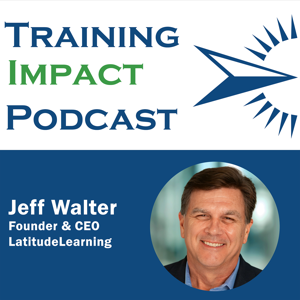

When families face the emotional, time-pressured moment of moving a loved one into assisted or memory care, it’s rarely a business decision—it’s a crisis one. In this episode of the Training Impact Podcast, host Jeff Walter, CEO of LatitudeLearning, talks with Mike Lamkin, Director of Business Development at Care Patrol of Northern Indianapolis, about how empathy, education, and franchise-level training intersect to transform one of life’s hardest transitions into an informed and compassionate process.
Care Patrol operates more than 200 locations across North America, helping families identify the right assisted-living, memory-care, or independent-living communities—at no cost to the client. Franchisees are paid by the providers in their network, which makes matching the right resident to the right facility not just a moral obligation but the foundation of their business model.
Mike shares how his own family’s healthcare experiences guided him toward senior care and how the **Care Patrol framework—social preferences, clinical needs, finances, and timing—**drives every client conversation. This “motivational-interviewing” style of discovery helps advisors uncover what truly matters: whether it’s proximity to family, social connection, clinical capability, or budget. “The earlier we start these conversations,” Mike explains, “the more likely the decision is a choice rather than a crisis.”
Behind the scenes, Care Patrol’s advisors complete the Certified Senior Advisor accreditation—a national certification developed with third-party partners and backed by Care Patrol leadership—to ensure every franchise maintains a consistent, ethical standard. But education doesn’t stop there. Advisors gain their deepest expertise the old-fashioned way: boots on the ground. They visit every facility, meet administrators face-to-face, and gather real-time insights that no online directory or AI tool can replicate.
That field-based learning becomes the differentiator. It turns franchisees into trusted matchmakers—professionals who combine data with empathy, policy knowledge with personal connection. Jeff notes that this dual-track model—a standardized national baseline plus hyper-local experiential learning—reflects the best practices of extended-enterprise training: blending certification, field immersion, and continuous feedback loops.
Mike also discusses how Care Patrol acts as an extension of the healthcare system, easing burdens on hospital discharge teams and social workers who simply don’t have the time or local visibility to vet every care option. By maintaining relationships with over 90 percent of facilities in their area, Mike’s team reduces hospital re-admissions, improves patient outcomes, and saves families from the “trial-and-error” approach that so often adds stress to already difficult situations.
As the conversation evolves, Jeff draws parallels between Care Patrol’s matchmaking process and franchisee development across industries: the more accurately you align values, expectations, and environment, the stronger the long-term success. The takeaway: training isn’t just about compliance or skill—it’s about clarity, compassion, and cultural fit.
In an era where AI, virtual tours, and automation are rapidly transforming healthcare decision-making, Care Patrol proves that high-touch still wins when high stakes are involved. Their blend of structured learning, ethical standards, and human connection provides a replicable model for any organization that needs to align knowledge, service, and empathy at scale.
Final Insight: Great franchisors train for consistency—but great advisors, like those at Care Patrol, train for humanity. Whether you’re guiding a customer, a partner, or a patient, the true impact of training is measured not in checklists completed, but in lives improved.
👉 Learn more about Care Patrol and find a local advisor at carepatrol.com
 View all episodes
 By LatitudeLearning
When families face the emotional, time-pressured moment of moving a loved one into assisted or memory care, it’s rarely a business decision—it’s a crisis one. In this episode of the Training Impact Podcast, host Jeff Walter, CEO of LatitudeLearning, talks with Mike Lamkin, Director of Business Development at Care Patrol of Northern Indianapolis, about how empathy, education, and franchise-level training intersect to transform one of life’s hardest transitions into an informed and compassionate process.
Care Patrol operates more than 200 locations across North America, helping families identify the right assisted-living, memory-care, or independent-living communities—at no cost to the client. Franchisees are paid by the providers in their network, which makes matching the right resident to the right facility not just a moral obligation but the foundation of their business model.
Mike shares how his own family’s healthcare experiences guided him toward senior care and how the **Care Patrol framework—social preferences, clinical needs, finances, and timing—**drives every client conversation. This “motivational-interviewing” style of discovery helps advisors uncover what truly matters: whether it’s proximity to family, social connection, clinical capability, or budget. “The earlier we start these conversations,” Mike explains, “the more likely the decision is a choice rather than a crisis.”
Behind the scenes, Care Patrol’s advisors complete the Certified Senior Advisor accreditation—a national certification developed with third-party partners and backed by Care Patrol leadership—to ensure every franchise maintains a consistent, ethical standard. But education doesn’t stop there. Advisors gain their deepest expertise the old-fashioned way: boots on the ground. They visit every facility, meet administrators face-to-face, and gather real-time insights that no online directory or AI tool can replicate.
That field-based learning becomes the differentiator. It turns franchisees into trusted matchmakers—professionals who combine data with empathy, policy knowledge with personal connection. Jeff notes that this dual-track model—a standardized national baseline plus hyper-local experiential learning—reflects the best practices of extended-enterprise training: blending certification, field immersion, and continuous feedback loops.
Mike also discusses how Care Patrol acts as an extension of the healthcare system, easing burdens on hospital discharge teams and social workers who simply don’t have the time or local visibility to vet every care option. By maintaining relationships with over 90 percent of facilities in their area, Mike’s team reduces hospital re-admissions, improves patient outcomes, and saves families from the “trial-and-error” approach that so often adds stress to already difficult situations.
As the conversation evolves, Jeff draws parallels between Care Patrol’s matchmaking process and franchisee development across industries: the more accurately you align values, expectations, and environment, the stronger the long-term success. The takeaway: training isn’t just about compliance or skill—it’s about clarity, compassion, and cultural fit.
In an era where AI, virtual tours, and automation are rapidly transforming healthcare decision-making, Care Patrol proves that high-touch still wins when high stakes are involved. Their blend of structured learning, ethical standards, and human connection provides a replicable model for any organization that needs to align knowledge, service, and empathy at scale.
Final Insight: Great franchisors train for consistency—but great advisors, like those at Care Patrol, train for humanity. Whether you’re guiding a customer, a partner, or a patient, the true impact of training is measured not in checklists completed, but in lives improved.
👉 Learn more about Care Patrol and find a local advisor at carepatrol.com