
Sign up to save your podcasts
Or

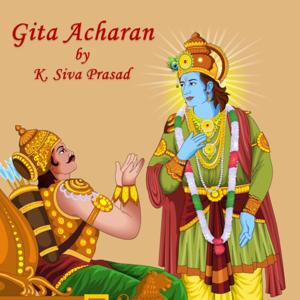

The sixteenth chapter of the Bhagavad Gita is titled 'Daiva-Asura Sampad Vibhag Yoga' which is attaining Union through the distinction of the Divine and Demonic Natures. 'Daiva' is the internal journey towards Paramatma and 'Asura' is away from HIM. Krishna gave a detailed description of these two natures to help us identify our tendencies and correct course accordingly.
He concludes the chapter by saying that those who act under the impulse of desire, discarding the scriptural ordinance, attain neither perfection, nor happiness,
The seventeenth chapter of the Bhagavad Gita is titled 'Shraddha Traya Vibhaga Yoga', i.e. attaining union through insight into the three divisions of shraddha (trust). This chapter starts with Arjun's question, "Those who
Krishna replies, "Every embodied being is born with innate shraddha which can be of three kinds -sattvic, rajasic and tamasic (17.2). The shraddha of each man
This innate shraddha is the root cause of swa-dharmam (own nature). Because of this intrinsic origin, Krishna had earlier advised us to follow swa-dharmam, even if it’s faulty or devoid of merits rather than following para-dharmam (other's nature) (3.35). Thus, this chapter dwells on the various facets of swa-dharmam and how our behaviours are influenced accordingly.
 View all episodes
 By Siva Prasad
The sixteenth chapter of the Bhagavad Gita is titled 'Daiva-Asura Sampad Vibhag Yoga' which is attaining Union through the distinction of the Divine and Demonic Natures. 'Daiva' is the internal journey towards Paramatma and 'Asura' is away from HIM. Krishna gave a detailed description of these two natures to help us identify our tendencies and correct course accordingly.
He concludes the chapter by saying that those who act under the impulse of desire, discarding the scriptural ordinance, attain neither perfection, nor happiness,
The seventeenth chapter of the Bhagavad Gita is titled 'Shraddha Traya Vibhaga Yoga', i.e. attaining union through insight into the three divisions of shraddha (trust). This chapter starts with Arjun's question, "Those who
Krishna replies, "Every embodied being is born with innate shraddha which can be of three kinds -sattvic, rajasic and tamasic (17.2). The shraddha of each man
This innate shraddha is the root cause of swa-dharmam (own nature). Because of this intrinsic origin, Krishna had earlier advised us to follow swa-dharmam, even if it’s faulty or devoid of merits rather than following para-dharmam (other's nature) (3.35). Thus, this chapter dwells on the various facets of swa-dharmam and how our behaviours are influenced accordingly.

928 Listeners