
Sign up to save your podcasts
Or

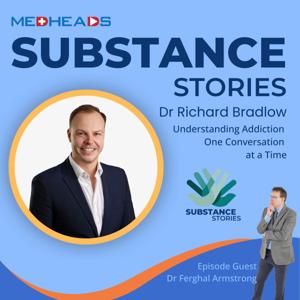

Boundaries in addiction recovery aren't about isolation—they're about rewiring neural pathways that support long-term sobriety.
Learn the 3 types and the neuroscience behind healthy boundary-setting for recovery.
🧠 THE COMMON MYTH
Many believe setting boundaries in recovery means cutting everyone off or that "boundaries = conflict." This black-and-white thinking actually mirrors the same rigid neural patterns that maintain addictive behaviours.
🔬 THE NEUROSCIENCE REALITY
Healthy boundary-setting activates your prefrontal cortex—the brain's executive control centre that addiction impairs.
When we practice selective trust and contextual flexibility, we're literally strengthening neural circuits damaged by substance use:
Dopamine regulation improves through secure relationships
Executive function recovers via boundary practice
Neuroplasticity accelerates in supportive environments
Stress response systems recalibrate through healthy attachment
 View all episodes
 By Meducate
Boundaries in addiction recovery aren't about isolation—they're about rewiring neural pathways that support long-term sobriety.
Learn the 3 types and the neuroscience behind healthy boundary-setting for recovery.
🧠 THE COMMON MYTH
Many believe setting boundaries in recovery means cutting everyone off or that "boundaries = conflict." This black-and-white thinking actually mirrors the same rigid neural patterns that maintain addictive behaviours.
🔬 THE NEUROSCIENCE REALITY
Healthy boundary-setting activates your prefrontal cortex—the brain's executive control centre that addiction impairs.
When we practice selective trust and contextual flexibility, we're literally strengthening neural circuits damaged by substance use:
Dopamine regulation improves through secure relationships
Executive function recovers via boundary practice
Neuroplasticity accelerates in supportive environments
Stress response systems recalibrate through healthy attachment