
Sign up to save your podcasts
Or

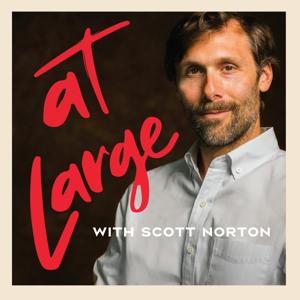

On a sun-bleached afternoon in Venice, California, where the ghost of the counterculture still haunts every exposed-brick studio and cosmic juice bar, Raed Khawaja sits beneath an iconic skylight that once illuminated the work of James Turrell and Robert Irwin. The light here is different. Anyone who's spent time in Los Angeles knows this instinctively: it's the reason artists have migrated west for generations, chasing something ineffable in the quality of atmospheric illumination itself.Khawaja, the CEO and co-founder of Open, has built something curious in this space. Not quite a studio, not quite a sanctuary, not quite a brand, though it is emphatically all three. Open offers breathwork, meditation, and movement practices in a market so thoroughly saturated with wellness grifters, Instagram yogis, and overpriced adaptogens that even using the word "wellness" has become an act of self-incrimination. Khawaja knows this. "I hate that word," he admits without hesitation.Yet here we are, in perhaps the most self-consciously well square mile in America, where green juice costs $16 and everyone you meet is either microdosing, macrodosing, or preparing a 30-day reset that will definitely, finally, be the one that sticks. The contradictions are almost too obvious to catalogue: the abundance masquerading as asceticism, the consumption marketed as consciousness, the $200 leggings required for the privilege of learning to simply breathe. We can do better, and thankfully, Raed knows this.Khawaja's background—PepsiCo, Bank of America, the machinery of billion-dollar brands—suggests someone who understands exactly what he's doing. He describes himself as "the anti-guru," more interested in curation than revelation, in stripping away the mystical theater to reveal what actually works. Open's synthesis of breathwork, sound, and movement into something immediate and accessible represents, if not an invention, then a thoughtful construction of building blocks.The timing feels urgent. Gen Z is 50% religiously unaffiliated, up from 8% in the early nineties. Mental health diagnoses have reached crisis levels. And now, artificial intelligence threatens to render our last claim to uniqueness (our cognitive superiority) utterly obsolete. "We're entering a purpose and meaning crisis," Khawaja observes, and he's not wrong. When machines can think, what's left for us?This is the existential backdrop against which Open operates: a secular space for seeking in an increasingly untethered age, located in a neighborhood that has always attracted seekers, housed in a building that once belonged to artists obsessed with perception itself. The symbolism borders on too perfect, which is perhaps the point.What follows is a conversation we recorded in his space with a live audience, about altered states and applied philosophy, about what it means to build something genuine in a landscape of post-consumerist materialism, and about whether we're all just one good breath away from figuring this whole thing out—or at least getting through the day without doom-scrolling ourselves into oblivion.
Topics:01:31 Taste of a Guided Breath Work Session03:40 The Philosophy Behind Open07:31 Raed's Journey and Creation of Open14:42 The Role of Religion and Spirituality Today19:47 Community and Connectivity in Modern Wellness29:05 AI and the Future of Humanity33:48 The Purpose of Education in the Age of AI34:27 Techno-Optimism and the Future36:42 The Human Experience and Altered States39:17 The Role of Drugs in Society41:22 Balancing and Integration47:31 At Large and Off The Cuff: Quickfire57:35 Conclusion and Farewell
Links:
---📸@swhnorton 🐦@swhnorton🖥️http://atlargeshow.com
 View all episodes
 By SickBird Productions
On a sun-bleached afternoon in Venice, California, where the ghost of the counterculture still haunts every exposed-brick studio and cosmic juice bar, Raed Khawaja sits beneath an iconic skylight that once illuminated the work of James Turrell and Robert Irwin. The light here is different. Anyone who's spent time in Los Angeles knows this instinctively: it's the reason artists have migrated west for generations, chasing something ineffable in the quality of atmospheric illumination itself.Khawaja, the CEO and co-founder of Open, has built something curious in this space. Not quite a studio, not quite a sanctuary, not quite a brand, though it is emphatically all three. Open offers breathwork, meditation, and movement practices in a market so thoroughly saturated with wellness grifters, Instagram yogis, and overpriced adaptogens that even using the word "wellness" has become an act of self-incrimination. Khawaja knows this. "I hate that word," he admits without hesitation.Yet here we are, in perhaps the most self-consciously well square mile in America, where green juice costs $16 and everyone you meet is either microdosing, macrodosing, or preparing a 30-day reset that will definitely, finally, be the one that sticks. The contradictions are almost too obvious to catalogue: the abundance masquerading as asceticism, the consumption marketed as consciousness, the $200 leggings required for the privilege of learning to simply breathe. We can do better, and thankfully, Raed knows this.Khawaja's background—PepsiCo, Bank of America, the machinery of billion-dollar brands—suggests someone who understands exactly what he's doing. He describes himself as "the anti-guru," more interested in curation than revelation, in stripping away the mystical theater to reveal what actually works. Open's synthesis of breathwork, sound, and movement into something immediate and accessible represents, if not an invention, then a thoughtful construction of building blocks.The timing feels urgent. Gen Z is 50% religiously unaffiliated, up from 8% in the early nineties. Mental health diagnoses have reached crisis levels. And now, artificial intelligence threatens to render our last claim to uniqueness (our cognitive superiority) utterly obsolete. "We're entering a purpose and meaning crisis," Khawaja observes, and he's not wrong. When machines can think, what's left for us?This is the existential backdrop against which Open operates: a secular space for seeking in an increasingly untethered age, located in a neighborhood that has always attracted seekers, housed in a building that once belonged to artists obsessed with perception itself. The symbolism borders on too perfect, which is perhaps the point.What follows is a conversation we recorded in his space with a live audience, about altered states and applied philosophy, about what it means to build something genuine in a landscape of post-consumerist materialism, and about whether we're all just one good breath away from figuring this whole thing out—or at least getting through the day without doom-scrolling ourselves into oblivion.
Topics:01:31 Taste of a Guided Breath Work Session03:40 The Philosophy Behind Open07:31 Raed's Journey and Creation of Open14:42 The Role of Religion and Spirituality Today19:47 Community and Connectivity in Modern Wellness29:05 AI and the Future of Humanity33:48 The Purpose of Education in the Age of AI34:27 Techno-Optimism and the Future36:42 The Human Experience and Altered States39:17 The Role of Drugs in Society41:22 Balancing and Integration47:31 At Large and Off The Cuff: Quickfire57:35 Conclusion and Farewell
Links:
---📸@swhnorton 🐦@swhnorton🖥️http://atlargeshow.com