
Sign up to save your podcasts
Or

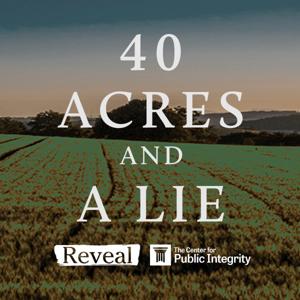

Our historical investigation found 1,250 formerly enslaved Black Americans who were given land – only to see it returned to their enslavers.
Patricia Bailey’s four-bedroom home sits high among the trees in lush Edisto Island, South Carolina. It’s a peaceful place where her body healed from multiple sclerosis. It’s also the source of her generational wealth.
Bailey built this house on land that was passed down by her great-great-grandfather, Jim Hutchinson, who was enslaved on Edisto before he was freed and became a landowner.
“I know this is sacred land here,” Bailey says, “’cause it's my ancestors and I feel it.”
Union General William T. Sherman’s Special Field Orders, No. 15 – better known as 40 acres and a mule – implied a better life in the waning days of the Civil War. Hutchinson is among the formerly enslaved people who received land through the field orders, which are often thought of as a promise that was never kept. But 40 acres and a mule was more than that.
It was real.
Over a more than two-year investigation, our partners at the Center for Public Integrity have unearthed thousands of records once buried in the National Archives. In them, they found more than 1,200 formerly enslaved people who were given land by the federal government through the field orders – and then saw that land taken away.
None of the land Bailey lives on today is part of Hutchinson’s 40 acres. Instead, her family’s wealth is built on her ancestor’s determination to get and keep land of his own, after losing what he thought he had gained through the field orders.
This week on Reveal, with our partners at the Center for Public Integrity, we bring you the first in a three-part series in which we tell the history of an often-misunderstood government program. We explore a reparation that wasn’t – and the wealth gap that remains.
 View all episodes
 By The Center for Investigative Reporting and PRX

4.5
2626 ratings
Our historical investigation found 1,250 formerly enslaved Black Americans who were given land – only to see it returned to their enslavers.
Patricia Bailey’s four-bedroom home sits high among the trees in lush Edisto Island, South Carolina. It’s a peaceful place where her body healed from multiple sclerosis. It’s also the source of her generational wealth.
Bailey built this house on land that was passed down by her great-great-grandfather, Jim Hutchinson, who was enslaved on Edisto before he was freed and became a landowner.
“I know this is sacred land here,” Bailey says, “’cause it's my ancestors and I feel it.”
Union General William T. Sherman’s Special Field Orders, No. 15 – better known as 40 acres and a mule – implied a better life in the waning days of the Civil War. Hutchinson is among the formerly enslaved people who received land through the field orders, which are often thought of as a promise that was never kept. But 40 acres and a mule was more than that.
It was real.
Over a more than two-year investigation, our partners at the Center for Public Integrity have unearthed thousands of records once buried in the National Archives. In them, they found more than 1,200 formerly enslaved people who were given land by the federal government through the field orders – and then saw that land taken away.
None of the land Bailey lives on today is part of Hutchinson’s 40 acres. Instead, her family’s wealth is built on her ancestor’s determination to get and keep land of his own, after losing what he thought he had gained through the field orders.
This week on Reveal, with our partners at the Center for Public Integrity, we bring you the first in a three-part series in which we tell the history of an often-misunderstood government program. We explore a reparation that wasn’t – and the wealth gap that remains.

90,994 Listeners

37,636 Listeners
26,984 Listeners

3,329 Listeners

111,948 Listeners

69,540 Listeners
99,724 Listeners

16,399 Listeners

4,307 Listeners

15,592 Listeners

15,950 Listeners

41,321 Listeners

87 Listeners