
Sign up to save your podcasts
Or

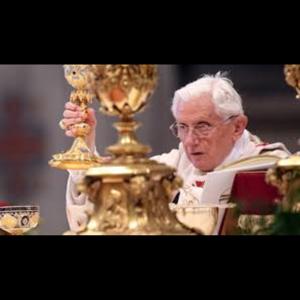

The Holy, Holy, Holy—the Sanctus—comes directly from Sacred Scripture. In Isaiah 6, the prophet hears the seraphim crying out “Holy, holy, holy is the LORD of hosts,” and in Revelation the same hymn resounds in the worship of heaven. This is the song of heaven itself. When we sing it at Mass, we are not merely recalling a biblical moment—we are entering into heavenly worship. The liturgy lifts us beyond time and space and unites us to what is always happening before the throne of God.
Immediately after this hymn, we kneel. That posture is not accidental. In the Gospels, kneeling is one of the most common responses when people come to recognize the divinity of Jesus—whether in awe, supplication, or worship. We kneel because something infinitely greater than a symbol is about to take place. The same Jesus who is worshiped in heaven is about to become sacramentally present on the altar. Our bodies confess what our voices have just proclaimed: God is here.
 View all episodes
 By Father Bryan Kujawa
The Holy, Holy, Holy—the Sanctus—comes directly from Sacred Scripture. In Isaiah 6, the prophet hears the seraphim crying out “Holy, holy, holy is the LORD of hosts,” and in Revelation the same hymn resounds in the worship of heaven. This is the song of heaven itself. When we sing it at Mass, we are not merely recalling a biblical moment—we are entering into heavenly worship. The liturgy lifts us beyond time and space and unites us to what is always happening before the throne of God.
Immediately after this hymn, we kneel. That posture is not accidental. In the Gospels, kneeling is one of the most common responses when people come to recognize the divinity of Jesus—whether in awe, supplication, or worship. We kneel because something infinitely greater than a symbol is about to take place. The same Jesus who is worshiped in heaven is about to become sacramentally present on the altar. Our bodies confess what our voices have just proclaimed: God is here.