
Sign up to save your podcasts
Or

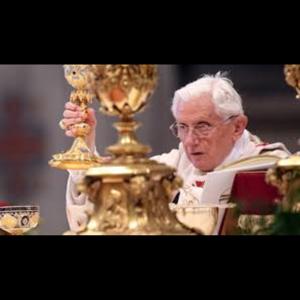

The next part of Holy Mass combines three different actions into one movement: the Fraction Rite, the Lamb of God (Agnus Dei), and the commingling of the Body and Blood of the Lord. Each of them reveals something distinct about what is taking place on the altar, but together they show one single mystery. Let’s take a closer look.
While the Lamb of God is sung or recited, the priest picks up the Eucharistic host and breaks it. From one portion he breaks a small fragment and places it into the chalice, praying quietly, “May this mingling of the Body and Blood of our Lord Jesus Christ bring eternal life to us who receive it.” All of this happens fairly quickly. (Yet another reason for the Sign of Peace to be sober and offered only to those nearest you — if we are busy chatting, we may miss one of the most revealing moments of the Mass.)
In Luke 24, the risen Jesus appears to two disciples on the Road to Emmaus. At table with them He took bread, blessed it, broke it, and gave it to them — and their eyes were opened. It was in “the breaking of the bread” that they recognized Him. The Church deliberately repeats this action at every Mass. The breaking is not practical preparation; it is proclamation. A living body is not divided — a sacrificed one is. The fraction shows sacramentally what the consecration has made present: the sacrifice of Christ. From the earliest days of Christianity, the Eucharistic worship was even called “the Breaking of the Bread.” We recognize Christ precisely at the moment His sacrifice is shown to us.
As the Host is broken, we sing: Lamb of God, you take away the sins of the world, have mercy on us…grant us peace. Throughout the Old Testament, lambs played a central role in worship. The Passover lamb protected Israel from death and had to be eaten. The sacrifices offered in the Temple brought a kind of reconciliation with God, especially on the Day of Atonement. When John the Baptist called Jesus the Lamb of God who takes away the sins of the world, he revealed that all those sacrifices pointed to Him. So while the priest performs the action of sacrifice, the congregation speaks its meaning. We are not watching a ritual; we are witnessing the sacrifice of Christ. Notice the pattern of the prayer: We ask for mercy; we ask again for mercy; finally we ask for peace. Peace is not a substitute for mercy — it is the result of mercy. Before receiving the Lamb who judges the living and the dead, we persistently beg forgiveness, and only afterward do we ask for the peace that comes from reconciliation with God.
After breaking the Host, the priest places a fragment into the chalice. In death, Christ’s Body and Blood were separated. In the Resurrection, they are united forever. The commingling does not make Christ alive — He is always the living Lord in the Eucharist — but it shows sacramentally that the sacrifice made present on the altar is the sacrifice of the risen Christ. The One offered to the Father is not dead, but living. The priest prays quietly that this mingling bring eternal life to those who receive it. The Eucharist is life-giving, but it must be received properly. This prepares us for the next moment of Mass when we will acknowledge our unworthiness before Communion.
So in just a few moments the Church shows us a very large window into the mystery of Jesus: He is sacrificed (the breaking); He is identified (the Lamb of God); He lives forever (the mingling).
 View all episodes
 By Father Bryan Kujawa
The next part of Holy Mass combines three different actions into one movement: the Fraction Rite, the Lamb of God (Agnus Dei), and the commingling of the Body and Blood of the Lord. Each of them reveals something distinct about what is taking place on the altar, but together they show one single mystery. Let’s take a closer look.
While the Lamb of God is sung or recited, the priest picks up the Eucharistic host and breaks it. From one portion he breaks a small fragment and places it into the chalice, praying quietly, “May this mingling of the Body and Blood of our Lord Jesus Christ bring eternal life to us who receive it.” All of this happens fairly quickly. (Yet another reason for the Sign of Peace to be sober and offered only to those nearest you — if we are busy chatting, we may miss one of the most revealing moments of the Mass.)
In Luke 24, the risen Jesus appears to two disciples on the Road to Emmaus. At table with them He took bread, blessed it, broke it, and gave it to them — and their eyes were opened. It was in “the breaking of the bread” that they recognized Him. The Church deliberately repeats this action at every Mass. The breaking is not practical preparation; it is proclamation. A living body is not divided — a sacrificed one is. The fraction shows sacramentally what the consecration has made present: the sacrifice of Christ. From the earliest days of Christianity, the Eucharistic worship was even called “the Breaking of the Bread.” We recognize Christ precisely at the moment His sacrifice is shown to us.
As the Host is broken, we sing: Lamb of God, you take away the sins of the world, have mercy on us…grant us peace. Throughout the Old Testament, lambs played a central role in worship. The Passover lamb protected Israel from death and had to be eaten. The sacrifices offered in the Temple brought a kind of reconciliation with God, especially on the Day of Atonement. When John the Baptist called Jesus the Lamb of God who takes away the sins of the world, he revealed that all those sacrifices pointed to Him. So while the priest performs the action of sacrifice, the congregation speaks its meaning. We are not watching a ritual; we are witnessing the sacrifice of Christ. Notice the pattern of the prayer: We ask for mercy; we ask again for mercy; finally we ask for peace. Peace is not a substitute for mercy — it is the result of mercy. Before receiving the Lamb who judges the living and the dead, we persistently beg forgiveness, and only afterward do we ask for the peace that comes from reconciliation with God.
After breaking the Host, the priest places a fragment into the chalice. In death, Christ’s Body and Blood were separated. In the Resurrection, they are united forever. The commingling does not make Christ alive — He is always the living Lord in the Eucharist — but it shows sacramentally that the sacrifice made present on the altar is the sacrifice of the risen Christ. The One offered to the Father is not dead, but living. The priest prays quietly that this mingling bring eternal life to those who receive it. The Eucharist is life-giving, but it must be received properly. This prepares us for the next moment of Mass when we will acknowledge our unworthiness before Communion.
So in just a few moments the Church shows us a very large window into the mystery of Jesus: He is sacrificed (the breaking); He is identified (the Lamb of God); He lives forever (the mingling).