
Sign up to save your podcasts
Or

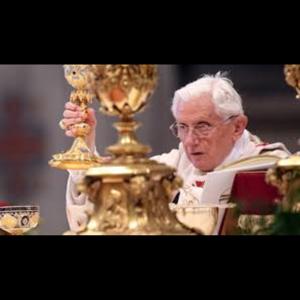

After the distribution of Holy Communion has finished, the priest takes a moment to purify the sacred vessels, making sure to clean and consume every crumb and every drop, rinsing them with water and making sure nothing is wasted. The principle comes from John 6 after the multiplication of the loaves, John tells us that Jesus instructed the disciples, “Gather up the fragments left over, that nothing may be lost” (John 6:12). Jesus has performed a different, better kind of miracle with bread for us, so we also want to make sure nothing of this miracle is lost. If the fragments of ordinary bread were treated with such care, how much more the Eucharist, which is truly the Body of Christ? As I mentioned in the last session, we believe even the smallest fragment of the Sacred Host or the smallest drop of the Precious Blood is the fullness of Christ, so we don’t want to treat the Eucharist casually or leave those crumbs behind. They deserve our highest reverence, so it is fitting for the priest to be careful during the purification.
While the priest is purifying the sacred vessels either at the altar or the credence table, the Roman Missal provides this prayer for him to pray quietly: “What has passed our lips as food, O Lord, may we possess in purity of heart, that what is given to us in time may be our healing for eternity.” The priest is praying that all who have received the gift of the Eucharist would be healed in such a way that they can abide with this living Presence of the Lord in their hearts all the way into eternal life. Just as the sacred vessels are carefully purified, the priest asks that our hearts also be purified. We always seek the Lord’s continual grace of conversion, especially as we share with him in Holy Communion.
While this is happening, and during the entire time Communion is being distributed, it’s very common for parishes to be singing a hymn with a Eucharistic theme or to be chanting the Communion Antiphon with an accompanying Psalm. The congregation is often invited to join in the singing or chanting as an expression of our communal sharing of the Eucharist. Some people may choose, however, to return to their pew for silent prayer. This silent prayer, even while singing is taking place, allows for personal reflection on the incredible mystery they are sharing in, which is true Communion with the Savior of the world. They may choose to offer prayers of thanksgiving and adoration, contemplating the mystery of Christ present within them, or they may choose to share with the Lord the deepest needs of their lives or of their loved ones. It can be a very sacred encounter for all.
I personally like to pray the Magnificat after I’ve distributed Communion and purified the vessels. The Magnificat is a beautiful prayer prayed by Mary during the Visitation (Luke 1:39-56; the Magnificat is vv 46-55). Some have suggested that this prayer is really from the baby Jesus from within the womb of Mary, expressed by Him through His Mother. As I share in a quiet moment of prayer after Holy Communion, I imagine the Lord sharing that same prayer of praise from within me, which I can then express as my own. I also like to pray the Prayer of St. Francis (which was probably not written by St. Francis, but that’s another story for another day), the one that begins, “Lord, make me an instrument of your peace…” From my prayer of praise, I ask the Lord to help me be his instrument of grace for the world. Others may have their own prayers they like to pray after Communion or they may simply enjoy contemplative love shared between Lord and disciple. May the Lord grant that all of us share in the fruits of Holy Communion!
 View all episodes
 By Father Bryan Kujawa
After the distribution of Holy Communion has finished, the priest takes a moment to purify the sacred vessels, making sure to clean and consume every crumb and every drop, rinsing them with water and making sure nothing is wasted. The principle comes from John 6 after the multiplication of the loaves, John tells us that Jesus instructed the disciples, “Gather up the fragments left over, that nothing may be lost” (John 6:12). Jesus has performed a different, better kind of miracle with bread for us, so we also want to make sure nothing of this miracle is lost. If the fragments of ordinary bread were treated with such care, how much more the Eucharist, which is truly the Body of Christ? As I mentioned in the last session, we believe even the smallest fragment of the Sacred Host or the smallest drop of the Precious Blood is the fullness of Christ, so we don’t want to treat the Eucharist casually or leave those crumbs behind. They deserve our highest reverence, so it is fitting for the priest to be careful during the purification.
While the priest is purifying the sacred vessels either at the altar or the credence table, the Roman Missal provides this prayer for him to pray quietly: “What has passed our lips as food, O Lord, may we possess in purity of heart, that what is given to us in time may be our healing for eternity.” The priest is praying that all who have received the gift of the Eucharist would be healed in such a way that they can abide with this living Presence of the Lord in their hearts all the way into eternal life. Just as the sacred vessels are carefully purified, the priest asks that our hearts also be purified. We always seek the Lord’s continual grace of conversion, especially as we share with him in Holy Communion.
While this is happening, and during the entire time Communion is being distributed, it’s very common for parishes to be singing a hymn with a Eucharistic theme or to be chanting the Communion Antiphon with an accompanying Psalm. The congregation is often invited to join in the singing or chanting as an expression of our communal sharing of the Eucharist. Some people may choose, however, to return to their pew for silent prayer. This silent prayer, even while singing is taking place, allows for personal reflection on the incredible mystery they are sharing in, which is true Communion with the Savior of the world. They may choose to offer prayers of thanksgiving and adoration, contemplating the mystery of Christ present within them, or they may choose to share with the Lord the deepest needs of their lives or of their loved ones. It can be a very sacred encounter for all.
I personally like to pray the Magnificat after I’ve distributed Communion and purified the vessels. The Magnificat is a beautiful prayer prayed by Mary during the Visitation (Luke 1:39-56; the Magnificat is vv 46-55). Some have suggested that this prayer is really from the baby Jesus from within the womb of Mary, expressed by Him through His Mother. As I share in a quiet moment of prayer after Holy Communion, I imagine the Lord sharing that same prayer of praise from within me, which I can then express as my own. I also like to pray the Prayer of St. Francis (which was probably not written by St. Francis, but that’s another story for another day), the one that begins, “Lord, make me an instrument of your peace…” From my prayer of praise, I ask the Lord to help me be his instrument of grace for the world. Others may have their own prayers they like to pray after Communion or they may simply enjoy contemplative love shared between Lord and disciple. May the Lord grant that all of us share in the fruits of Holy Communion!