
Sign up to save your podcasts
Or

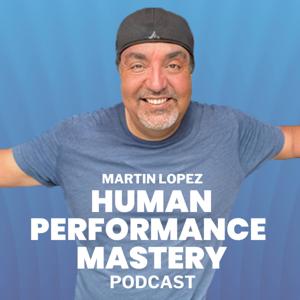

Episode #59: Breaking the Cycle of Unchecked Emotions (Part 2): In this episode of the Human Performance Mastery Daily Podcast, host Martin Lopez focuses on breaking the cycle of unchecked emotions and preventing them from ruling our actions and decisions.
The discussion builds on the idea that our emotional reactions often stem from survival instincts, like the “fight, flight, or freeze” response. While this is helpful in real danger, it often misfires in everyday situations, creating a cycle known as Trigger-React-Regret—where something triggers us, we react impulsively and later regret our behavior.
To break this cycle, Martin introduces The Curiosity Theory, a method summarized as Trigger, Connect, Act, & Celebrate. Here’s a breakdown of the initial steps:
Trigger: When triggered, take a moment to breathe and get curious. This pause helps interrupt the automatic reaction, allowing time for a more thoughtful response.
Connect: This step is broken into three parts:
This approach allows you to respond thoughtfully instead of impulsively, moving from reactive to proactive behavior. In the next episode, Martin promises to cover the final steps—Act and Celebrate—to complete the process of mastering emotional responses.
 View all episodes
 By Martin Lopez
Episode #59: Breaking the Cycle of Unchecked Emotions (Part 2): In this episode of the Human Performance Mastery Daily Podcast, host Martin Lopez focuses on breaking the cycle of unchecked emotions and preventing them from ruling our actions and decisions.
The discussion builds on the idea that our emotional reactions often stem from survival instincts, like the “fight, flight, or freeze” response. While this is helpful in real danger, it often misfires in everyday situations, creating a cycle known as Trigger-React-Regret—where something triggers us, we react impulsively and later regret our behavior.
To break this cycle, Martin introduces The Curiosity Theory, a method summarized as Trigger, Connect, Act, & Celebrate. Here’s a breakdown of the initial steps:
Trigger: When triggered, take a moment to breathe and get curious. This pause helps interrupt the automatic reaction, allowing time for a more thoughtful response.
Connect: This step is broken into three parts:
This approach allows you to respond thoughtfully instead of impulsively, moving from reactive to proactive behavior. In the next episode, Martin promises to cover the final steps—Act and Celebrate—to complete the process of mastering emotional responses.