
Sign up to save your podcasts
Or


Silence gets mistaken for absence far too easily. And when that happens, people who don’t use speech end up carrying the cost — socially, emotionally, system-wide.
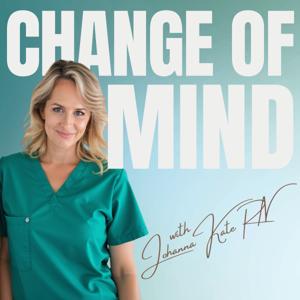
In this episode of Change of Mind, Johanna Kate breaks down eight common mistakes adults make around non-speaking people, especially autistic people and those with complex communication needs. Not in a call-out way. More in a “we were taught this wrong, here’s the update” way.
By the end of this episode, you’ll see non-speaking communication as exactly that — communication — and understand how subtle assumptions shape behaviour, access, and dignity. This isn’t about being perfect. It’s about being more accurate.
The science matters here. Research in autism, AAC, and cognitive neuroscience shows that speech is a motor output, not a measure of intelligence, comprehension, or intent. Studies on presuming competence, sensory processing differences, and delayed motor planning help explain why so many well-meaning interactions miss the mark.
In this episode, we cover:
This episode is for parents, clinicians, educators, and anyone who wants to stop guessing and start listening — even when listening doesn’t look the way we were taught it should.
Calm, grounded, and practical.
Hosted on Acast. See acast.com/privacy for more information.
 View all episodes
 By Johanna Kate RN
Silence gets mistaken for absence far too easily. And when that happens, people who don’t use speech end up carrying the cost — socially, emotionally, system-wide.
In this episode of Change of Mind, Johanna Kate breaks down eight common mistakes adults make around non-speaking people, especially autistic people and those with complex communication needs. Not in a call-out way. More in a “we were taught this wrong, here’s the update” way.
By the end of this episode, you’ll see non-speaking communication as exactly that — communication — and understand how subtle assumptions shape behaviour, access, and dignity. This isn’t about being perfect. It’s about being more accurate.
The science matters here. Research in autism, AAC, and cognitive neuroscience shows that speech is a motor output, not a measure of intelligence, comprehension, or intent. Studies on presuming competence, sensory processing differences, and delayed motor planning help explain why so many well-meaning interactions miss the mark.
In this episode, we cover:
This episode is for parents, clinicians, educators, and anyone who wants to stop guessing and start listening — even when listening doesn’t look the way we were taught it should.
Calm, grounded, and practical.
Hosted on Acast. See acast.com/privacy for more information.