
Sign up to save your podcasts
Or

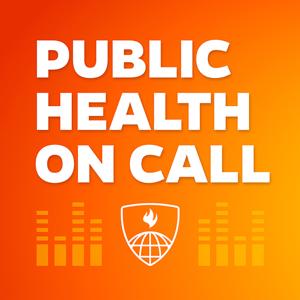

Breastfeeding plays a crucial role in babies' development and new research is even suggesting that breast milk can provide benefits to the microbiomes and immune systems of adults. In this episode: Meghan Azad, a breastfeeding researcher from the University of Manitoba, explains the chemical compounds that make human breast milk unique from other mammals, the opportunities to build more community support for breastfeeding, and the benefits of lactation for mothers.
Guest:Meghan Azad, PhD, is a professor of pediatrics and child health at the University of Manitoba, where she leads a lab studying breastfeeding and breast milk.
Host:Lindsay Smith Rogers, MA, is the producer of the Public Health On Call podcast, an editor for Expert Insights, and the director of content strategy for the Johns Hopkins Bloomberg School of Public Health.
Show links and related content:World Breastfeeding Week—World Health Organization
New study reveals breastfeeding duration influences infant microbiome and respiratory development—UM Today
Breast milk's benefits are not limited to babies—The Economist
Looking for episode transcripts? Open our podcast on the Apple Podcasts app (desktop or mobile) or the Spotify mobile app to access an auto-generated transcript of any episode. Closed captioning is also available for every episode on our YouTube channel.
Contact us:Have a question about something you heard? Looking for a transcript? Want to suggest a topic or guest? Contact us via email or visit our website.
Follow us:@PublicHealthPod on Bluesky
@JohnsHopkinsSPH on Instagram
@JohnsHopkinsSPH on Facebook
@PublicHealthOnCall on YouTube
Here's our RSS feed
Note: These podcasts are a conversation between the participants, and do not represent the position of Johns Hopkins University.
 View all episodes
 By The Johns Hopkins Bloomberg School of Public Health

4.6
618618 ratings
Breastfeeding plays a crucial role in babies' development and new research is even suggesting that breast milk can provide benefits to the microbiomes and immune systems of adults. In this episode: Meghan Azad, a breastfeeding researcher from the University of Manitoba, explains the chemical compounds that make human breast milk unique from other mammals, the opportunities to build more community support for breastfeeding, and the benefits of lactation for mothers.
Guest:Meghan Azad, PhD, is a professor of pediatrics and child health at the University of Manitoba, where she leads a lab studying breastfeeding and breast milk.
Host:Lindsay Smith Rogers, MA, is the producer of the Public Health On Call podcast, an editor for Expert Insights, and the director of content strategy for the Johns Hopkins Bloomberg School of Public Health.
Show links and related content:World Breastfeeding Week—World Health Organization
New study reveals breastfeeding duration influences infant microbiome and respiratory development—UM Today
Breast milk's benefits are not limited to babies—The Economist
Looking for episode transcripts? Open our podcast on the Apple Podcasts app (desktop or mobile) or the Spotify mobile app to access an auto-generated transcript of any episode. Closed captioning is also available for every episode on our YouTube channel.
Contact us:Have a question about something you heard? Looking for a transcript? Want to suggest a topic or guest? Contact us via email or visit our website.
Follow us:@PublicHealthPod on Bluesky
@JohnsHopkinsSPH on Instagram
@JohnsHopkinsSPH on Facebook
@PublicHealthOnCall on YouTube
Here's our RSS feed
Note: These podcasts are a conversation between the participants, and do not represent the position of Johns Hopkins University.

43,594 Listeners
40 Listeners

5 Listeners
27 Listeners
4 Listeners
262 Listeners

56,545 Listeners
496 Listeners

9 Listeners

45 Listeners
93 Listeners

16,351 Listeners
16 Listeners
4,762 Listeners
2 Listeners

4,485 Listeners

391 Listeners

6,543 Listeners
25 Listeners

6,394 Listeners
238 Listeners
66 Listeners
163 Listeners

98 Listeners