
Sign up to save your podcasts
Or

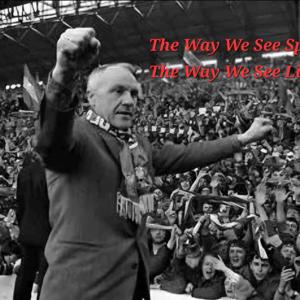

When Merseyside's footballing titans (Everton and Liverpool) were drawn together in the 5th Round of the FA Cup in 1991, the stage was set for the latest instalment of a gripping rivalry, one that had dominated English Football for much of the previous decade, when the First Division title seemed to reside permanently on Merseyside - with Liverpool claiming six titles and Everton emerging from the shadow of their bitter rivals to claim the league championship on two occasions.
In addition to the sides domestic dominance, they also both claimed European prizes; Liverpool adding two further European Cups to those they claimed in the late seventies and Everton added the European Cup Winners Cup to the league title they won in 1984/85 and were only denied a unique Treble when a Norman Whiteside curler gave Manchester United the FA Cup.
Evertonians would have been keen to emulate their neighbours achievements in being recognised as Europe's premier club side, but Liverpool fans behaviour in the Heysel Stadium meant that their neighbours would be denied the opportunity to compete in the following season's European Cup. English clubs were banned for an "indeterminate period of time" from UEFA competitions.
It has been claimed that the ban was integral in Everton’s decline. Indeed, of the Big Five clubs who led the moves to establish a breakaway Premier League in 1992, their drop in performance has unquestionably been the most marked. However, they matched their bitterest rivals’ stride for stride during the 1985/86 campaign, narrowly losing both the league championship and the FA Cup Final to Liverpool in player-manager Kenny Dalglish’s first season.
The following season, it was Everton who prevailed in the title race, but at the end of the 1986/87 campaign, manager Howard Kendall departed Goodison for sunnier climes. The only surprise was that he did not move to Barcelona or Real Madrid. Instead, he moved to the Basque Country taking the Athletic Bilbao job. Seeking to replicate Liverpool’s happy knack for promoting from within, Everton appointed Kendall’s assistant (Colin Harvey) to the Goodison hot seat. Harvey claimed the Chatity Shield early in his tenure, but he struggled to mirror the achievements of his former team-mate as manager.
Having suffered the rare indignity of a trophyless campaign in 1986/87, Dalglish spent heavily to reshape Liverpool’s side. England forwards John Barnes and Peter Beardsley were added to replace the outgoing Ian Rush. When Barnes and Beardsley lined up alongside John Aldridge, they provided an exhilarating sight and one which inspired Liverpool to reassert their dominance, sweeping to the league title in 1987/88, a season in which they were described as “better than the Brazilians”.
The following season was overshadowed by Hillsborough, and it was perhaps fitting that after the disaster when football resumed, Everton were not only Liverpool’s first league opponents, but also their opponents in the second all-Merseyside FA Cup Final.
By 1991, English football itself was set to undergo seismic changes. The discussions that would ultimately result in the establishment of a new Premier League in 1992/93 were well underway. A swagger and associated feelgood factor were back in English football following the national team’s unexpectedly stellar performance at Italia 90. Greater commercial opportunities were on the horizon through the introduction of ‘A Whole New Ball Game’ via the Premier League’s arrival.
This series of matches (particularly the epic 4-4 draw broadcast on the nascent BskyB) have entered footballing folklore in Merseyside and beyond. Whilst this game itself was a clash for the ages, the fallout from this titanic struggle was felt for a long time afterwards, particularly on the red half of Merseyside.
 View all episodes
 By Chris Bayes
When Merseyside's footballing titans (Everton and Liverpool) were drawn together in the 5th Round of the FA Cup in 1991, the stage was set for the latest instalment of a gripping rivalry, one that had dominated English Football for much of the previous decade, when the First Division title seemed to reside permanently on Merseyside - with Liverpool claiming six titles and Everton emerging from the shadow of their bitter rivals to claim the league championship on two occasions.
In addition to the sides domestic dominance, they also both claimed European prizes; Liverpool adding two further European Cups to those they claimed in the late seventies and Everton added the European Cup Winners Cup to the league title they won in 1984/85 and were only denied a unique Treble when a Norman Whiteside curler gave Manchester United the FA Cup.
Evertonians would have been keen to emulate their neighbours achievements in being recognised as Europe's premier club side, but Liverpool fans behaviour in the Heysel Stadium meant that their neighbours would be denied the opportunity to compete in the following season's European Cup. English clubs were banned for an "indeterminate period of time" from UEFA competitions.
It has been claimed that the ban was integral in Everton’s decline. Indeed, of the Big Five clubs who led the moves to establish a breakaway Premier League in 1992, their drop in performance has unquestionably been the most marked. However, they matched their bitterest rivals’ stride for stride during the 1985/86 campaign, narrowly losing both the league championship and the FA Cup Final to Liverpool in player-manager Kenny Dalglish’s first season.
The following season, it was Everton who prevailed in the title race, but at the end of the 1986/87 campaign, manager Howard Kendall departed Goodison for sunnier climes. The only surprise was that he did not move to Barcelona or Real Madrid. Instead, he moved to the Basque Country taking the Athletic Bilbao job. Seeking to replicate Liverpool’s happy knack for promoting from within, Everton appointed Kendall’s assistant (Colin Harvey) to the Goodison hot seat. Harvey claimed the Chatity Shield early in his tenure, but he struggled to mirror the achievements of his former team-mate as manager.
Having suffered the rare indignity of a trophyless campaign in 1986/87, Dalglish spent heavily to reshape Liverpool’s side. England forwards John Barnes and Peter Beardsley were added to replace the outgoing Ian Rush. When Barnes and Beardsley lined up alongside John Aldridge, they provided an exhilarating sight and one which inspired Liverpool to reassert their dominance, sweeping to the league title in 1987/88, a season in which they were described as “better than the Brazilians”.
The following season was overshadowed by Hillsborough, and it was perhaps fitting that after the disaster when football resumed, Everton were not only Liverpool’s first league opponents, but also their opponents in the second all-Merseyside FA Cup Final.
By 1991, English football itself was set to undergo seismic changes. The discussions that would ultimately result in the establishment of a new Premier League in 1992/93 were well underway. A swagger and associated feelgood factor were back in English football following the national team’s unexpectedly stellar performance at Italia 90. Greater commercial opportunities were on the horizon through the introduction of ‘A Whole New Ball Game’ via the Premier League’s arrival.
This series of matches (particularly the epic 4-4 draw broadcast on the nascent BskyB) have entered footballing folklore in Merseyside and beyond. Whilst this game itself was a clash for the ages, the fallout from this titanic struggle was felt for a long time afterwards, particularly on the red half of Merseyside.