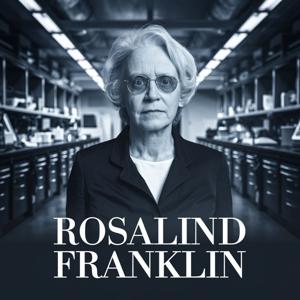
In this poignant episode, Dr Sarah Quinn explores Rosalind Franklin's final years from 1953 to 1958, examining her transformative move from King's College London to Birkbeck College. Despite facing a hostile work environment earlier in her career, Franklin found her scientific stride at Birkbeck, where she conducted groundbreaking research on virus structure alongside future Nobel laureate Aaron Klug. This period saw Franklin publish seventeen influential papers on viral architecture, developing revolutionary techniques that combined X-ray crystallography with chemical analysis. Her work on tobacco mosaic virus and poliovirus laid crucial foundations for modern virology and vaccine development. The episode highlights how Franklin thrived in collaborative environments, mentoring graduate students while building international research partnerships. We explore the tragic irony of Watson and Crick receiving the Nobel Prize in 1962 for DNA work that relied heavily on Franklin's data, four years after her death. Quinn examines Franklin's extraordinary scientific productivity despite declining health, revealing a brilliant researcher whose contributions to structural biology extended far beyond DNA. The episode presents Franklin not as the difficult figure sometimes portrayed in early accounts, but as a dedicated scientist whose innovative methodologies continue to influence modern biotechnology and drug development research today.



 View all episodes
