
Sign up to save your podcasts
Or

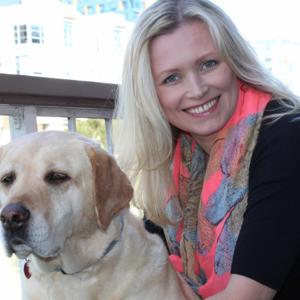

The night before our LIVE conversation, architect and regenerative practitioner Caroline Pidcock sent me a short text that landed with the weight of a thesis: “We are behaving as if incremental change is good enough.”
It was blunt, unsoftened, and in many ways the most honest description of the moment we’re in. Sustainability has, too often, become a story we tell ourselves to feel better, not a practice that actually changes outcomes. “A little less, a little better” has become both a comfort blanket and a trap.
In our conversation, Caroline Pidcock dissected that trap with extraordinary clarity. She spoke about the truth-telling we avoid, the systems we cling to, the joy we misplace, and the surprising role that slowing down and listening might play in urgent times. And she introduced a regenerative framework—the five handprints of good design—that shifts us from disorientation and guilt to agency.
This essay is a distilled version of that LIVE session: the heartbreak, the hope, the wisdom accumulated over 33 years inside a movement that has asked more of her than any single role could contain.
The full episode is available on Substack, Spotify, and Apple Podcasts for all who prefer to listen to the original!
1. The moment that “hit her in the chest”
Caroline began by describing an article she had just read about scientists briefing the UK Parliament about climate risk:
They were “very factual, very clear, very calm” about the “clear and present danger of what is happening right now,” laying out the need to “almost move to a war footing.”
She contrasted this with the softened, diluted messaging she sees in Australia, where truth is “tampered down” or, in some cases, “completely changed” for political convenience.
What unsettles her most is the gap between what scientists know and how society behaves.
“So many people don’t even think about this.” “The idea that we can keep doing what we’ve always done with a few little tweaks… is so fallacious.”
She wasn’t angry. She was heartbroken.
And she was clear about the stakes:
“We’re experiencing what came 30 years ago… the disasters will only get worse.”
2. The comforting lie of “a little less, a bit better”
Caroline described a pervasive cultural myth — that small improvements allow us to keep living exactly as we do now.
“If we electrify our houses, we can keep doing exactly what we’re doing… keep consuming as much as we have… driving, flying… no one is talking about how many flights we should be making every year.”
The fantasy is that we can avoid changing anything fundamental.
But the truth she returns to is simple and devastating:
“I’d love it if the people who say we don’t need to do anything were right. Wouldn’t that be great? But it’s not the truth.”
This is the moral clarity we rarely hear in climate conversations.
3. Joy, regeneration, and what we’ve misunderstood
Caroline refuses the framing that climate action is about sacrifice.
Instead, she reframes where joy actually lives:
“The end game is a really joyful, happy life… finding joy not from consuming things but from regenerating nature and people.”
She’s not imagining a grim hairshirt future. She’s pointing out that the consumerist present is already failing:
“I just can’t see huge amounts of happiness out in the world… in consumer land.” “Kids playing in nature—that’s when I see joy.”
In her telling, the shift away from incrementalism is not about less joy.It’s about truer joy.
4. The roles you must invent when reality changes
One of the most powerful parts of the conversation was Caroline’s description of how her own career unfolded — accidentally, emergently, courageously:
* Accidentally starting her practice in 1992, after being told her job might disappear: “I love this… I can’t go back to being an employee.”
* Being the only woman on the Academic Senate at the University of Newcastle, and unexpectedly loving committee work: “I had never been on a committee before… and I just loved it.”
* Reading Green Architecture in a single night — “Oh my God, I think this is it” — and reorienting her whole trajectory.
* Realizing that “green” wasn’t enough, then “sustainable” wasn’t enough, and eventually moving toward regenerative design.
* Establishing the Living Future Institute of Australia, which I co-founded with Warren Overton in 2012, inviting Caroline to join the inaugural Board: “It just opened my heart widely… I want to be part of this.”
* Helping launch Architects Declare and joining global peers: “These are the architects I want to connect with.”
Her summary:
“My career is much more one of happenstance… but I was always open to what I could or should be doing.”
Openness, not a plan, is how you shape a movement — and how a movement shapes you for the better.
5. Urgency vs. Listening: The Paradox of Regenerative Leadership
This may have been the most unexpected twist in our conversation.
We began with urgency.But we landed on listening.
Caroline described the “command and control” training she received:
“In architecture… and from my engineer father… I was trained to work quickly, manage exactly what happens.”
But she is now intentionally unlearning that:
“I’m really trying to stop, listen… give space… feel into the right way.”
COVID accelerated this transformation:
“I closed my office in 2018, but I was still in that mode of being busy. COVID helped me slow down and be more patient.”
And her move to the small town of Dungog is part of that spiritual redesign:
“I’m hoping this place will also change me.”
Urgency without imagination becomes panic.Slowing down without urgency becomes retreat.
Caroline is practicing a third thing: attentive urgency.
6. The five handprints: a framework for regenerative action
Caroline introduced a framework she and collaborators are developing: the handprints of good design, a counter-narrative to the carbon footprint.
The five handprints ask:
* How does this bring the story of place to life?
* How does it celebrate resourcefulness?
* How does it enable communities to thrive?
* How does it foster long-now thinking and good ancestor values?
* How does it inspire and enable capacity and agency?
She walked us through a live example — rethinking walkability in Dungog — and showed how these five questions shift us from guilt to generation.
It was one of the most constructive moments of the entire session.
7. The Closing Question That Opens Agency
Near the end of the conversation, Caroline offered a deceptively simple reframing:
“One of the big shifts is from, ‘I can’t do this,’ to ‘How can I do this?’ It opens a door.”
She contrasted this with the exhaustion people feel in the green movement:
“People say, just tell me what to do… give me boxes to tick.”
Ticking boxes keeps us inside the same inadequate and dangerous frame.
To unleash imagination, she suggests embracing:
“Questions… poetry… music… they open things up.”
This, perhaps more than anything, is the antidote to incrementalism:
A shift from compliance → creativity.From guilt → agency.From “less bad” → “more good.”
My takeaway
This conversation clarified something essential:
Incrementalism isn’t just inadequate — it is a psychological strategy to avoid transformation.
Truth-telling is an act of love.Slowing down is an act of courage.Imagination is an act of defiance.Agency is an act of design.
Caroline embodies all four.
Changemakers’ Handbook is an audience-supported publication. To access all posts and support my work, consider becoming a free or paid subscriber.
📚 References & Further Reading
* Scientists briefing UK Parliament on climate risk: https://www.theguardian.com/environment/2025/nov/27/limate-related-risks-uk-economy-security
* Green Architecture — Robert & Brenda Vale: https://books.google.com.au/books/about/Green_Architecture.html?id=PpdlQgAACAAJ&redir_esc=y
* Less Is More — - how regrowth will save the world. Jason Hickel: https://www.penguin.com.au/books/less-is-more-9781786091215
* The Web of Meaning — Jeremy Lent: https://www.jeremylent.com/the-web-of-meaning.html.
A 7-Day Experiment: Replace “I can’t” with “How can I?”
Choose one moment each day where you feel resistanc e— writing the email you’re avoiding, having the conversation you fear, making the decision you’ve delayed.
Ask:
“If I assumed I could influence this, how might I do it?”
Then pick one handprint:
* story of place
* resourcefulness
* community thriving
* long-now thinking
* capacity & agency
…and run your problem through that lens.
Share your reflections in the comments—I will respond!
 View all episodes
 By Elena Bondareva
The night before our LIVE conversation, architect and regenerative practitioner Caroline Pidcock sent me a short text that landed with the weight of a thesis: “We are behaving as if incremental change is good enough.”
It was blunt, unsoftened, and in many ways the most honest description of the moment we’re in. Sustainability has, too often, become a story we tell ourselves to feel better, not a practice that actually changes outcomes. “A little less, a little better” has become both a comfort blanket and a trap.
In our conversation, Caroline Pidcock dissected that trap with extraordinary clarity. She spoke about the truth-telling we avoid, the systems we cling to, the joy we misplace, and the surprising role that slowing down and listening might play in urgent times. And she introduced a regenerative framework—the five handprints of good design—that shifts us from disorientation and guilt to agency.
This essay is a distilled version of that LIVE session: the heartbreak, the hope, the wisdom accumulated over 33 years inside a movement that has asked more of her than any single role could contain.
The full episode is available on Substack, Spotify, and Apple Podcasts for all who prefer to listen to the original!
1. The moment that “hit her in the chest”
Caroline began by describing an article she had just read about scientists briefing the UK Parliament about climate risk:
They were “very factual, very clear, very calm” about the “clear and present danger of what is happening right now,” laying out the need to “almost move to a war footing.”
She contrasted this with the softened, diluted messaging she sees in Australia, where truth is “tampered down” or, in some cases, “completely changed” for political convenience.
What unsettles her most is the gap between what scientists know and how society behaves.
“So many people don’t even think about this.” “The idea that we can keep doing what we’ve always done with a few little tweaks… is so fallacious.”
She wasn’t angry. She was heartbroken.
And she was clear about the stakes:
“We’re experiencing what came 30 years ago… the disasters will only get worse.”
2. The comforting lie of “a little less, a bit better”
Caroline described a pervasive cultural myth — that small improvements allow us to keep living exactly as we do now.
“If we electrify our houses, we can keep doing exactly what we’re doing… keep consuming as much as we have… driving, flying… no one is talking about how many flights we should be making every year.”
The fantasy is that we can avoid changing anything fundamental.
But the truth she returns to is simple and devastating:
“I’d love it if the people who say we don’t need to do anything were right. Wouldn’t that be great? But it’s not the truth.”
This is the moral clarity we rarely hear in climate conversations.
3. Joy, regeneration, and what we’ve misunderstood
Caroline refuses the framing that climate action is about sacrifice.
Instead, she reframes where joy actually lives:
“The end game is a really joyful, happy life… finding joy not from consuming things but from regenerating nature and people.”
She’s not imagining a grim hairshirt future. She’s pointing out that the consumerist present is already failing:
“I just can’t see huge amounts of happiness out in the world… in consumer land.” “Kids playing in nature—that’s when I see joy.”
In her telling, the shift away from incrementalism is not about less joy.It’s about truer joy.
4. The roles you must invent when reality changes
One of the most powerful parts of the conversation was Caroline’s description of how her own career unfolded — accidentally, emergently, courageously:
* Accidentally starting her practice in 1992, after being told her job might disappear: “I love this… I can’t go back to being an employee.”
* Being the only woman on the Academic Senate at the University of Newcastle, and unexpectedly loving committee work: “I had never been on a committee before… and I just loved it.”
* Reading Green Architecture in a single night — “Oh my God, I think this is it” — and reorienting her whole trajectory.
* Realizing that “green” wasn’t enough, then “sustainable” wasn’t enough, and eventually moving toward regenerative design.
* Establishing the Living Future Institute of Australia, which I co-founded with Warren Overton in 2012, inviting Caroline to join the inaugural Board: “It just opened my heart widely… I want to be part of this.”
* Helping launch Architects Declare and joining global peers: “These are the architects I want to connect with.”
Her summary:
“My career is much more one of happenstance… but I was always open to what I could or should be doing.”
Openness, not a plan, is how you shape a movement — and how a movement shapes you for the better.
5. Urgency vs. Listening: The Paradox of Regenerative Leadership
This may have been the most unexpected twist in our conversation.
We began with urgency.But we landed on listening.
Caroline described the “command and control” training she received:
“In architecture… and from my engineer father… I was trained to work quickly, manage exactly what happens.”
But she is now intentionally unlearning that:
“I’m really trying to stop, listen… give space… feel into the right way.”
COVID accelerated this transformation:
“I closed my office in 2018, but I was still in that mode of being busy. COVID helped me slow down and be more patient.”
And her move to the small town of Dungog is part of that spiritual redesign:
“I’m hoping this place will also change me.”
Urgency without imagination becomes panic.Slowing down without urgency becomes retreat.
Caroline is practicing a third thing: attentive urgency.
6. The five handprints: a framework for regenerative action
Caroline introduced a framework she and collaborators are developing: the handprints of good design, a counter-narrative to the carbon footprint.
The five handprints ask:
* How does this bring the story of place to life?
* How does it celebrate resourcefulness?
* How does it enable communities to thrive?
* How does it foster long-now thinking and good ancestor values?
* How does it inspire and enable capacity and agency?
She walked us through a live example — rethinking walkability in Dungog — and showed how these five questions shift us from guilt to generation.
It was one of the most constructive moments of the entire session.
7. The Closing Question That Opens Agency
Near the end of the conversation, Caroline offered a deceptively simple reframing:
“One of the big shifts is from, ‘I can’t do this,’ to ‘How can I do this?’ It opens a door.”
She contrasted this with the exhaustion people feel in the green movement:
“People say, just tell me what to do… give me boxes to tick.”
Ticking boxes keeps us inside the same inadequate and dangerous frame.
To unleash imagination, she suggests embracing:
“Questions… poetry… music… they open things up.”
This, perhaps more than anything, is the antidote to incrementalism:
A shift from compliance → creativity.From guilt → agency.From “less bad” → “more good.”
My takeaway
This conversation clarified something essential:
Incrementalism isn’t just inadequate — it is a psychological strategy to avoid transformation.
Truth-telling is an act of love.Slowing down is an act of courage.Imagination is an act of defiance.Agency is an act of design.
Caroline embodies all four.
Changemakers’ Handbook is an audience-supported publication. To access all posts and support my work, consider becoming a free or paid subscriber.
📚 References & Further Reading
* Scientists briefing UK Parliament on climate risk: https://www.theguardian.com/environment/2025/nov/27/limate-related-risks-uk-economy-security
* Green Architecture — Robert & Brenda Vale: https://books.google.com.au/books/about/Green_Architecture.html?id=PpdlQgAACAAJ&redir_esc=y
* Less Is More — - how regrowth will save the world. Jason Hickel: https://www.penguin.com.au/books/less-is-more-9781786091215
* The Web of Meaning — Jeremy Lent: https://www.jeremylent.com/the-web-of-meaning.html.
A 7-Day Experiment: Replace “I can’t” with “How can I?”
Choose one moment each day where you feel resistanc e— writing the email you’re avoiding, having the conversation you fear, making the decision you’ve delayed.
Ask:
“If I assumed I could influence this, how might I do it?”
Then pick one handprint:
* story of place
* resourcefulness
* community thriving
* long-now thinking
* capacity & agency
…and run your problem through that lens.
Share your reflections in the comments—I will respond!