
Sign up to save your podcasts
Or


The George Washington Cancer Center serves a racially, ethnically, and socioeconomically diverse population across Washington, D.C., northern Virginia, and southern Maryland. Their Breast Cancer Program has found that a community-informed model is most successful for managing care and adverse events related to CDK4/6 inhibitors. In this episode, CANCER BUZZ speaks with Pavani Chalasani, MD, MPH, director of the division of hematology/oncology at the George Washington University Cancer Center about the flexible and collaborative team design that allows for culturally responsive and comprehensive care for their patients with breast cancer.
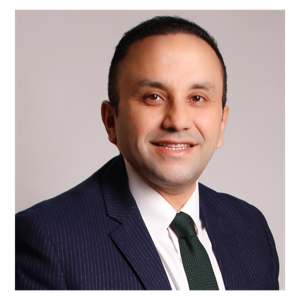
Pavani Chalasani, MD, MPH Director, Division of Hematology/Oncology George Washington University Cancer Center Washington, DC
"I think adapting and knowing what the barriers are and how we can divide and support and come up with roles for our team members is essential."
"[Navigators] give us an understanding of where the hesitancy is coming from, or where the concerns are coming from, so that we can do a better job explaining and overcoming those barriers."
Resources
· Spotlight on George Washington (GW) Cancer Center: Managing Adverse Effects of CDK4/6 Inhibitors With a Patient-Centered, Team-Based Approach
· ACCC Resource: CDK4/6 Inhibitors Management
· ACCC CDK4/6 Inhibitors Infographic
 View all episodes
 By Association of Cancer Care Centers
5
3030 ratings
The George Washington Cancer Center serves a racially, ethnically, and socioeconomically diverse population across Washington, D.C., northern Virginia, and southern Maryland. Their Breast Cancer Program has found that a community-informed model is most successful for managing care and adverse events related to CDK4/6 inhibitors. In this episode, CANCER BUZZ speaks with Pavani Chalasani, MD, MPH, director of the division of hematology/oncology at the George Washington University Cancer Center about the flexible and collaborative team design that allows for culturally responsive and comprehensive care for their patients with breast cancer.
Pavani Chalasani, MD, MPH Director, Division of Hematology/Oncology George Washington University Cancer Center Washington, DC
"I think adapting and knowing what the barriers are and how we can divide and support and come up with roles for our team members is essential."
"[Navigators] give us an understanding of where the hesitancy is coming from, or where the concerns are coming from, so that we can do a better job explaining and overcoming those barriers."
Resources
· Spotlight on George Washington (GW) Cancer Center: Managing Adverse Effects of CDK4/6 Inhibitors With a Patient-Centered, Team-Based Approach
· ACCC Resource: CDK4/6 Inhibitors Management
· ACCC CDK4/6 Inhibitors Infographic

7 Listeners
1 Listeners