
Sign up to save your podcasts
Or


Charity Nafula is a queer feminist, certified accountant, podcaster, and passionate advocate for digital dignity. As the Executive Director of Queer Prism 256, Charity uses podcasting and art to amplify the everyday lives of marginalized women in Uganda, creating intentional safe spaces for queer women to share their stories without fear of judgment or exposure.
In this episode, Dr Yemisi Akinbobola sits down with Charity to explore her journey from growing up in a religious home in Uganda to discovering her sexuality in secondary school, and eventually joining the LGBTQ community in 2015. Charity opens up about the moment she first saw pride coverage in the news and her deep desire to be part of it, even when she couldn't physically attend. She reflects on how she never saw her identity as something negative, which gave her the courage to step fully into advocacy work that now spans accounting, activism, and storytelling.
A significant portion of the conversation focuses on the intersection of technology, AI, and gender-based violence within queer communities. Charity shares harrowing examples of tech-facilitated GBV—from being outed on TikTok alongside other queer activists, to the fear of being blackmailed, doxxed, or having her home vandalized. She describes the anxiety of relocating for safety, and the devastating impact on friends who risked losing their marriages and children due to online exposure. Charity calls out how social media platforms and AI tools are weaponized against marginalized communities, and challenges tech companies to prioritize ethical design, survivor-centered surveys, and proactive safety measures before launching new platforms.
Charity also envisions what a queer feminist AI tool could look like—one rooted in storytelling support, mental health resources, counter-misinformation capabilities, and radical inclusivity. Charity's message is clear: queer people are not defined by their sexuality; they are parents, taxpayers, contributors to the economy, and deserving of dignity, safety, and representation.
ChaptersIf this episode resonated with you, subscribe, leave a review, and share it with someone who needs to hear it. Your support helps amplify conversations that strengthen media ecosystems across Africa.
Interested in joining a future episode of Her Media Diary? Email: [email protected] (mailto:[email protected])
You can also listen via our partner radio stations across Africa, and join the ongoing conversation using #HerMediaDiary.
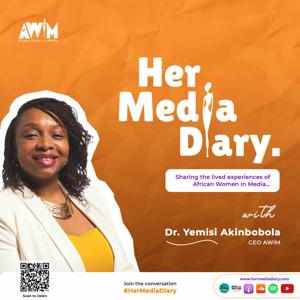
Her Media Diary is produced by African Women in Media (AWiM).
Follow African Women in Media (AWiM):
Facebook (https://www.facebook.com/share/1ARgsBptVC/)
LinkedIn (https://www.linkedin.com/company/african-women-in-media/)
TikTok (https://www.tiktok.com/@realawim?_r=1&_t=ZS-93QVDxwCcv1)
X (Twitter) (https://x.com/RealAWiM)
Instagram (https://www.instagram.com/africanwomeninmedia?igsh=MXA4NTc4NjF1NTFnbQ==)
 View all episodes
 By Dr Yemisi Akinbobola
Charity Nafula is a queer feminist, certified accountant, podcaster, and passionate advocate for digital dignity. As the Executive Director of Queer Prism 256, Charity uses podcasting and art to amplify the everyday lives of marginalized women in Uganda, creating intentional safe spaces for queer women to share their stories without fear of judgment or exposure.
In this episode, Dr Yemisi Akinbobola sits down with Charity to explore her journey from growing up in a religious home in Uganda to discovering her sexuality in secondary school, and eventually joining the LGBTQ community in 2015. Charity opens up about the moment she first saw pride coverage in the news and her deep desire to be part of it, even when she couldn't physically attend. She reflects on how she never saw her identity as something negative, which gave her the courage to step fully into advocacy work that now spans accounting, activism, and storytelling.
A significant portion of the conversation focuses on the intersection of technology, AI, and gender-based violence within queer communities. Charity shares harrowing examples of tech-facilitated GBV—from being outed on TikTok alongside other queer activists, to the fear of being blackmailed, doxxed, or having her home vandalized. She describes the anxiety of relocating for safety, and the devastating impact on friends who risked losing their marriages and children due to online exposure. Charity calls out how social media platforms and AI tools are weaponized against marginalized communities, and challenges tech companies to prioritize ethical design, survivor-centered surveys, and proactive safety measures before launching new platforms.
Charity also envisions what a queer feminist AI tool could look like—one rooted in storytelling support, mental health resources, counter-misinformation capabilities, and radical inclusivity. Charity's message is clear: queer people are not defined by their sexuality; they are parents, taxpayers, contributors to the economy, and deserving of dignity, safety, and representation.
ChaptersIf this episode resonated with you, subscribe, leave a review, and share it with someone who needs to hear it. Your support helps amplify conversations that strengthen media ecosystems across Africa.
Interested in joining a future episode of Her Media Diary? Email: [email protected] (mailto:[email protected])
You can also listen via our partner radio stations across Africa, and join the ongoing conversation using #HerMediaDiary.
Her Media Diary is produced by African Women in Media (AWiM).
Follow African Women in Media (AWiM):
Facebook (https://www.facebook.com/share/1ARgsBptVC/)
LinkedIn (https://www.linkedin.com/company/african-women-in-media/)
TikTok (https://www.tiktok.com/@realawim?_r=1&_t=ZS-93QVDxwCcv1)
X (Twitter) (https://x.com/RealAWiM)
Instagram (https://www.instagram.com/africanwomeninmedia?igsh=MXA4NTc4NjF1NTFnbQ==)