
Sign up to save your podcasts
Or

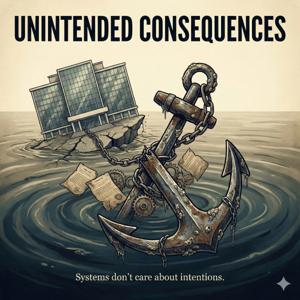

In this episode of Unintended Consequences, Jesse Hendon walks through why the ACA had to exist, why it chose a market-based solution instead of socialized care, and how a series of well-intended design choices reshaped the incentives of the entire system.
This is the story of underwriting before 2010, the introduction of guaranteed issue, the 80/20 Medical Loss Ratio rule, age-rating compression, and the bet on the “Young Invincibles.” It’s also the story of what happened when that bet didn’t pay off.
By the end of the episode, you’ll understand why underwriting never disappeared — it just changed form — and why narrow networks, prior authorization, and utilization management became the new tools of control.
This is Episode 1 of a three-part series on how healthcare policy changed the system’s incentives — and why those incentives still shape coverage, cost, and access today.
 View all episodes
 By Jesse Hendon
In this episode of Unintended Consequences, Jesse Hendon walks through why the ACA had to exist, why it chose a market-based solution instead of socialized care, and how a series of well-intended design choices reshaped the incentives of the entire system.
This is the story of underwriting before 2010, the introduction of guaranteed issue, the 80/20 Medical Loss Ratio rule, age-rating compression, and the bet on the “Young Invincibles.” It’s also the story of what happened when that bet didn’t pay off.
By the end of the episode, you’ll understand why underwriting never disappeared — it just changed form — and why narrow networks, prior authorization, and utilization management became the new tools of control.
This is Episode 1 of a three-part series on how healthcare policy changed the system’s incentives — and why those incentives still shape coverage, cost, and access today.