
Sign up to save your podcasts
Or

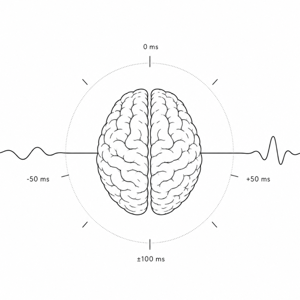

This episode explores advanced methods for recording and analyzing EEG responses evoked by transcranial magnetic stimulation, with a focus on TMS-evoked potentials, or TEPs. Drawing on recent research by Zrenner and Ziemann (2024), Beck et al. (2024), Casarotto et al. (2022), Kabir et al. (2024), and Vasileiadi et al. (2026), the episode examines how scientists are improving the precision, reliability, and physiological interpretation of brain stimulation measurements.
The discussion highlights a major shift from traditional open-loop stimulation protocols toward state-dependent and closed-loop approaches, where TMS pulses are timed according to the brain’s ongoing electrophysiological activity. It covers real-time EEG-informed stimulation, immediate TEPs occurring within the first milliseconds after a pulse, real-time artifact monitoring, EEG microstate-dependent variability, and state-dependent network effects during speech production.
Together, these studies show that the brain’s response to stimulation depends strongly on its moment-to-moment state. By improving signal-to-noise ratio, temporal resolution, artifact control, and stimulation timing, these approaches help researchers better capture the brain’s earliest physiological responses to non-invasive stimulation. The podcast also considers how these developments may support more precise neuromodulation protocols for neuroscience research and clinical applications, including disorders such as major depressive disorder.
References
Zrenner, C., & Ziemann, U. (2024). Closed-Loop Brain Stimulation. Biological Psychiatry.
Beck, M. M., Christiansen, L., Madsen, M. A. J., et al. (2024). Transcranial magnetic stimulation of primary motor cortex elicits an immediate transcranial evoked potential. Brain Stimulation.
Casarotto, S., Fecchio, M., Rosanova, M., et al. (2022). The rt-TEP tool: real-time visualization of TMS-Evoked Potentials to maximize cortical activation and minimize artifacts. Journal of Neuroscience Methods.
Kabir, A., Dhami, P., Dussault Gomez, M.-A., et al. (2024). Influence of Large-Scale Brain State Dynamics on the Evoked Response to Brain Stimulation. The Journal of Neuroscience.
Vasileiadi, M., Schuler, A.-L., Woletz, M., et al. (2026). Chronometric interleaved TMS-fMRI shows state-dependent network effects underlying speech production. Brain Stimulation.
 View all episodes
 By Kolya Syrov
This episode explores advanced methods for recording and analyzing EEG responses evoked by transcranial magnetic stimulation, with a focus on TMS-evoked potentials, or TEPs. Drawing on recent research by Zrenner and Ziemann (2024), Beck et al. (2024), Casarotto et al. (2022), Kabir et al. (2024), and Vasileiadi et al. (2026), the episode examines how scientists are improving the precision, reliability, and physiological interpretation of brain stimulation measurements.
The discussion highlights a major shift from traditional open-loop stimulation protocols toward state-dependent and closed-loop approaches, where TMS pulses are timed according to the brain’s ongoing electrophysiological activity. It covers real-time EEG-informed stimulation, immediate TEPs occurring within the first milliseconds after a pulse, real-time artifact monitoring, EEG microstate-dependent variability, and state-dependent network effects during speech production.
Together, these studies show that the brain’s response to stimulation depends strongly on its moment-to-moment state. By improving signal-to-noise ratio, temporal resolution, artifact control, and stimulation timing, these approaches help researchers better capture the brain’s earliest physiological responses to non-invasive stimulation. The podcast also considers how these developments may support more precise neuromodulation protocols for neuroscience research and clinical applications, including disorders such as major depressive disorder.
References
Zrenner, C., & Ziemann, U. (2024). Closed-Loop Brain Stimulation. Biological Psychiatry.
Beck, M. M., Christiansen, L., Madsen, M. A. J., et al. (2024). Transcranial magnetic stimulation of primary motor cortex elicits an immediate transcranial evoked potential. Brain Stimulation.
Casarotto, S., Fecchio, M., Rosanova, M., et al. (2022). The rt-TEP tool: real-time visualization of TMS-Evoked Potentials to maximize cortical activation and minimize artifacts. Journal of Neuroscience Methods.
Kabir, A., Dhami, P., Dussault Gomez, M.-A., et al. (2024). Influence of Large-Scale Brain State Dynamics on the Evoked Response to Brain Stimulation. The Journal of Neuroscience.
Vasileiadi, M., Schuler, A.-L., Woletz, M., et al. (2026). Chronometric interleaved TMS-fMRI shows state-dependent network effects underlying speech production. Brain Stimulation.