
Sign up to save your podcasts
Or


What happens when entertainment joins forces with law enforcement? Who gets hurt, and who--or what--evades accountability?
In Episode 3 of Unmaking the Prison Image, host Pooja Rangan is joined by filmmaker Davit Osit, critical criminologist Michelle Brown, and formerly incarcerated policy advocate and founder of America on Trial, Inc. Vidal Guzman to discuss the social costs of carceral entertainment, from reality TV shows filmed inside prisons to self-appointed vigilantes and "predator catchers."
Davit Osit reflects on the ethical contradictions of documentary filmmaking, including his own film Predators, and walking the tightrope of complicity and challenge. Michelle Brown situates "carceral entertainment" within a broader political landscape that exhausts our imagination and normalizes punitive responses to harm. Vidal Guzman talks about how incarcerated people experience the physical and legal harms of incarcerated reality shows like 60 Days In and his work on the #AIRS (Abolish Incarcerated Reality Shows) campaign.
Citations:
Media Resources:
Unmaking the Prison Image is a production of Visualizing Abolition, a public scholarship initiative at the University of California, Santa Cruz, directed by Gina Dent and Rachel Nelson. Additional support comes from Amherst College. Full transcripts for all episodes are available at https://ias.ucsc.edu/unmaking-the-prison-image/.
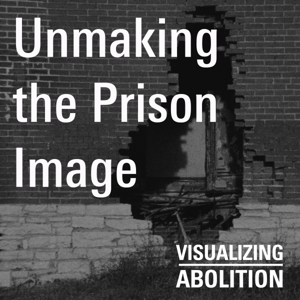
Theme music for Visualizing Abolition is Pray by Terri Lyne Carrington and Social Science. Our cover art features an image from Christopher Harris’s still/here.
 View all episodes
 By Visualizing Abolition
What happens when entertainment joins forces with law enforcement? Who gets hurt, and who--or what--evades accountability?
In Episode 3 of Unmaking the Prison Image, host Pooja Rangan is joined by filmmaker Davit Osit, critical criminologist Michelle Brown, and formerly incarcerated policy advocate and founder of America on Trial, Inc. Vidal Guzman to discuss the social costs of carceral entertainment, from reality TV shows filmed inside prisons to self-appointed vigilantes and "predator catchers."
Davit Osit reflects on the ethical contradictions of documentary filmmaking, including his own film Predators, and walking the tightrope of complicity and challenge. Michelle Brown situates "carceral entertainment" within a broader political landscape that exhausts our imagination and normalizes punitive responses to harm. Vidal Guzman talks about how incarcerated people experience the physical and legal harms of incarcerated reality shows like 60 Days In and his work on the #AIRS (Abolish Incarcerated Reality Shows) campaign.
Citations:
Media Resources:
Unmaking the Prison Image is a production of Visualizing Abolition, a public scholarship initiative at the University of California, Santa Cruz, directed by Gina Dent and Rachel Nelson. Additional support comes from Amherst College. Full transcripts for all episodes are available at https://ias.ucsc.edu/unmaking-the-prison-image/.
Theme music for Visualizing Abolition is Pray by Terri Lyne Carrington and Social Science. Our cover art features an image from Christopher Harris’s still/here.