
Sign up to save your podcasts
Or

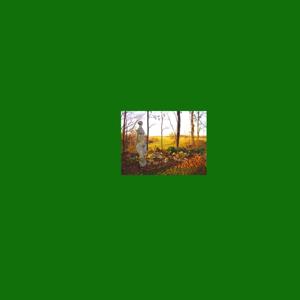

Last weekend, as we zoomed from a frigid start around 0 degrees Saturday morning to a springlike sunny 50s on Sunday afternoon, I took the opportunity to enjoy tea, biscuits, and lovely walk in his back field with my across-the-street neighbor, Adam, and his and Annette’s dog, Pearl. I knew the weather was just a delicious tease, and that we would be back in deep winter again for a good while before the real deal was upon us. But it was enough to evoke for me the hunger for spring Peter used to express about this time of year, when he began complaining of “cabin fever” and accordingly started planning our annual April jaunt to New Orleans.
From the high ground on the walk back from the south border of Adam and Annette’s property I got an unaccustomed distant view of our barn and the field running from there down to the road. There, calmly, in the mid-afternoon sun, our entire sheep herd, large dots at that distance, appeared to be sauntering slowly back toward the barn from the roadside manger on Lasher Avenue where they had been munching hay and the remaining skeletons of discarded Christmas trees. Generally, left on their own, the movement of the herd is a very slow motion kind of event. In an open field full of grass, the herd reminds me of an amoeba or bit of protoplasm, irregularly shaped. They lurch fitfully in one direction or another, guided by some unspoken signals they convey to one another. Although the herd has some clear leaders, the mechanism by which they decide to shift from side to side or take unexpected turns is not fully apparent.
Last Sunday, when there was still six inches of snow on the ground, the movement was more orderly, single file, up the path they had created to get from the barn to the road without getting their feet unduly wet. But they always move at a pace that allows older and lamer sheep to stay with the group.
I was struck by the contrast between the herd’s sauntering pace Sunday afternoon and what I had witnessed just that morning at chores. Then, too, there was a substantial group down by the manger at the road. As Troy and I stocked the hay in the barn and annex mangers and set up their grain treat bowls, many, alerted by our noises and closing of the barn doors, realized what we were doing, and made their way up to gather outside the barn doors, ready to thunder in and get as much grain as they could when we reopened the barn. But a few lambs were so absorbed with whatever they were doing that they had not gotten the message.
When we rolled open the doors and the excited baas of the herd reached a crescendo, the ears of young lambs down by the road perked up, and when they realized they were alone down there they charged at lightning speed back up toward the barn, bleating most of the way. In their case, their urgent movement was clearly not for the grain. At that age, they generally are muscled aside at grain time and they only develop the grain habit over months. It was rather the separation from the herd and particularly from their mothers that impelled their mad dash to rejoin the group. The sorts of bleats they emitted betrayed their motives.
Both the slow movement of the herd that usually allows stragglers to stay with the group and the mad dash of the lambs when separated express the importance to sheep of the group staying together.
Sheep have long been symbols of extreme group think. People are described as sheep like when they appear to be unthinkingly following some invisible diktat that comes from their membership in a group. People of my political persuasion often dismiss MAGA-hat wearing Trump supporters this way. A friend of mine of decidedly more conservative bent told me that the white-garbed women at the State of the Union address last week evoked in his mind the wearers of Mao jackets during the Chinese cultural revolution. That comment in turn provoked another friend, from a far leftier perspective, to w
 View all episodes
 By ROBIN HOOD RADIO
5
11 ratings
Last weekend, as we zoomed from a frigid start around 0 degrees Saturday morning to a springlike sunny 50s on Sunday afternoon, I took the opportunity to enjoy tea, biscuits, and lovely walk in his back field with my across-the-street neighbor, Adam, and his and Annette’s dog, Pearl. I knew the weather was just a delicious tease, and that we would be back in deep winter again for a good while before the real deal was upon us. But it was enough to evoke for me the hunger for spring Peter used to express about this time of year, when he began complaining of “cabin fever” and accordingly started planning our annual April jaunt to New Orleans.
From the high ground on the walk back from the south border of Adam and Annette’s property I got an unaccustomed distant view of our barn and the field running from there down to the road. There, calmly, in the mid-afternoon sun, our entire sheep herd, large dots at that distance, appeared to be sauntering slowly back toward the barn from the roadside manger on Lasher Avenue where they had been munching hay and the remaining skeletons of discarded Christmas trees. Generally, left on their own, the movement of the herd is a very slow motion kind of event. In an open field full of grass, the herd reminds me of an amoeba or bit of protoplasm, irregularly shaped. They lurch fitfully in one direction or another, guided by some unspoken signals they convey to one another. Although the herd has some clear leaders, the mechanism by which they decide to shift from side to side or take unexpected turns is not fully apparent.
Last Sunday, when there was still six inches of snow on the ground, the movement was more orderly, single file, up the path they had created to get from the barn to the road without getting their feet unduly wet. But they always move at a pace that allows older and lamer sheep to stay with the group.
I was struck by the contrast between the herd’s sauntering pace Sunday afternoon and what I had witnessed just that morning at chores. Then, too, there was a substantial group down by the manger at the road. As Troy and I stocked the hay in the barn and annex mangers and set up their grain treat bowls, many, alerted by our noises and closing of the barn doors, realized what we were doing, and made their way up to gather outside the barn doors, ready to thunder in and get as much grain as they could when we reopened the barn. But a few lambs were so absorbed with whatever they were doing that they had not gotten the message.
When we rolled open the doors and the excited baas of the herd reached a crescendo, the ears of young lambs down by the road perked up, and when they realized they were alone down there they charged at lightning speed back up toward the barn, bleating most of the way. In their case, their urgent movement was clearly not for the grain. At that age, they generally are muscled aside at grain time and they only develop the grain habit over months. It was rather the separation from the herd and particularly from their mothers that impelled their mad dash to rejoin the group. The sorts of bleats they emitted betrayed their motives.
Both the slow movement of the herd that usually allows stragglers to stay with the group and the mad dash of the lambs when separated express the importance to sheep of the group staying together.
Sheep have long been symbols of extreme group think. People are described as sheep like when they appear to be unthinkingly following some invisible diktat that comes from their membership in a group. People of my political persuasion often dismiss MAGA-hat wearing Trump supporters this way. A friend of mine of decidedly more conservative bent told me that the white-garbed women at the State of the Union address last week evoked in his mind the wearers of Mao jackets during the Chinese cultural revolution. That comment in turn provoked another friend, from a far leftier perspective, to w
0 Listeners

2 Listeners

2 Listeners

0 Listeners

0 Listeners