Dr. Jennifer Aaker, General Atlantic Professor at the Stanford Graduate School of Business, renowned behavioral scientist and expert on purpose, meaning, and technology's impact on well-being.
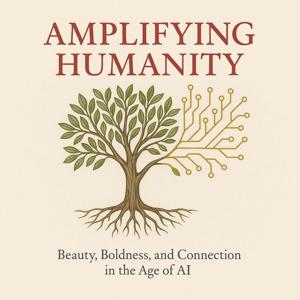
This podcast explores the potential of Artificial Intelligence (AI) not just for automation, but for the augmentation of human flourishing, defined by the core elements of Authenticity, Boldness, and Connection. Dr. Aaker frames this by reflecting on the common regrets of the dying ("I wish I’d been able to be my true self," "I wish I’d lived more boldly," "I wish I’d told those I’m closest to how much I love them") and argues that AI, when thoughtfully designed and utilized, can help us live and ultimately die better by fostering these crucial aspects of a meaningful life.
Key Ideas and Facts:
1. The Paradox of AI:
- AI presents a duality: it can either erode our humanity through automation and detachment, or elevate it to new levels of self-awareness, courage, and connection through augmentation.
- Dr. Aaker emphasizes the importance of consciously designing and utilizing AI to amplify our most human qualities.
2. The "ABC" of Human Flourishing in the Age of AI:
- Drawing a parallel to the business mantra "Always Be Closing," Aaker proposes a new "ABC" for the AI era: Authenticity, Boldness, and Connection.
- These three elements are identified as the key to both living well and running successful, sustainable businesses in a chaotic world.
3. Authenticity:
- Definition: Living in alignment with one's deepest values and beliefs; an ongoing practice of honesty about who one is becoming.
- Quote: "Authenticity really means living in alignment with the things that are truest for you. It isn’t a fixed state—you aren’t either “authentic” or “inauthentic”—but rather it’s an ongoing practice of aligning your actions, words, and decisions with your deepest values and beliefs—even when it’s uncomfortable. It’s less about being fixed in who you are, and more about being honest about who you are becoming."
- AI's Role in Fostering Authenticity:AI can help individuals understand their own "big, beautiful, chaotic lives" by finding patterns and meaning in personal data.
- Examples from Aaker's class:
- Using AI prompts to generate emotional profiles based on online presence to understand self-projection.
- Identifying "signature stories" that epitomize personal values.
- Employing a custom ChatGPT bot to coach students on telling these authentic stories effectively (clarity, comedy, confidence).
- AI can help organizations manifest their authentic values at scale, citing Syndio Solutions' use of AI for pay audits to ensure equitable compensation.
- Personal anecdote: Using AI to analyze 20 years of family "leaving behind, moving forward" notes for objective self-reflection and identification of future aspirations.
- AI's potential in mental health: Sophisticated AI tools for diagnosing conditions and GenAI therapists trained on real-world sessions.
4. Boldness:
- Definition: Using the insight of authenticity to power radical new forms of imagination and having the willingness to embrace transformation, even if scary. It's inner courage to choose growth over comfort.
- Quote: "If authenticity is about finding certainty in who you are, boldness is about using that insight to power radical new forms of imagination. It’s about using conviction to power creativity, and unlock the courage to dream of—and build—a better future for everyone."
- The Human Element of Boldness: AI is trained on the past and struggles to imagine what could be, making human imagination crucial for truly bold leaps.
- AI as a Tool for Boldness:AI can accelerate processes and free up human time and energy for more complex and imaginative tasks (e.g., AI in protein folding).
- AI can help break out of echo chambers in research by finding alternate sources and unexpected connections, enriching thinking and broadening horizons.
- Example: Dr. James Evans' work using AI to predict where the next big scientific breakthroughs will occur by mapping interdisciplinary connections.
- Research showing that optimism (a form of boldness in health beliefs) leads to better health outcomes.
- AI can help individuals view their goals as a "journey," fostering more persistent and successful behavior.
5. Love & Connection:
- Definition: Seeing and valuing the humanity in others, approaching them with love, and cultivating belonging, safety, and shared meaning; treating each person as worthy of dignity.
- Quote: "when I talk about connection I’m talking about the act of seeing and valuing the humanity in others—of approaching those around you with love. It’s through this connection that we cultivate belonging, safety, and shared meaning. At its core, connection means treating each person as worthy of dignity — as someone who matters."
- The Innately Human Nature of Connection: Algorithms cannot forge meaningful connections or heal spiritual wounds.
- AI's Role in Operationalizing Love and Connection:AI can help smooth rough edges in communication and express needs more gracefully (e.g., GenAI refining potentially angry messages).
- Personalized AI assistants can learn individual preferences for expressing warmth and connection in communication.
- Examples:
- Wildflower Montessori using AI to ensure all students receive attention, addressing potential unconscious biases.
- Lowering the cost of reaching out and expressing gratitude (e.g., quickly writing to airline CEOs about positive experiences).
- AI in healthcare (HCA Healthcare's "Katie") freeing up nurses' time for more human interaction with patients.
- Focusing on concrete pro-social goals ("making someone smile") generates more personal satisfaction.
- Quote from Joel Peterson (JetBlue): "Love is the most powerful motivating force in the universe. If you can build an organization rooted in love, where you care deeply for one another, your company’s potential is limitless.”
6. AI: Automation vs. Augmentation:
- The central argument is a shift from viewing AI solely as a tool for automation to recognizing its potential for augmentation.
- The goal should not be to outsource profound human experiences to AI, but to use AI to enhance our ability to do what humans do best: perceive beauty, understand ourselves, act boldly, and connect with others.
- Quote: "Instead of trying to automate away our human experiences, we need to use AI in ways that augment our ability to do the things that humans do best."
- Personal anecdote: "B-Sessions" with a friend, focusing on sharing beautiful moments, highlight the importance of actively engaging with beauty for memory, perception, and mindfulness.
- The poem "For a Student Who Used AI to Write a Paper" emphasizes the value of engaging in the "miraculous task" of living and loving the work itself.
7. Conclusion:
- The regrets of the dying provide crucial insights into living well and navigating the future with transformative technologies like AI.
- The "ABC" – Authenticity, Boldness, and Connection – are not just keys to a good life and death, but also to running smarter, more sustainable, and more successful businesses.
- By developing and using AI in a...



 View all episodes
