
Sign up to save your podcasts
Or


Homily for Thursday in the Sixth Week of Eastertide (before the Ascension, and the Feast of Pope St John I), delivered in the Chanel College Chapel, Gladstone, Qld.
"Paul left Athens and went to Corinth, where he met a Jew called Aquila whose family came from Pontus. He and his wife Priscilla had recently left Italy because an edict of Claudius had expelled all the Jews from Rome. Paul went to visit them, and when he found they were tentmakers, of the same trade as himself, he lodged with them, and they worked together. Every sabbath he used to hold debates in the synagogues, trying to convert Jews as well as Greeks." (cf Acts 18).
"Jesus said to his disciples: ‘In a short time you will no longer see me, and then a short time later you will see me again.’..." (cf. Jn 16).
A biography retrieved from Universals:
"He was born in Tuscany and elected pope in 523. It was a time of high political and religious tension. Theodoric the Ostrogoth, the ruler of Italy, was an Arian, while many of his subjects were Catholics. Initially tolerant, he became increasingly suspicious of the Catholics’ influence and political allegiance – above all, because they naturally had strong links with the Catholicism of the surviving eastern Roman Empire in Constantinople. Moreover, Arians in the eastern Roman Empire were being persecuted by the Catholic emperor, Justin, and they appealed to Theodoric for help. Pope John I was sent on an embassy to the emperor, to ask for better treatment for the Arians. In this he succeeded; but the enthusiasm with which he was greeted in Constantinople excited Theodoric’s suspicions, and when he returned to Italy Theodoric had him imprisoned and he died from ill-treatment there a few days later. Pope John I’s career reminds us what tolerance is and is not. Arianism was a dangerous heresy (by making the Son subordinate to the Father it made the Atonement virtually pointless) and there could be no compromise with it – but this did not mean that Arians themselves were to be persecuted for their beliefs. Then, as so often now, it was the state and not the Church that tried to use force to impose uniformity."
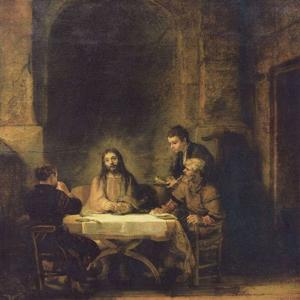
Artwork: an image of Pope Saint John I, retrieved from UCatholic.com
 View all episodes
 By Ashwin Emmanuel Acharya
Homily for Thursday in the Sixth Week of Eastertide (before the Ascension, and the Feast of Pope St John I), delivered in the Chanel College Chapel, Gladstone, Qld.
"Paul left Athens and went to Corinth, where he met a Jew called Aquila whose family came from Pontus. He and his wife Priscilla had recently left Italy because an edict of Claudius had expelled all the Jews from Rome. Paul went to visit them, and when he found they were tentmakers, of the same trade as himself, he lodged with them, and they worked together. Every sabbath he used to hold debates in the synagogues, trying to convert Jews as well as Greeks." (cf Acts 18).
"Jesus said to his disciples: ‘In a short time you will no longer see me, and then a short time later you will see me again.’..." (cf. Jn 16).
A biography retrieved from Universals:
"He was born in Tuscany and elected pope in 523. It was a time of high political and religious tension. Theodoric the Ostrogoth, the ruler of Italy, was an Arian, while many of his subjects were Catholics. Initially tolerant, he became increasingly suspicious of the Catholics’ influence and political allegiance – above all, because they naturally had strong links with the Catholicism of the surviving eastern Roman Empire in Constantinople. Moreover, Arians in the eastern Roman Empire were being persecuted by the Catholic emperor, Justin, and they appealed to Theodoric for help. Pope John I was sent on an embassy to the emperor, to ask for better treatment for the Arians. In this he succeeded; but the enthusiasm with which he was greeted in Constantinople excited Theodoric’s suspicions, and when he returned to Italy Theodoric had him imprisoned and he died from ill-treatment there a few days later. Pope John I’s career reminds us what tolerance is and is not. Arianism was a dangerous heresy (by making the Son subordinate to the Father it made the Atonement virtually pointless) and there could be no compromise with it – but this did not mean that Arians themselves were to be persecuted for their beliefs. Then, as so often now, it was the state and not the Church that tried to use force to impose uniformity."
Artwork: an image of Pope Saint John I, retrieved from UCatholic.com