
Sign up to save your podcasts
Or

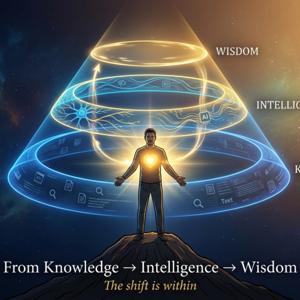

There is a protective intelligence embedded within the intellect.
Its role is not to expand you.
Its role is to keep you within what is known.
So when you approach a boundary—something unfamiliar, uncertain, or untested—
it does what it is designed to do:
It signals discomfort.
Not because the boundary is real.
But because it is unverified.
This is why discomfort often feels like a warning.
And over time, that warning gets interpreted as a limit.
→ “This is as far as I can go.”
→ “This is not for me.”
→ “This is beyond my capability.”
But what is actually happening is simpler:
The intellect is projecting the past onto the present.
Integrated Intelligence does not remove this signal.
It repositions it.
Discomfort is no longer:
→ a boundary to respect
It becomes:
→ a signal to explore
This is the paradox at the heart of today’s reflection:
The only way to become comfortable
is to move through what feels uncomfortable.
And once this is seen clearly, something shifts.
Discomfort loses its authority.
Not because it disappears,
but because it is no longer mistaken for truth.
This is where joy enters the picture.
Joy is not the absence of challenge.
It is the absence of resistance.
So when you move beyond limits:
The same action, completely different experience.
Your reference to whole-brain engagement points to this precisely.
When only “protect” is active:
→ limits feel fixed
When “explore” and “connect” are also engaged:
→ limits become fluid
And this extends naturally into your AI insight.
AI, like intellect, operates on known patterns.
It can map constraints with incredible precision.
But it does not experience expansion.
That remains a human capacity.
So the real question is not:
→ “What are my limits?”
But:
→ “Am I willing to move with discomfort
without turning it into a boundary?”
Because in that moment,
limits stop being definitions…
and start becoming doorways.
 View all episodes
 By Gaurav Vaid
There is a protective intelligence embedded within the intellect.
Its role is not to expand you.
Its role is to keep you within what is known.
So when you approach a boundary—something unfamiliar, uncertain, or untested—
it does what it is designed to do:
It signals discomfort.
Not because the boundary is real.
But because it is unverified.
This is why discomfort often feels like a warning.
And over time, that warning gets interpreted as a limit.
→ “This is as far as I can go.”
→ “This is not for me.”
→ “This is beyond my capability.”
But what is actually happening is simpler:
The intellect is projecting the past onto the present.
Integrated Intelligence does not remove this signal.
It repositions it.
Discomfort is no longer:
→ a boundary to respect
It becomes:
→ a signal to explore
This is the paradox at the heart of today’s reflection:
The only way to become comfortable
is to move through what feels uncomfortable.
And once this is seen clearly, something shifts.
Discomfort loses its authority.
Not because it disappears,
but because it is no longer mistaken for truth.
This is where joy enters the picture.
Joy is not the absence of challenge.
It is the absence of resistance.
So when you move beyond limits:
The same action, completely different experience.
Your reference to whole-brain engagement points to this precisely.
When only “protect” is active:
→ limits feel fixed
When “explore” and “connect” are also engaged:
→ limits become fluid
And this extends naturally into your AI insight.
AI, like intellect, operates on known patterns.
It can map constraints with incredible precision.
But it does not experience expansion.
That remains a human capacity.
So the real question is not:
→ “What are my limits?”
But:
→ “Am I willing to move with discomfort
without turning it into a boundary?”
Because in that moment,
limits stop being definitions…
and start becoming doorways.