
Sign up to save your podcasts
Or

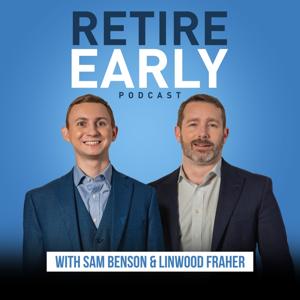

In this episode of the Retire Early Podcast, financial advisors and retirement planners Sam Benson & Linwood Fraher of Martin Wealth Solutions continue their asset class series with a conversation around alternative investments — what they are, why they exist, and how (or if) they belong in a retirement plan.
Sam and Linwood explain what qualifies as an alternative investment, including real estate, private investments, and other non-traditional assets. They discuss potential benefits like diversification and income, along with the trade-offs such as liquidity constraints, complexity, and risk. Most importantly, they emphasize why alternatives should be used intentionally and carefully within a broader retirement strategy — not as a silver bullet.
This episode helps listeners understand when alternatives can add value and when they may create unnecessary complications for retirees.
http://retirewithmartin.com/ ← Learn about working with us
00:00 – Introduction: What are alternative investments?
Disclaimer
Opinions expressed herein are solely those of Martin Wealth Solutions, unless otherwise specifically cited. Material presented is believed to be from reliable sources, but no representations are made by our firm as to another parties’ informational accuracy or completeness. Content provided herein is for informational purposes only and should not be used or construed as investment advice or a recommendation regarding the purchase or sale of any security. There is no guarantee that any statements, opinions or forecasts provided herein will prove to be correct. All information or ideas provided should be discussed in detail with an advisor, accountant or legal counsel prior to implementation. Past performance may not be indicative of future results. Indices are not available for direct investment. Any investor who attempts to mimic the performance of an index would incur fees and expenses which would reduce returns. Securities investing involves risk, including the potential for loss of principal. There is no assurance that any investment plan or strategy will be successful.
 View all episodes
 By Sam Benson & Linwood Fraher
In this episode of the Retire Early Podcast, financial advisors and retirement planners Sam Benson & Linwood Fraher of Martin Wealth Solutions continue their asset class series with a conversation around alternative investments — what they are, why they exist, and how (or if) they belong in a retirement plan.
Sam and Linwood explain what qualifies as an alternative investment, including real estate, private investments, and other non-traditional assets. They discuss potential benefits like diversification and income, along with the trade-offs such as liquidity constraints, complexity, and risk. Most importantly, they emphasize why alternatives should be used intentionally and carefully within a broader retirement strategy — not as a silver bullet.
This episode helps listeners understand when alternatives can add value and when they may create unnecessary complications for retirees.
http://retirewithmartin.com/ ← Learn about working with us
00:00 – Introduction: What are alternative investments?
Disclaimer
Opinions expressed herein are solely those of Martin Wealth Solutions, unless otherwise specifically cited. Material presented is believed to be from reliable sources, but no representations are made by our firm as to another parties’ informational accuracy or completeness. Content provided herein is for informational purposes only and should not be used or construed as investment advice or a recommendation regarding the purchase or sale of any security. There is no guarantee that any statements, opinions or forecasts provided herein will prove to be correct. All information or ideas provided should be discussed in detail with an advisor, accountant or legal counsel prior to implementation. Past performance may not be indicative of future results. Indices are not available for direct investment. Any investor who attempts to mimic the performance of an index would incur fees and expenses which would reduce returns. Securities investing involves risk, including the potential for loss of principal. There is no assurance that any investment plan or strategy will be successful.