
Sign up to save your podcasts
Or

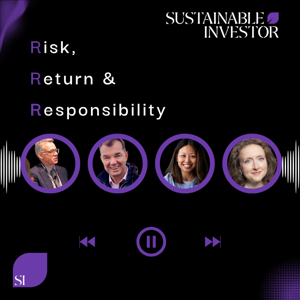

In this ‘interview-only’ episode, we explore the role of Australia’s superannuation funds in the country’s embrace of clean energy, with Jeremy Cooper and David Bell of the Conexus Institute.
Risk, Return and Responsibility – the monthly podcast from Sustainable Investor – aims to provide institutional asset owners with news and views shaping both the sustainable investment landscape and our wider economic, environmental and social systems.
In this episode, Guy Opperman, the UK’s longest-serving Pensions Minister & Chair of Sustainable Investor’s editorial board, reports from Sydney, on the barriers facing Australia’s US$2.8 trillion superannuation sector in supporting the country’s net zero transition.
In discussion with David Bell and Jeremy Cooper of the Conexus Institute, Guy finds out whether regulation and policy are giving supers the right incentives to invest sustainably, why so much capital is flowing into overseas infrastructure, and how Australia’s path to net zero could be different from other developed economies.
Guests: David Bell, Executive Director, Conexus Institute, a research organisation focused on improving Australia’s superannuation and retirement systems, and a former CIO of Mine Super. Jeremy Cooper, Chair of the Advisory Board, Conexus Institute, former deputy chair of the Australian Securities and Investments Commission (ASIC), Australia’s financial regulator and author of the government’s review of the super system.
Interview highlights:
Thanks for joining us: If you like what you hear, you can also subscribe to Sustainable Investor, subscribe to this podcast, where you can also find our contact details. We’d love to hear your ideas as we plan future episodes.
For more info or to sponsor contact [email protected]
 View all episodes
 By Asset Owner Network
In this ‘interview-only’ episode, we explore the role of Australia’s superannuation funds in the country’s embrace of clean energy, with Jeremy Cooper and David Bell of the Conexus Institute.
Risk, Return and Responsibility – the monthly podcast from Sustainable Investor – aims to provide institutional asset owners with news and views shaping both the sustainable investment landscape and our wider economic, environmental and social systems.
In this episode, Guy Opperman, the UK’s longest-serving Pensions Minister & Chair of Sustainable Investor’s editorial board, reports from Sydney, on the barriers facing Australia’s US$2.8 trillion superannuation sector in supporting the country’s net zero transition.
In discussion with David Bell and Jeremy Cooper of the Conexus Institute, Guy finds out whether regulation and policy are giving supers the right incentives to invest sustainably, why so much capital is flowing into overseas infrastructure, and how Australia’s path to net zero could be different from other developed economies.
Guests: David Bell, Executive Director, Conexus Institute, a research organisation focused on improving Australia’s superannuation and retirement systems, and a former CIO of Mine Super. Jeremy Cooper, Chair of the Advisory Board, Conexus Institute, former deputy chair of the Australian Securities and Investments Commission (ASIC), Australia’s financial regulator and author of the government’s review of the super system.
Interview highlights:
Thanks for joining us: If you like what you hear, you can also subscribe to Sustainable Investor, subscribe to this podcast, where you can also find our contact details. We’d love to hear your ideas as we plan future episodes.
For more info or to sponsor contact [email protected]