
Sign up to save your podcasts
Or

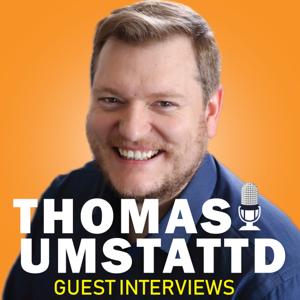

Alex Strathdee had me on his podcast Before the Bestseller to talk about AI.
Here is an AI summary:
In the rapidly evolving landscape of book marketing, authors have long been told to master Search Engine Optimization (SEO). But as we move deeper into the age of artificial intelligence, a new, perhaps more critical, strategy has emerged: AI Optimization (AIO), sometimes called Generative Engine Optimization (GEO).
In a recent episode of Before the Bestseller, host Alex Strathdee sat down with the legendary Thomas Umstattd Jr.—host of the Novel Marketing Podcast and a self-described “book marketing hero”—to uncover the strategies, struggles, and secrets behind getting AI to recommend your book over the competition.
This isn’t just about keywords anymore; it’s about training the digital brain of the internet to recognize your authority. Here is a deep dive into the insights Thomas shared on how authors can navigate this new frontier.
To understand the power—and the quirks—of AI optimization, Thomas shared a telling anecdote from a recent family trip to San Antonio, Texas. When planning the trip, he didn’t turn to Google or Yelp; he asked an AI to build an itinerary for his family, specifically requesting fun activities for children.
The AI recommended the Rainforest Cafe on the famous Riverwalk. While the Riverwalk is known for authentic Tex-Mex, the AI prioritized the Rainforest Cafe because it offered “animatronic animals,” fitting the specific prompt for “fun activities for kids”.
When Thomas arrived, there was a 40-minute wait, while better, more authentic restaurants nearby were actively soliciting customers. The food at the Rainforest Cafe was, in Thomas’s words, “awful,” but the establishment was thriving because it was the kind of place ChatGPT would recommend.
The lesson for authors is stark but valuable: The goal isn’t to trick AI into selling a bad product, but to realize that AI recommendations can drive massive traffic. If you want your book to be the one readers find when they ask ChatGPT, “What should I read next?”, you need to understand how the AI thinks.
If you ask an AI model to recommend a book based on a photo of your bookshelf, it can do so with shocking accuracy because it analyzes the books in its Large Language Model (LLM). But how does your specific book get into that model?
According to Thomas, one major source is piracy. Recent court cases have revealed that AI companies often train their models on massive datasets downloaded from pirate websites. While this sounds alarming, the courts have generally ruled this as “fair use” because the AI’s reading of the text is considered transformative.
Thomas offers a controversial take for nonfiction authors: piracy might actually be beneficial. If pirated copies lead to a million people reading your book and establishing you as a thought leader, you will likely make more money in the long run through speaking engagements and podcast invites than you would have from book sales alone. In the world of nonfiction, the idea itself is often less valuable than the execution and the authority of the author.
However, AI training data usually cuts off at the top 7 million most popular books. If your book is new or hasn’t reached that threshold, the AI might not “know” it exists in its core training data. In these cases, the AI relies on external sources it can read, such as Goodreads.
A major pitfall for authors testing their AI visibility is the “sycophancy” of current models. If you ask ChatGPT about your own book, it will often flatter you, telling you exactly what it thinks you want to hear. It might even hallucinate that your book is a bestseller when it isn’t.
To combat this, Thomas developed a suite of “AI Knowledge Checkers” in his Patron Toolbox. These tools are designed to blind the AI from the live web, forcing it to answer only from its internal context window. This reveals whether the AI actually knows who you are or if it’s just quickly Googling you to be polite.
If you want to rank in AI recommendations, you must stop relying solely on Amazon or social media. You need a robust author website. Thomas emphasizes that the principles of SEO (Search Engine Optimization) and AIO are nearly identical. If you have been ignoring your website, you are already behind.
Thomas highlighted three specific areas of your website that need to be optimized:
1. The Homepage Your homepage needs to be technically sound and content-rich. Thomas’s toolbox includes a scanner that acts like a “curmudgeonly webmaster,” giving you a brutally honest score on your homepage’s effectiveness.
2. The Book Page A common mistake authors make is having a single page listing all their books. For AIO, every single book needs its own dedicated, robust page. This page shouldn’t just be a sales link; it should be a service center for the book. It needs to include:
3. The About Page Most authors write about pages that are too short and written in the first person (e.g., “I started writing when…”). AI struggles to rank the word “I.” Thomas advises rewriting your bio in the third person to create a narrative the AI can easily ingest and cite. A robust About page also protects your reputation, ensuring your website is the primary source of your life story rather than a third-party article.
Just like Google uses hyperlinks as “votes” of authority to rank websites, AI models determine what is true and important based on citations and links from reputable sources. This is “Off-Page AIO.”
Podcasts as Backlinks For nonfiction authors, being a guest on podcasts is the most organic way to generate these authority signals. Every time you appear on a show, the show notes link back to your website. These non-reciprocal links are high-value currency for AI algorithms.
Local Media and Journalism Don’t overlook local news. Local TV stations often publish articles without paywalls, making them easy for AI bots to scrape and index. Furthermore, major publications like The Wall Street Journal constitute high-authority sources because they have signed licensing deals with AI companies. Getting mentioned in these “legacy” media outlets tells the AI that you are a figure of importance.
Amidst all the talk of algorithms, scanners, and bots, Thomas ended the conversation with a vital reminder: AI does not buy books. Humans do.
Thomas advises against creating corporate-style “customer personas.” Instead, he advocates for the “Timothy” strategy—identifying a specific, actual human being who represents your target reader. When you focus on thrilling that one real person, you avoid the trap of writing for a stereotype. You can talk to “Timothy,” ask him for feedback, and ensure your marketing actually resonates.
Ultimately, the best marketing strategy is to love and serve your reader. If you do that, the algorithms—and the sales—will follow.
To help authors navigate this technical landscape, Thomas has made his suite of tools available at PatronToolbox.com. These include the website scanners, the AI knowledge checkers, and even a “hook identifier” that helps you find news angles for your book PR.
As we look toward 2025, the authors who succeed will be those who balance technical optimization with genuine human connection.
Tune in next week to Before the Bestseller when we are joined by Veronica Yager to discuss what it takes to make a book thrive in the coming year, including high-impact calls to action and the secrets of Kindle Unlimited.
 View all episodes
 By Thomas Umstattd Jr.
Alex Strathdee had me on his podcast Before the Bestseller to talk about AI.
Here is an AI summary:
In the rapidly evolving landscape of book marketing, authors have long been told to master Search Engine Optimization (SEO). But as we move deeper into the age of artificial intelligence, a new, perhaps more critical, strategy has emerged: AI Optimization (AIO), sometimes called Generative Engine Optimization (GEO).
In a recent episode of Before the Bestseller, host Alex Strathdee sat down with the legendary Thomas Umstattd Jr.—host of the Novel Marketing Podcast and a self-described “book marketing hero”—to uncover the strategies, struggles, and secrets behind getting AI to recommend your book over the competition.
This isn’t just about keywords anymore; it’s about training the digital brain of the internet to recognize your authority. Here is a deep dive into the insights Thomas shared on how authors can navigate this new frontier.
To understand the power—and the quirks—of AI optimization, Thomas shared a telling anecdote from a recent family trip to San Antonio, Texas. When planning the trip, he didn’t turn to Google or Yelp; he asked an AI to build an itinerary for his family, specifically requesting fun activities for children.
The AI recommended the Rainforest Cafe on the famous Riverwalk. While the Riverwalk is known for authentic Tex-Mex, the AI prioritized the Rainforest Cafe because it offered “animatronic animals,” fitting the specific prompt for “fun activities for kids”.
When Thomas arrived, there was a 40-minute wait, while better, more authentic restaurants nearby were actively soliciting customers. The food at the Rainforest Cafe was, in Thomas’s words, “awful,” but the establishment was thriving because it was the kind of place ChatGPT would recommend.
The lesson for authors is stark but valuable: The goal isn’t to trick AI into selling a bad product, but to realize that AI recommendations can drive massive traffic. If you want your book to be the one readers find when they ask ChatGPT, “What should I read next?”, you need to understand how the AI thinks.
If you ask an AI model to recommend a book based on a photo of your bookshelf, it can do so with shocking accuracy because it analyzes the books in its Large Language Model (LLM). But how does your specific book get into that model?
According to Thomas, one major source is piracy. Recent court cases have revealed that AI companies often train their models on massive datasets downloaded from pirate websites. While this sounds alarming, the courts have generally ruled this as “fair use” because the AI’s reading of the text is considered transformative.
Thomas offers a controversial take for nonfiction authors: piracy might actually be beneficial. If pirated copies lead to a million people reading your book and establishing you as a thought leader, you will likely make more money in the long run through speaking engagements and podcast invites than you would have from book sales alone. In the world of nonfiction, the idea itself is often less valuable than the execution and the authority of the author.
However, AI training data usually cuts off at the top 7 million most popular books. If your book is new or hasn’t reached that threshold, the AI might not “know” it exists in its core training data. In these cases, the AI relies on external sources it can read, such as Goodreads.
A major pitfall for authors testing their AI visibility is the “sycophancy” of current models. If you ask ChatGPT about your own book, it will often flatter you, telling you exactly what it thinks you want to hear. It might even hallucinate that your book is a bestseller when it isn’t.
To combat this, Thomas developed a suite of “AI Knowledge Checkers” in his Patron Toolbox. These tools are designed to blind the AI from the live web, forcing it to answer only from its internal context window. This reveals whether the AI actually knows who you are or if it’s just quickly Googling you to be polite.
If you want to rank in AI recommendations, you must stop relying solely on Amazon or social media. You need a robust author website. Thomas emphasizes that the principles of SEO (Search Engine Optimization) and AIO are nearly identical. If you have been ignoring your website, you are already behind.
Thomas highlighted three specific areas of your website that need to be optimized:
1. The Homepage Your homepage needs to be technically sound and content-rich. Thomas’s toolbox includes a scanner that acts like a “curmudgeonly webmaster,” giving you a brutally honest score on your homepage’s effectiveness.
2. The Book Page A common mistake authors make is having a single page listing all their books. For AIO, every single book needs its own dedicated, robust page. This page shouldn’t just be a sales link; it should be a service center for the book. It needs to include:
3. The About Page Most authors write about pages that are too short and written in the first person (e.g., “I started writing when…”). AI struggles to rank the word “I.” Thomas advises rewriting your bio in the third person to create a narrative the AI can easily ingest and cite. A robust About page also protects your reputation, ensuring your website is the primary source of your life story rather than a third-party article.
Just like Google uses hyperlinks as “votes” of authority to rank websites, AI models determine what is true and important based on citations and links from reputable sources. This is “Off-Page AIO.”
Podcasts as Backlinks For nonfiction authors, being a guest on podcasts is the most organic way to generate these authority signals. Every time you appear on a show, the show notes link back to your website. These non-reciprocal links are high-value currency for AI algorithms.
Local Media and Journalism Don’t overlook local news. Local TV stations often publish articles without paywalls, making them easy for AI bots to scrape and index. Furthermore, major publications like The Wall Street Journal constitute high-authority sources because they have signed licensing deals with AI companies. Getting mentioned in these “legacy” media outlets tells the AI that you are a figure of importance.
Amidst all the talk of algorithms, scanners, and bots, Thomas ended the conversation with a vital reminder: AI does not buy books. Humans do.
Thomas advises against creating corporate-style “customer personas.” Instead, he advocates for the “Timothy” strategy—identifying a specific, actual human being who represents your target reader. When you focus on thrilling that one real person, you avoid the trap of writing for a stereotype. You can talk to “Timothy,” ask him for feedback, and ensure your marketing actually resonates.
Ultimately, the best marketing strategy is to love and serve your reader. If you do that, the algorithms—and the sales—will follow.
To help authors navigate this technical landscape, Thomas has made his suite of tools available at PatronToolbox.com. These include the website scanners, the AI knowledge checkers, and even a “hook identifier” that helps you find news angles for your book PR.
As we look toward 2025, the authors who succeed will be those who balance technical optimization with genuine human connection.
Tune in next week to Before the Bestseller when we are joined by Veronica Yager to discuss what it takes to make a book thrive in the coming year, including high-impact calls to action and the secrets of Kindle Unlimited.