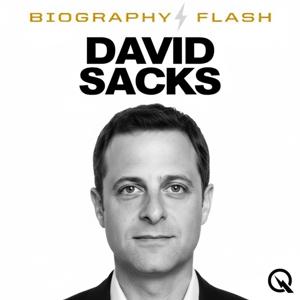
David Sacks Biography Flash a weekly Biography.
David Sacks has spent the past few days at the center of an ethical firestorm that could become a defining chapter of his biography. According to a recent New York Times investigation, amplified by Public Citizen and Fortune, Sacks, who serves as President Trumps special government employee overseeing AI and crypto policy, has retained hundreds of stakes in AI‑related companies even after promising to largely divest. Public Citizen, citing that Times reporting, alleges that Sacks has positioned himself to personally benefit from policies he is helping to shape, with at least 449 AI‑linked holdings that could be aided directly or indirectly by his work. Public Citizen goes so far as to say he can no longer credibly serve as White House AI advisor and calls for his resignation, a demand that thrusts him from tech-world power player into Washington scandal protagonist almost overnight.
TechCrunch reports that Sacks obtained multiple White House ethics waivers and pledged to sell most of his AI and crypto assets, but the Times found his public ethics filings omit the remaining value of the investments and the timing of any sales, raising questions about whether his divestiture was more cosmetic than complete. TechCrunch also notes expert Kathleen Clark, a government ethics scholar, who bluntly characterized the arrangement as graft, highlighting how closely Sacks business interests, his All-In podcast brand deals, and his government portfolio now overlap.
Fortune underscores the broader context, portraying Sacks as the Trump administrations AI and crypto czar whose proximity to power, access to CEOs like Nvidias Jensen Huang, and role in loosening export limits on advanced chips have all increased his influence and potentially his upside. This week, that same story is being retold with a darker edge: watchdogs see an official who parlayed a hit podcast, a venture portfolio, and a Silicon Valley network into a policy job that might boomerang back into private profit. Sacks has pushed back on X, according to TechCrunch, insisting that the Times spent months on accusations that were debunked in detail and that his government service has cost him money rather than enriched him. His legal team has accused the paper of setting out with prewritten marching orders to find a conflict of interest. Those responses are on the record, but the underlying financial details remain murky, and independent confirmation of his claims has not yet surfaced, leaving some of the defense in the realm of assertion rather than verifiable fact.
There are no widely reported major new public appearances for Sacks in just the past 24 hours beyond ongoing social media sparring and secondary coverage recycling the ethics story, and no fresh business announcements have broken through the noise. Right now, the long-term biographical weight clearly sits with this ethics controversy: whether it ends in vindication, reform, or resignati
This content was created in partnership and with the help of Artificial Intelligence AI.



 View all episodes
