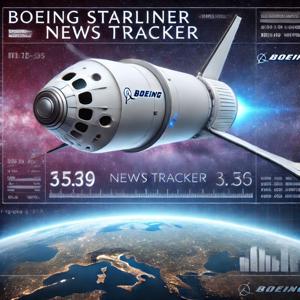
Boeing's Starliner program has undergone significant changes in recent days as NASA and Boeing work to address technical challenges that emerged during the spacecraft's debut crewed mission last year.
The most significant development involves a restructured contract between NASA and Boeing. The two organizations have agreed to modify their commercial crew program arrangement, reducing the total number of planned Starliner missions from six to four, with two available as options. This modification comes directly in response to propulsion and thruster problems that occurred during the 2024 crewed test flight, which forced astronauts Sunita Williams and Butch Wilmore to remain on the International Space Station far longer than originally scheduled before returning home aboard a SpaceX Crew Dragon capsule instead.
Moving forward, the next Starliner flight will be a cargo-only mission designated Starliner-1, scheduled for no earlier than April 2026. This uncrewed test flight represents a strategic shift in approach, allowing NASA and Boeing to focus on safely certifying the system throughout 2026 before attempting crewed rotations when the spacecraft is deemed ready. Following successful certification and mission completion, Starliner will eventually fly up to three crew rotations to the ISS, though the exact timeline remains dependent on completing necessary system upgrades and validations.
The 2024 mission revealed multiple technical issues beyond the thruster failures, including helium leaks and other concerns that prevented the spacecraft from receiving full operational certification. These complications represented one of NASA's most significant human spaceflight safety challenges since the Columbia shuttle accident in 2003, though no crew members were harmed during the incident.
Meanwhile, the Atlas V rocket, which is contracted to launch Boeing's Starliner missions to the ISS, is approaching retirement. Recent reports indicate that following the November launch of ViaSat-3 F2 satellites, the Atlas V is down to just two types of remaining launches: six Boeing Starliner missions to the ISS and five Amazon Project Kuiper missions to low Earth orbit. Once these contracted flights are complete, the Atlas V will officially retire after decades of service. NASA's use of the Starliner is expected to stretch into the late 2020s, potentially extending into 2030.
On the broader commercial aircraft front, Boeing has announced plans to accelerate deliveries of its 737 MAX and 787 Dreamliner programs in 2025 and 2026, driven by improvements in factory productivity and stabilized supply chain operations.
Thank you for tuning in to this space news update. Be sure to subscribe for more developments as the Starliner program continues its path toward certification.
This has been a Quiet Please production. For more, check out quietplease dot ai.
Some great Deals https://amzn.to/49SJ3Qs
For more check out http://www.quietplease.ai
This content was created in partnership and with the help of Artificial Intelligence AI



 View all episodes
