
Sign up to save your podcasts
Or


On December 13, 2025, a mass shooting inside a classroom at Brown University left two students dead and nine others injured. Two days later, a Massachusetts Institute of Technology professor was murdered in Brookline, Massachusetts. Authorities later confirmed that both crimes were committed by the same individual.
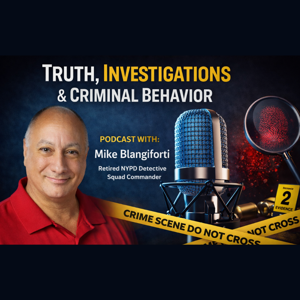
In this episode of Truth Investigations and Criminal Behavior, retired NYPD Detective Squad Commander Mike Blangiforti examines the full investigative timeline, the multi-state manhunt, and the leadership and communication decisions made while the suspect remained at large.
This is not a true crime commentary episode and not a critique of frontline police officers or detectives. It is a command-level, professional analysis of how information was released, how press conferences were conducted, and how public messaging shaped perception during an active investigation.
Topics include:
The Brown University shooting and immediate response
The identification and release of a person of interest
The killing of an MIT professor and escalation of the investigation
How investigators connected the cases across state lines
The role of public tips, surveillance, and vehicle tracking
Why crisis communication matters during ongoing investigations
What questions remain unanswered after the suspect’s death
This episode is intended to provide context, clarity, and insight into how complex investigations actually unfold — without speculation, sensationalism, or hindsight bias.
 View all episodes
 By blangifm
On December 13, 2025, a mass shooting inside a classroom at Brown University left two students dead and nine others injured. Two days later, a Massachusetts Institute of Technology professor was murdered in Brookline, Massachusetts. Authorities later confirmed that both crimes were committed by the same individual.
In this episode of Truth Investigations and Criminal Behavior, retired NYPD Detective Squad Commander Mike Blangiforti examines the full investigative timeline, the multi-state manhunt, and the leadership and communication decisions made while the suspect remained at large.
This is not a true crime commentary episode and not a critique of frontline police officers or detectives. It is a command-level, professional analysis of how information was released, how press conferences were conducted, and how public messaging shaped perception during an active investigation.
Topics include:
The Brown University shooting and immediate response
The identification and release of a person of interest
The killing of an MIT professor and escalation of the investigation
How investigators connected the cases across state lines
The role of public tips, surveillance, and vehicle tracking
Why crisis communication matters during ongoing investigations
What questions remain unanswered after the suspect’s death
This episode is intended to provide context, clarity, and insight into how complex investigations actually unfold — without speculation, sensationalism, or hindsight bias.