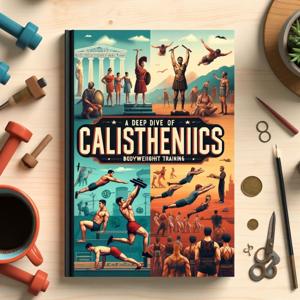
In the annals of physical culture, few disciplines have stood the test of time as gracefully as calisthenics. Born in the crucible of ancient Greece, where the pursuit of physical excellence was a noble calling, calisthenics has endured through the centuries, adapting to the needs and sensibilities of each successive generation. Today, in a world where fitness is often equated with expensive equipment and complex routines, calisthenics stands as a testament to the power of simplicity, a reminder that the human body itself is the most versatile and effective tool for achieving strength, grace, and vitality.
To fully appreciate the beauty and efficacy of calisthenics, one must first understand its fundamental principles. At its core, calisthenics is a system of exercises that relies on the body's own weight for resistance. Rather than lifting external weights or using complicated machines, the practitioner of calisthenics harnesses the power of gravity and leverage to challenge and strengthen the muscles, tendons, and bones. This elegant simplicity is the key to calisthenics' enduring appeal, for it requires no special equipment or facilities, only the willingness to push one's own body to its limits.
The origins of calisthenics can be traced back to the golden age of ancient Greece, where physical prowess was prized as highly as intellectual achievement. In the gymnasiums and athletics fields of Athens and Sparta, young men and women trained their bodies through a regimen of running, jumping, wrestling, and other exercises that emphasized strength, agility, and coordination. These early calisthenics were not merely a means to an end, but an end in themselves, a way of cultivating the harmonious development of body and mind that the Greeks called "arete."
Among the most famous advocates of calisthenics in the ancient world was Herodicus, a physician and teacher who lived in the 5th century BCE. Herodicus believed that physical exercise was essential for the maintenance of health and the prevention of disease, and he developed a system of therapeutic gymnastics that combined calisthenics with massage, hydrotherapy, and other treatments. His ideas would be taken up and expanded upon by his student, the legendary physician Hippocrates, who is often called the father of Western medicine.
As the centuries passed, calisthenics would fall in and out of favor, but it never entirely disappeared from the repertoire of physical culture. In the 19th century, as the Industrial Revolution transformed society and gave rise to new concerns about health and fitness, calisthenics enjoyed a major revival. One of the key figures in this renaissance was Catherine Beecher, an American educator and writer who believed that physical education was essential for the health and well-being of women. In her 1856 book, "Physiology and Calisthenics for Schools and Families," Beecher laid out a comprehensive system of exercises that could be performed without any special equi
This content was created in partnership and with the help of Artificial Intelligence AI.



 View all episodes
