
Sign up to save your podcasts
Or

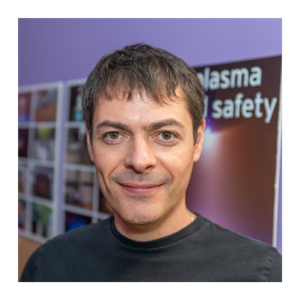

Next in the "Can Plasma?" series: can plasma be scaled up? You built it in the lab, it works beautifully — now turn it into an industrial process. I wrote down 14 reasons that's harder than it sounds.
⏱️ Chapters
00:00 The question: can plasma be scaled up?
00:28 Why I wrote down 14 points for this one
00:36 #1 Preserving the plasma regime — from a 2mm jet to a whole strawberry
01:53 #2 Power supply scaling — from a few watts to 100 kilowatts
02:52 The hard x-ray problem (Bremsstrahlung above ~100 kV)
03:13 #3 Uniformity — keeping electrodes parallel across 8 meters within microns
05:07 #4 Gas flow and mixing — non-equilibrium plasmas don't scale linearly
05:12 #5 Heat management — invisible at lab scale, critical at industrial scale
05:55 #6 Electrode erosion, durability, and 24/7 operation
07:14 #7 Chemistry changes with scale (and the ozone production/destruction tradeoff)
08:02 #8 Mass transfer limits — getting reactants out of the plasma
08:34 #9 Diagnostics — you can't deploy 500 optical emission spectrometers
09:12 #10 Energy efficiency — does 95% lab efficiency hold at scale?
09:46 #11 Modular vs monolithic — why industrial ozone systems use hundreds of small electrodes
10:35 #12 Safety and regulatory burden (FDA, CDC, USDA)
11:41 #13 Manufacturability and repeatability at scale
12:26 #14 Control, feedback, and electromagnetic interference between power supplies
13:21 Wrap-up: lasers and metallurgy face the same problem
13:45 The field is wide open — we need more people. Come help us scale plasmas.
If you're a plasma researcher, process engineer, founder, or student deciding whether this is the field for you — this is the episode.
🔔 Subscribe for more in the "Can Plasma?" series: @gregfridman
#CanPlasma #PlasmaScience #ScaleUp #PlasmaEngineering #IndustrialEngineering #ProcessEngineering #Bremsstrahlung #Ozone #ChemicalEngineering
 View all episodes
 By Gregory Fridman
Next in the "Can Plasma?" series: can plasma be scaled up? You built it in the lab, it works beautifully — now turn it into an industrial process. I wrote down 14 reasons that's harder than it sounds.
⏱️ Chapters
00:00 The question: can plasma be scaled up?
00:28 Why I wrote down 14 points for this one
00:36 #1 Preserving the plasma regime — from a 2mm jet to a whole strawberry
01:53 #2 Power supply scaling — from a few watts to 100 kilowatts
02:52 The hard x-ray problem (Bremsstrahlung above ~100 kV)
03:13 #3 Uniformity — keeping electrodes parallel across 8 meters within microns
05:07 #4 Gas flow and mixing — non-equilibrium plasmas don't scale linearly
05:12 #5 Heat management — invisible at lab scale, critical at industrial scale
05:55 #6 Electrode erosion, durability, and 24/7 operation
07:14 #7 Chemistry changes with scale (and the ozone production/destruction tradeoff)
08:02 #8 Mass transfer limits — getting reactants out of the plasma
08:34 #9 Diagnostics — you can't deploy 500 optical emission spectrometers
09:12 #10 Energy efficiency — does 95% lab efficiency hold at scale?
09:46 #11 Modular vs monolithic — why industrial ozone systems use hundreds of small electrodes
10:35 #12 Safety and regulatory burden (FDA, CDC, USDA)
11:41 #13 Manufacturability and repeatability at scale
12:26 #14 Control, feedback, and electromagnetic interference between power supplies
13:21 Wrap-up: lasers and metallurgy face the same problem
13:45 The field is wide open — we need more people. Come help us scale plasmas.
If you're a plasma researcher, process engineer, founder, or student deciding whether this is the field for you — this is the episode.
🔔 Subscribe for more in the "Can Plasma?" series: @gregfridman
#CanPlasma #PlasmaScience #ScaleUp #PlasmaEngineering #IndustrialEngineering #ProcessEngineering #Bremsstrahlung #Ozone #ChemicalEngineering