
Sign up to save your podcasts
Or



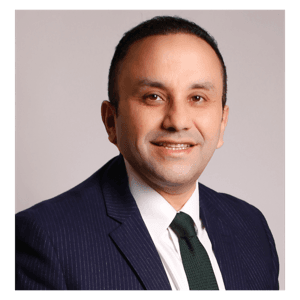
In this episode of Oncology Unscripted, hosts Mark Liu and Deirdre Saulet speak with Arif Kamal, MD, Chief Patient Officer at the American Cancer Society (ACS). Dr. Kamal discusses his recent appointment to this inaugural role at ACS, leading into a conversation about how he expects the cancer care field to evolve. Namely, a shift for providers toward building a skillset for compassionate patient conversations, a shift toward self-administered treatment modalities whenever possible, and new payment models for multi-cancer early detection tests. Dr. Kamal also shares how ACS's recently launched Access to Clinical Trials and Support program—an education-forward initiative designed is helping to reduce the challenges and barriers patients face when enrolling in clinical trials. "When you think about...the goal of cancer care...it's about more and better days. It is a false choice to choose between one or the other...As we're getting people to the other side [of treatment], are we leaving them financially devastated, significantly lonely, without support around them?" – Arif Kamal, MD
Arif Kamal, MD Chief Patient Officer American Cancer Society
To submit a topic of discussion to the podcast, please email [email protected] and [email protected].
The 2026 Oncology Unscripted series is exclusively sponsored by Advarra.
Resources Spirituality and Cultural Humility: Core Components of Comprehensive Palliative Care
Together As One: Advancing Joy, Resilience, and Peer Support in Oncology Care
Oncology Unscripted: Transforming Palliative Care in Oncology
Oncolytic viruses are a novel and effective way to treat cancers by infecting and destroying cancer cells, but clinical delivery necessitates creative strategies to account for the required safety protocols, deep-freeze storage, and rigorous clinical oversight. The University of North Carolina (UNC) Lineberger Comprehensive Cancer Center is a referral center for the only currently FDA-approved oncolytic virus therapy for cancer, talimogene laherparepvec, and its staff noticed that a common pain point for patients receiving this treatment is the extensive time spent in appointments.
In this episode, CANCER BUZZ speaks with 2026 ACCC Innovator Award winner Morgan Gwynn, PharmD, BCOP, CPP, an Oncology Clinical Pharmacist Practitioner at UNC Lineberger, about her program's development of a pharmacist-led care model to make oncolytic virus treatments more efficient for patients and providers. By moving toxicity assessment, clinical review, and dose planning to pre-treatment telemedicine visits, the program reduced treatment time by more than 2 hours per session and helped decrease unnecessary clinic visits and drug waste.
"Just because there's one way that things are done, [that] doesn't mean that's the only way things can be done...Finding creative solutions that benefit...the patient, the physician, and our pharmacy...was key." – Morgan Gwynn, PharmD, BCOP, CPP
Guest: Morgan Gwynn, PharmD, BCOP, CPP Oncology Clinical Pharmacist Practitioner University of North Carolina Medical Center UNC Lineberger Comprehensive Cancer Center Chapel Hill, North CarolinaResources:
ACCC 43rd National Oncology Conference
2026 ACCC Innovator UNC Lineberger
A Pharmacist-Led Strategy to Improve Care With Oncolytic Virus Treatments
Heart and Healing: Embedding Pharmacists in Cardio-Oncology Clinics
Oncology Pharmacy Virtual Office Hours Highlight Emerging Strategies for Implementing Bispecific Antibodies
In 2025, the FDA approved the antibody-drug conjugate (ADC) enfortumab vedotin combined with pembrolizumab for patients with cisplatin-ineligible muscle-invasive bladder cancer, unlocking a new perioperative treatment option. To administer this ADC-based therapy alongside surgical intervention, multidisciplinary teams must prioritize collaborative workflows at all points of the treatment journey. In this episode, CANCER BUZZ speaks with Manojkumar Bupathi, MD, President of Rocky Mountain Cancer Centers, about how ADCs are reshaping the care model toward earlier, structured collaboration between urology and medical oncology.
Guests: Manojkumar Bupathi, MD President Rocky Mountain Cancer Centers Co-Chair, GU Executive Committee Sarah Cannon Research Institute Denver, CO
"The challenge wasn't learning the drug itself. The challenge was how you integrate the regimen into your treatment paradigm." —Manojkumar Bupathi, MD
"There's always this relationship that happens from the beginning and is maintained throughout the entire process." —Manojkumar Bupathi, MD
Resources:
ACCC Bladder Cancer Resources
ACCC Antibody-Drug Conjugate Resources
At the University of California, San Francisco (UCSF), the team treating patients with bladder cancer and other genitourinary malignancies utilizes a multidisciplinary team approach to ensure care is coordinated, personalized, and patient-centered. This is particularly important when administering antibody-drug conjugates, a promising tool for some patients with muscle-invasive bladder cancer that comes with a high risk of adverse events (AEs). In this episode, CANCER BUZZ speaks with Terence Friedlander, MD, and Iva Petrovchich Colón, NP, both part of the team treating bladder cancer at UCSF, about how their cancer program manages the toxicity profile of ADCs in order to prioritize patient outcomes and quality of life.
Guests:
Terence Friedlander, MD Robert and Virginia O'Reilly Family Professor of Medicine Chief of Hematology-Oncology, Zuckerberg San Francisco General Hospital
UCSF Helen Diller Family Comprehensive Cancer Center San Francisco, CA
Iva Colón, NP Nurse Practitioner, Genitourinary Medical Oncology UCSF Health Genitourinary Medical Oncology Mission Bay San Francisco, CA
"The median onset is in the mid 60s, and folks who are in their 60s are more mature, they may have more comorbidities, more medical problems, and we have to be really sensitive to that." —Terence Friedlander, MD
"It takes a village and having that having open and direct communication is key." —Iva Colón, NP
Resources:
ACCC Bladder Cancer Resources
ACCC Antibody-Drug Conjugate Resources
Myelodysplastic syndromes (MDS), a rare category of bone marrow disorders that may develop into acute myeloid leukemia, are categorized into risk groups ranging from very low to very high risk. However, this language can be misleading to patients. Low risk (LR) does not equate to low impact or lack of urgency. In this episode, CANCER BUZZ speaks with Amy DeZern, MD, MHS, from Sidney Kimmel Comprehensive Cancer Center, and Christin Blair DeStefano, MD, FACP, from Walter Reed National Military Medical Center, about the importance of aligning language and terminology regarding LR-MDS across academic and community settings. These experts candidly discuss their own collaboration and the importance of early conversations with patients to align expectations on goals, disease trajectory, and treatment sequencing.
Guests: Amy DeZern, MD, MHS Hematologist/Oncologist Director, Bone Marrow Failure and MDS Program Sidney Kimmel Comprehensive Cancer Center Baltimore, MD
Christin Blair DeStefano, MD, FACP Hematologist/Oncologist Walter Reed National Military Medical Center Bethesda, MD
"I really try and individualize [language] to a patient and their family, because I worry that sometimes the terminology 'lower risk' may not correctly convey the impact the disease is going to have on an individual human's life." — Amy DeZern, MD, MHS
"Frequent reassessment—questioning our patients about quality of life and if we're meeting the goals they have—should be something that's readily reassessed, especially in the lower risk space, every 2 to 3 months, just to make sure we don't put anybody on autopilot." — Amy De Zern, MD, MHS
"There's been such an explosion in understanding the molecular landscape of MDS and slicing and dicing it into different diseases that fall under the MDS umbrella. It has sometimes created a little bit of confusion." — Christin Blair DeStefano, MD, FACP
Resources:
ACCC Hematologic Malignancies Resources
Blood Cancer Awareness Month: Tackling Communication Challenges
Addressing Frequency of Care to Improve Quality of Life in Patients with Low-Risk MDS
Defining and Managing Erythropoietin Stimulating Agents (ESAs) Failure in Patients with Low-Risk MDS
From the moment a woman learns that she has breast cancer, her life is forever changed—from the treatment challenges of chemotherapy, radiation, and surgery to the personal and emotional challenges of a change in identity, a loss of control, and physical self-acceptance. For many survivors, the difficult journey of emotional healing continues long after active treatment ends, and this phase deserves to be addressed with the same urgency and compassion as diagnosis and treatment. To dive into this defining moment of the cancer care continuum and learn how providers can support patients as they navigate vulnerable moments, CANCER BUZZ spoke with Taylor Keeney, an areola restoration tattoo artist, licensed esthetician, and owner of TayK Cosmetics, and her client Eraina Bartholomew, a survivor of breast cancer. Together, the guests explore the human side of cancer care, how paramedical tattooing bridges a critical gap in breast cancer survivorship care, and the importance of restoring not just physical health, but dignity and joy.
"Unfortunately, cosmetics can be seen as superficial in today's society, especially with women. But [paramedical tattooing] plays a big role in [survivors'] mental and emotional health, their psyche, [and] how they view themselves. It's very symbolic to help them close that chapter of breast cancer and move forward in their life." – Taylor Keeney
"That experience changed my life. It meant so much to me...at the end of this journey, to find some sense of normalcy in feeling [complete and] like a whole woman...being able to look in the mirror and not cringe at myself." – Eraina Bartholomew
Guests:
Taylor Keeney Areola Restoration Tattoo Artist Licensed Esthetician Owner TayK Cosmetics
Eraina Bartholomew
Breast Cancer Survivor
Resources:
Restoring Wholeness: The Role of Paramedical Tattooing in Continuous Cancer Care
Efficiency and Safety of the Dual Surgeon Bilateral Mastectomy Approach
A Legacy of Healing, A Future of Hope for Egyptian Women: Spotlight on the Baheya Foundation
A New Frontier— Where Women's Health Meets Oncology
Radiation therapy is a powerful and non-invasive tool in the management of small cell lung cancer (SCLC), but radiation oncologists are not always fully integrated into the care team. In this episode, CANCER BUZZ speaks with Charles B. Simone, II, MD, FASTRO, FACRO, FACR, chief medical officer of the New York Proton Center and radiation oncologist at Memorial Sloan Kettering Cancer Center, about strategies to improve collaboration between radiation and medical oncology. He discusses some of the biggest barriers and greatest rewards of enhancing this partnership and expanding access to radiation therapy for SCLC.
Guest: Charles B. Simone, II, MD, FASTRO, FACRO, FACR Research Professor and Chief Medical Officer New York Proton Center Radiation Oncologist Memorial Sloan Kettering Cancer Center New York, NY
"While we don't have large, randomized trials really telling us how the modalities should be sequenced, that really should be a discussion and personalized for each patient." —Charles B. Simone, II, MD, FASTRO, FACRO, FACR
"After a slow 20 years of limited progress, this last half a decade has seen dramatic progress for small cell, and with that, the multidisciplinary collaboration is even more important." —Charles B. Simone, II, MD, FASTRO, FACRO, FACR
Resources:
Comprehensive Quality Care for Patients With Small Cell Lung Cancer
Small Cell SMASHERS: How Community, Advocacy, and Emerging Science Are Changing the Narrative in Small Cell Lung Cancer
Bispecific antibodies (BsAbs) are an emerging and fast-developing area of immunotherapy, particularly in the treatment of hematologic malignancies. However, access to this therapy remains limited, particularly for Veterans. Administrative hurdles and challenging adverse events have slowed adoption of BsAbs in the US Department of Veterans Affairs (VA). In this episode, CANCER BUZZ speaks with Nicholas Burwick, MD, hematologist in the Puget Sound VA Health Care System, about how his VA site tackled these challenges and made BsAbs available to its patient population through a collaborative hub-and-spoke model.
Guest: Nicholas Burwick, MD President, Association of VA Hematology/Oncology Hematology and Bone Marrow Transplant Puget Sound VA Health Care System
"We set expectations, we came up with a plan, and we didn't have too many bispecific antibody patients at the same time. At least initially, we wanted some control." — Nicholas Burwick, MD
"The collaboration among different VA centers has been something that I've come to appreciate. We have a heme malignancy group, for example, so we can compare notes, work together, and in some cases even collaborate on VA initiative proposals or industry-sponsored clinical trials." — Nicholas Burwick, MD
Resources:
Addressing Care Disparities for Veterans: Tackling Barriers and Identifying Solutions
Bispecific Antibodies
Bispecific Antibodies Are Moving Forward; So Are the Implementation Questions
Service, Sacrifice, and Survival: Advancing Cancer Care for America's Heroes
Toxicities related to antibody-drug conjugates (ADCs) can significantly impact quality of life for patients with locally advanced or metastatic bladder cancer, but data-driven programs can help multidisciplinary teams manage some of the most challenging adverse events. In this episode, CANCER BUZZ speaks with Cindy Y. Jiang, MD, assistant professor at MD Anderson Cancer Center, about how her institution conducted and implemented research to aid management of rashes and peripheral neuropathy associated with the ADC enfortumab vedotin combined with pembrolizumab.
Guest: Cindy Y. Jiang, MD Assistant Professor Department of GU Medical Oncology MD Anderson Cancer Center Houston, TX
"It's important to assemble this team before you start on any sort of journey, because as oncologists, we're definitely not experts in skin rashes or neurological issues, and so you really need to rely heavily on those collaborators." — Cindy Y. Jiang, MD
Resources:
The ACCC Global eXchange series is committed to highlighting cross-regional collaborations that advance cancer care delivery and workforce development nationwide. In this episode of CANCER BUZZ, Dr. Michael Cavnar discusses his humanitarian efforts in Zambia and why volunteering in this capacity is crucial and meaningful for US oncology providers.
"The more you're around people that are different than you, the more different perspectives you see. It creates a more open mind and a better world, because people understand each other better." – Michael Cavnar, MD
Guest: Michael Cavnar, MD GI Surgical Oncologist UK HealthCare/Markey Cancer Center Lexington, KY
Resources:
Shared Solutions for Rural Oncology: Insights Across the Americas
Breast Cancer Knowledge Gaps and Misconceptions Among Non-Medical Female University Students in Southwestern Nigeria
A Global Perspective: Innovative Care and Supporting Women in Medicine in Nigeria
#ACCCNOC: Advancing Global Health Equity
From the publisher's feed
7 Listeners
0 Listeners