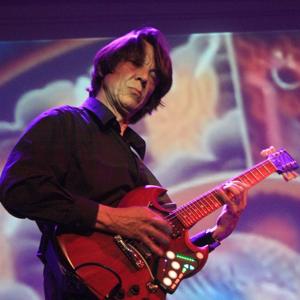
Carlos Vivanco

Carlos Vivanco

By Carlos VivancoMusic
Download on the App Store

All Carlos Vivanco episodes

  • Where The Sun Sets
    Composed, arranged, performed, and produced by:
    Carlos Vivanco
    For this composition, I use the Tembung scale (C, Db, F, G, Ab.) is the second main pentatonic mode of the pelog scale and is obtained by treating the third and seventh of the pelog scale as auxiliaries. Tembung has a very similar profile to the Japanese kumo hoshi koto scale. Origen: Indonesia. Used in Gamelan music.
    6 min
  • Into The Ether
    Composed, arranged, performed, and produced by:
    Carlos Vivanco
    For this composition, I am using the Diminished scale.
    The half-whole diminished scale is one of the most commonly used scales in jazz soloing. Its main function is to add alterations to the dominant 7 chords. This creates a great deal of tension which usually resolves when the dominant moves to the tonic chord. I have included a PDF that explains the alterations added to a dominant 7 chord, 2 lines, that use the diminished scale, and a sheet explaining patterns within the scale.
    Once you have become comfortable with the half/whole diminished scale, you can then start looking for interesting patterns within it. If we look at the notes again, we will see that there are several major triads within the scale (Please note that to be clear, enharmonic equivalents are used): C–Db–Eb–E–F#–G–A–Bb
    6 min
  • Oriental Wind
    Composed, arranged, performed, and produced by:
    Carlos Vivanco
    For this composition, I use the Mela Keeravani scale.
    Keeravani (pronounced keeravāṇi) is a rāgam in Carnatic music (musical scale of South Indian classical music). It is the 21st Melakarta rāgam in the 72 melakarta rāgam system of Carnatic music. The 21st melakarta rāgam as per Muthuswami Dikshitar school of music is Kiraṇāval̥i.
    This rāgam is a popular scale in western music as well. The Western equivalent is the Harmonic minor scale. It is said to be borrowed into Hindustani music from Carnatic music.
    Keeravani scale with shadjam at C
    It is the 3rd rāgam in the 4th chakra Veda. The mnemonic name is Veda-Go. The mnemonic phrase is sa ri gi ma pa dha nu.]Its ārohaṇa-avarohaṇa structure (ascending and descending scale) is as follows (see swaras in Carnatic music for details on below notation and terms):
    ārohaṇa: S R₂ G₂ M₁ P D₁ N₃ Ṡ[a]
    avarohaṇa: Ṡ N₃ D₁ P M₁ G₂ R₂ S[b]
    The notes used in this scale are chathusruthi rishabha, sadharana gandhara, suddha madhyama, panchama, suddha dhaivatha, kakali nishadha.
    As it is a melakarta rāgam, by definition it is a sampoorna rāgam (has all seven notes in ascending and descending scale). It is the shuddha madhyamam equivalent of Simhendramadhyamam, which is the 57th melakarta.
    Janya Rāgams
    Keeravani has many janya rāgams (derived scales) associated with it. Kalyāna vasantam is a popular janya of Keeravani. See List of janya rāgams for full list of rāgams associated with Keeravani. Other popular janya ragams include Sāmapriya and Vasantamanohari.
    6 min
  • Shulshaga
    Composed, arranged, performed, and produced by:
    Carlos Vivanco
    Shulshaga (Šulšaga) or Shulsagana (Šulšagana) was a Mesopotamian god. He was a part of the state pantheon of the city-state of Lagash. His name means "youth of his heart" in Sumerian, with the possessive pronoun possibly referring to Shulshaga's father, Ningirsu.
    While direct references to the lineage of deities are rare in sources from the Early Dynastic period, it is certain that Shulshaga was viewed as the eldest son of Ningirsu and his wife Bau, and as the older brother of Igalim. One inscription refers to Shulshaga and Igalim as "beloved children of Ningirsu." They received an equal amount of offerings according to documents from Early Dynastic Lagash.
    Several rulers of Lagash were devoted to Shulshaga. Ur-Nanshe built a statue of him. Urukagina mentions building temples to multiple deities of Lagash, including Shulsaga, as well as his parents, brother, as well as Hegir, Bau's Lamma and Ninmu. Said temple bore the name (E-)tuš-akkil-li. One inscription of Gudea mentions him alongside Ningirsu and the king's tutelary god Ningishzida, and credits him with providing him with the "breath of life."
    It is possible that in later periods Shulshaga was worshiped in Assur in Esharra, the temple of Ashur. Late lexical texts also sometimes apply the names Shulshaga and Igalim to the weapons of Zababa.
    5 min
  • Toshtli
    Composed, arranged, performed, and produced by:
    Carlos Vivanco
    For this composition, I am using the Ukranian Dorian scale. In music, the Romanian minor scale or Ukrainian Dorian scale or altered Dorian scale is a musical scale or the fourth mode of the harmonic minor scale. It is "similar to the dorian mode, but with a tritone and variable sixth and seventh degrees". It is related to both the Freygish and Misheberak scales and is used in Jewish music, "predominant in klezmer bulgarish and doina (doyne).When the Ukrainian Dorian scale functions in the synagogue, it is a mode known as the Mi sheberach (May He Who Blessed) or Av horachamon (Compassionate Father). Arab and Greek scholars give other names to the scale: Nikriz (نكريز) and Aulos, respectively."
    "The pitches of the Mi Shebeyrekh [cantorial] mode correspond roughly to a Dorian mode with a raised fourth (for example, D, E, F, G♯, A, B, C, or if Katythian Enharmonic mode of Harmonic Minor ♭4:D♭, E, F, G♯, A, B, C); alternately, it could be described as a variant of the Lydian mode, deriving instead from the harmonic minor scale, rather than from the major scale. Beregovski calls this pitch collection 'Ukrainian Dorian'."
    The Ukrainian Dorian scale is used particularly extensively within Julian Cochran's music including the Romanian Dances and Mazurkas.[5] It has also been used by George Gershwin. Another example is the Bert Kaempfert tune "Sweet Maria".
    Also called the Ukrainian minor scale, it is a combined type of musical scale.[citation needed] It figures prominently in Eastern European music, particularly Klezmer music, and melodies based on this scale have an exotic, romantic flavor for listeners accustomed to more typical Western scales.
    A Ukrainian minor scale in the key of C would proceed as follows: C D E♭ F♯ G A B♭.
    A Ukrainian minor scale in the key of B would proceed as follows: B C♯ D E♯ F♯ G♯ A.
    Its step pattern is w - h - + - h - w - h - w, where w indicates a whole step, h indicates a half step, and + indicates an augmented second, which looks like a minor third on a keyboard but is notationally distinct.
    Chords that may be derived from the scale based on B are Bm, C#7, D, E#dim7, F#m, G#m7b5 and Aaug. This scale is obtainable from the harmonic minor scale by starting from the fourth of that scale. Said another way, the B Ukrainian minor scale is the fourth mode of the F# harmonic minor scale. When its tonic is lowered a semitone, we obtain the Katythian Enharmonic scale, the 4th mode of the Harmonic Minor ♭4 scale:B♭ C♯ D E♯ F♯ G♯ A/C♭ D E♭ F♯ G A B♭/C D♯ E Fdouble sharp G♯ A♯ B. Chords that may be derived from the Katythian Enharmonic scale based on B♭ are Bbaug, C#6, D, Bb7, F#m, F#, Bbm, G#7sus2b5 and Aaug. Likewise, Chords that may be derived from the Katythian Enharmonic scale based on C♭ are Cbaug, D6, Eb, Cb7, Gm, G, Cbm, A7sus2b5, and Bbaug, and for the one based on C♮:Caug, D#6, E, C7, G#m, G#, Cm, A#7sus2b5, and Baug.

    7 min
  • Samadhi
    Composed, arranged, performed, and produced by: Carlos Vivanco
    Samādhi (Pali and Sanskrit: समाधि), in Hinduism, Buddhism, Jainism, Sikhism and yogic schools, is a state of meditative consciousness. In Buddhism, it is the last of the eight elements of the Noble Eightfold Path.[web 1] In the Ashtanga Yoga tradition, it is the eighth and final limb identified in the Yoga Sutras of Patanjali.
    In the oldest Buddhist sutras, on which several contemporary western Theravada teachers rely, it refers to the development of an investigative and luminous mind which is equanimous and mindful. In the yogic traditions, and the Buddhist commentarial tradition on which the Burmese Vipassana movement and the Thai Forest tradition rely, it is interpreted as a meditative absorption or trance, attained by the practice of dhyāna
    Samadhi es el estado de conciencia que se alcanza cuando, durante la meditación, la persona siente que se está fundiendo con el universo. En varias tradiciones religiosas y místicas del Este de Asia ―como el hinduismo, el budismo, el jainismo, el sijismo y en el yoga― el samādhi se considera un estado de conciencia de meditación, contemplación o recogimiento en el que se siente alcanzar la unidad con lo divino.
    El término sánscrito samādhi (en alfabeto devanagari: समाधि) proviene de sam o samiak: ‘completo’ y ādhi: ‘absorción [mental]’.
    El objetivo último de la práctica meditativa del yoga, es el logro del samadhi.
    El samadhi es un objetivo buscado tanto dentro del hinduismo como en el budismo.
    7 min