
Sign up to save your podcasts
Or

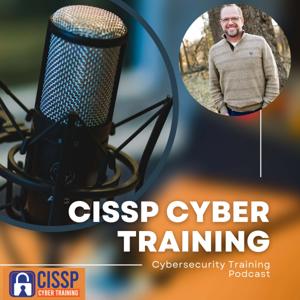

Send us a text
Check us out at: https://www.cisspcybertraining.com/
Get access to 360 FREE CISSP Questions: https://www.cisspcybertraining.com/offers/dzHKVcDB/checkout
Get access to my FREE CISSP Self-Study Essentials Videos: https://www.cisspcybertraining.com/offers/KzBKKouv
A headline about hacked nanny cams is more than a cautionary tale—it’s a mirror for how easily convenience eclipses security. We start with the Korean IP camera case to highlight simple, high-impact steps anyone can take: change default credentials, use unique passwords, turn off remote access unless you truly need it, and keep firmware current. Then we ask the harder question: how do you prove security works when the stakes are higher than a living room feed?
Shifting into CISSP Domain 6, we break down audit readiness, independence, and risk-based assurance. If you’re eyeing ISO 27001, the smartest first move is an internal audit program aligned with the standard’s control objectives. It validates design and operating effectiveness before an external auditor walks in, and it surfaces the documentation and evidence gaps that slow teams down. We also unpack governance: when boards want independent assurance, the audit function should report outside IT. Self-assessments still help, but they don’t replace a real audit.
Risk should lead, not scanner severity. Consider a “medium” vulnerability on a critical payment system that demands authenticated access and precise timing. Rather than knee-jerk patching or dismissal, a structured risk analysis weighs business impact, likelihood, and compensating controls like monitoring and segregation of duties. That approach drives better prioritization and stronger outcomes.
For ongoing evaluation, snapshots alone aren’t enough. Instead of doubling costly SOC 2s, blend risk-based self-assessments, targeted internal audits, and continuous monitoring to maximize coverage and value. And when your cloud provider won’t allow pen tests on shared PaaS, you can still gain assurance: request SOC 2 Type II, ISO 27001, and pen test summaries under NDA, then map their scope and results to your control requirements and risk appetite. Close gaps with compensating controls and a clear shared responsibility matrix.
If you’re preparing for the CISSP or modernizing your assurance program, this conversation will help you cut noise, focus effort, and build confidence where it counts. Subscribe, share with a teammate who handles audits, and leave a review to tell us what assurance challenge you want solved next.
Gain exclusive access to 360 FREE CISSP Practice Questions at FreeCISSPQuestions.com and have them delivered directly to your inbox! Don’t miss this valuable opportunity to strengthen your CISSP exam preparation and boost your chances of certification success.
Join now and start your journey toward CISSP mastery today!
 View all episodes
 By Shon Gerber, vCISO, CISSP, Cybersecurity Consultant and Entrepreneur

4.4
3232 ratings
Send us a text
Check us out at: https://www.cisspcybertraining.com/
Get access to 360 FREE CISSP Questions: https://www.cisspcybertraining.com/offers/dzHKVcDB/checkout
Get access to my FREE CISSP Self-Study Essentials Videos: https://www.cisspcybertraining.com/offers/KzBKKouv
A headline about hacked nanny cams is more than a cautionary tale—it’s a mirror for how easily convenience eclipses security. We start with the Korean IP camera case to highlight simple, high-impact steps anyone can take: change default credentials, use unique passwords, turn off remote access unless you truly need it, and keep firmware current. Then we ask the harder question: how do you prove security works when the stakes are higher than a living room feed?
Shifting into CISSP Domain 6, we break down audit readiness, independence, and risk-based assurance. If you’re eyeing ISO 27001, the smartest first move is an internal audit program aligned with the standard’s control objectives. It validates design and operating effectiveness before an external auditor walks in, and it surfaces the documentation and evidence gaps that slow teams down. We also unpack governance: when boards want independent assurance, the audit function should report outside IT. Self-assessments still help, but they don’t replace a real audit.
Risk should lead, not scanner severity. Consider a “medium” vulnerability on a critical payment system that demands authenticated access and precise timing. Rather than knee-jerk patching or dismissal, a structured risk analysis weighs business impact, likelihood, and compensating controls like monitoring and segregation of duties. That approach drives better prioritization and stronger outcomes.
For ongoing evaluation, snapshots alone aren’t enough. Instead of doubling costly SOC 2s, blend risk-based self-assessments, targeted internal audits, and continuous monitoring to maximize coverage and value. And when your cloud provider won’t allow pen tests on shared PaaS, you can still gain assurance: request SOC 2 Type II, ISO 27001, and pen test summaries under NDA, then map their scope and results to your control requirements and risk appetite. Close gaps with compensating controls and a clear shared responsibility matrix.
If you’re preparing for the CISSP or modernizing your assurance program, this conversation will help you cut noise, focus effort, and build confidence where it counts. Subscribe, share with a teammate who handles audits, and leave a review to tell us what assurance challenge you want solved next.
Gain exclusive access to 360 FREE CISSP Practice Questions at FreeCISSPQuestions.com and have them delivered directly to your inbox! Don’t miss this valuable opportunity to strengthen your CISSP exam preparation and boost your chances of certification success.
Join now and start your journey toward CISSP mastery today!

189 Listeners
2,010 Listeners
371 Listeners

374 Listeners

651 Listeners

1,022 Listeners

318 Listeners

417 Listeners

8,049 Listeners

181 Listeners
316 Listeners
189 Listeners
74 Listeners

137 Listeners

222 Listeners