
Sign up to save your podcasts
Or

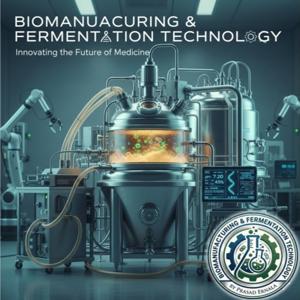

Cell-free bio-catalysis has evolved from a laboratory concept into a robust industrial manufacturing platform by removing the constraints of living cells. By using isolated enzymes, engineers can achieve superior control over reaction conditions, allowing for higher chemical concentrations and simpler purification processes than traditional fermentation. This approach is particularly effective for creating chiral intermediates in pharmaceuticals, as it replaces complex chemical steps with single, highly selective enzymatic transformations. Success in the field relies on engineering enzymes for durability and using techniques like immobilization to ensure catalysts can be reused in continuous operations. Ultimately, these systems bridge the gap between biological precision and chemical engineering efficiency, offering a scalable solution for the pharmaceutical, food, and renewable chemical sectors.
 View all episodes
 By prasad ernala
Cell-free bio-catalysis has evolved from a laboratory concept into a robust industrial manufacturing platform by removing the constraints of living cells. By using isolated enzymes, engineers can achieve superior control over reaction conditions, allowing for higher chemical concentrations and simpler purification processes than traditional fermentation. This approach is particularly effective for creating chiral intermediates in pharmaceuticals, as it replaces complex chemical steps with single, highly selective enzymatic transformations. Success in the field relies on engineering enzymes for durability and using techniques like immobilization to ensure catalysts can be reused in continuous operations. Ultimately, these systems bridge the gap between biological precision and chemical engineering efficiency, offering a scalable solution for the pharmaceutical, food, and renewable chemical sectors.