
Sign up to save your podcasts
Or


https://3speak.tv/watch?v=networkstate.mp3/gfghimgy
-----------------------
A peaceful way to opt out of past, present, future and increasingly oppressive legacy economic systems
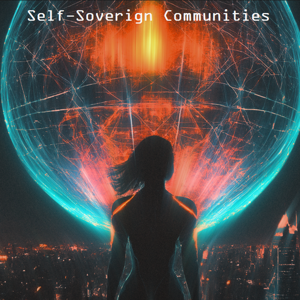
Decentralised technology extends far beyond the realm of digital payments; it gives communities the tools to form autonomous “Network States” online. As these groups gain genuine self-sovereignty, they can voluntarily exit failing systems and design their own economies and governance structures. This chapter examines how decentralised communities can evolve into fully realized digital sovereignties, ultimately achieving the kind of real-world recognition once reserved exclusively for traditional nation-states.
The Network-State is in contrast to the nation-state. Here we have a governance system that is based upon where one is geographically born. That is how citizenship is established. The rules of the land are based upon where one is physically. In comparison, the network-state is dependent upon which digital eco-system or community one interacts and associates. This is paralleling the idea of nations and networks.
From the Definition in the book “The Network State” by Balaji Srinivasan:
In the current centralised model, true power rests with large institutions governments, mega-corporations, and global financial conglomerates. These entities operate in a system which is set up to extract more from everyday people than it returns, leading to an erosion of personal freedom. Technological advancements should have simplified our workloads and enhanced autonomy, but in practice, they primarily enrich a narrow elite controlling both infrastructure and money supply. As individuals, we lack genuine alternatives and often find our freedoms and free time dwindling while technology continues to improve.
Decentralised economies offer a peaceful and genuinely empowering exit route. They allow people to:
Initially, people may adopt these technologies alongside legacy systems. But as self-sovereign tools become more accessible and the central system’s constraints grow intolerable, a larger exodus is likely. When you can genuinely own your voice, your currency, and your data why remain in a structure that limits them?
In the past, small towns or local tribes held autonomous decision-making power yet they were confined by strict borders or overshadowed by strong neighbouring states. Modern digital platforms like Facebook, Twitter, and YouTube tried to become the “virtual town square,” but they are run by CEOs and policed by regulations. Voicing “wrong” opinions can lead to an instant ban, removing your ability to participate. The essence of genuine community self-sovereignty had nearly vanished in the digital world until decentralised infrastructures offered a fresh solution.
Using decentralised networks helps communities recapture the autonomy once found in small, self-governing bodies:
Crucially, if there is no large corporate backer or centralised “founder stake,” no single entity can sell or infiltrate the entire project. The community itself provides the real defence against hostile takeovers. It is the Layer 0 and is what the ecosystem ultimately derives its value from.
Local currencies have long been tested examples ranging from town-based scrip to the “Brixton Pound.” Authorities typically shut these down swiftly, to preserve their monopoly on money. However, digital tokens can escape such crackdowns because they are:
By minting and managing its own currency, a community breaks free from external authorities and their restrictive policies. Goods, services, and ideas flow within a network governed by its own participants.
A decentralised group with credible infrastructure can:
As these digital societies exhibit tangible benefits economic productivity, peaceful collaboration, and mutual aid, external governments may start cooperating. Governments might find it financially worthwhile to trade with or even formally acknowledge these emerging Network States. Over time, major global powers could sign treaties or agreements, conferring a form of legitimacy once unimaginable for an “online community” operating on the legacy Web2 social platforms.
Some governments may not only recognize but also actively engage by:
Revolutionary conflict becomes less likely when there are clear incentives for collaboration. By demonstrating tangible value, Network States can secure legal stature and self-determination without resorting to conflict.
A shift toward voluntary, digital-native economies is already in motion. Individuals are seeking alternatives where freedoms like unhindered speech and genuine financial autonomy are safeguarded, which the conventional system often fails to provide. As these decentralised communities expand, they:
What begins as a small collective of idealistic individuals can develop into a thriving society with a unique currency and governance model, potentially culminating in formal diplomatic acknowledgment. Far from being a “fringe movement,” these new Network States could offer humanity’s best chance at equitable prosperity and authentic self-governance in the digital age.
 View all episodes
 By Network State Audio Book
https://3speak.tv/watch?v=networkstate.mp3/gfghimgy
-----------------------
A peaceful way to opt out of past, present, future and increasingly oppressive legacy economic systems
Decentralised technology extends far beyond the realm of digital payments; it gives communities the tools to form autonomous “Network States” online. As these groups gain genuine self-sovereignty, they can voluntarily exit failing systems and design their own economies and governance structures. This chapter examines how decentralised communities can evolve into fully realized digital sovereignties, ultimately achieving the kind of real-world recognition once reserved exclusively for traditional nation-states.
The Network-State is in contrast to the nation-state. Here we have a governance system that is based upon where one is geographically born. That is how citizenship is established. The rules of the land are based upon where one is physically. In comparison, the network-state is dependent upon which digital eco-system or community one interacts and associates. This is paralleling the idea of nations and networks.
From the Definition in the book “The Network State” by Balaji Srinivasan:
In the current centralised model, true power rests with large institutions governments, mega-corporations, and global financial conglomerates. These entities operate in a system which is set up to extract more from everyday people than it returns, leading to an erosion of personal freedom. Technological advancements should have simplified our workloads and enhanced autonomy, but in practice, they primarily enrich a narrow elite controlling both infrastructure and money supply. As individuals, we lack genuine alternatives and often find our freedoms and free time dwindling while technology continues to improve.
Decentralised economies offer a peaceful and genuinely empowering exit route. They allow people to:
Initially, people may adopt these technologies alongside legacy systems. But as self-sovereign tools become more accessible and the central system’s constraints grow intolerable, a larger exodus is likely. When you can genuinely own your voice, your currency, and your data why remain in a structure that limits them?
In the past, small towns or local tribes held autonomous decision-making power yet they were confined by strict borders or overshadowed by strong neighbouring states. Modern digital platforms like Facebook, Twitter, and YouTube tried to become the “virtual town square,” but they are run by CEOs and policed by regulations. Voicing “wrong” opinions can lead to an instant ban, removing your ability to participate. The essence of genuine community self-sovereignty had nearly vanished in the digital world until decentralised infrastructures offered a fresh solution.
Using decentralised networks helps communities recapture the autonomy once found in small, self-governing bodies:
Crucially, if there is no large corporate backer or centralised “founder stake,” no single entity can sell or infiltrate the entire project. The community itself provides the real defence against hostile takeovers. It is the Layer 0 and is what the ecosystem ultimately derives its value from.
Local currencies have long been tested examples ranging from town-based scrip to the “Brixton Pound.” Authorities typically shut these down swiftly, to preserve their monopoly on money. However, digital tokens can escape such crackdowns because they are:
By minting and managing its own currency, a community breaks free from external authorities and their restrictive policies. Goods, services, and ideas flow within a network governed by its own participants.
A decentralised group with credible infrastructure can:
As these digital societies exhibit tangible benefits economic productivity, peaceful collaboration, and mutual aid, external governments may start cooperating. Governments might find it financially worthwhile to trade with or even formally acknowledge these emerging Network States. Over time, major global powers could sign treaties or agreements, conferring a form of legitimacy once unimaginable for an “online community” operating on the legacy Web2 social platforms.
Some governments may not only recognize but also actively engage by:
Revolutionary conflict becomes less likely when there are clear incentives for collaboration. By demonstrating tangible value, Network States can secure legal stature and self-determination without resorting to conflict.
A shift toward voluntary, digital-native economies is already in motion. Individuals are seeking alternatives where freedoms like unhindered speech and genuine financial autonomy are safeguarded, which the conventional system often fails to provide. As these decentralised communities expand, they:
What begins as a small collective of idealistic individuals can develop into a thriving society with a unique currency and governance model, potentially culminating in formal diplomatic acknowledgment. Far from being a “fringe movement,” these new Network States could offer humanity’s best chance at equitable prosperity and authentic self-governance in the digital age.