
Sign up to save your podcasts
Or

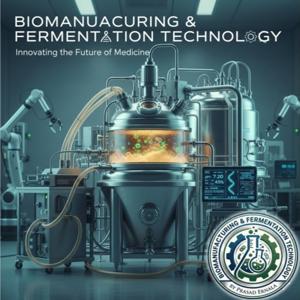

This Episode explores the transition from viewing microbial cells as simple enzyme containers to treating them as complex, reactive matrices in industrial manufacturing. It emphasizes that successful whole-cell bio-transformations depend on managing the intricate relationship between cellular physiology and reactor conditions rather than just selecting a specific enzyme. The author highlights how intracellular redox budgets, transport barriers, and metabolic stress responses dictate the efficiency and stability of chemical reactions at scale. By examining different operational modes like living, resting, and immobilized cells, the source provides a framework for designing robust processes that can withstand the physical fluctuations of large-scale production. Ultimately, the material argues for an integrated chemistry-microbiology interface approach to optimize the production of fine chemicals and pharmaceutical intermediates.
 View all episodes
 By prasad ernala
This Episode explores the transition from viewing microbial cells as simple enzyme containers to treating them as complex, reactive matrices in industrial manufacturing. It emphasizes that successful whole-cell bio-transformations depend on managing the intricate relationship between cellular physiology and reactor conditions rather than just selecting a specific enzyme. The author highlights how intracellular redox budgets, transport barriers, and metabolic stress responses dictate the efficiency and stability of chemical reactions at scale. By examining different operational modes like living, resting, and immobilized cells, the source provides a framework for designing robust processes that can withstand the physical fluctuations of large-scale production. Ultimately, the material argues for an integrated chemistry-microbiology interface approach to optimize the production of fine chemicals and pharmaceutical intermediates.