This is your Silicon Siege: China's Tech Offensive podcast.
I’m Ting, and tonight’s episode of Silicon Siege jumps straight into China’s tech offensive against the US—specifically, what’s been happening in the last two weeks across your favorite four-letter words: IP, SOC, and APT.
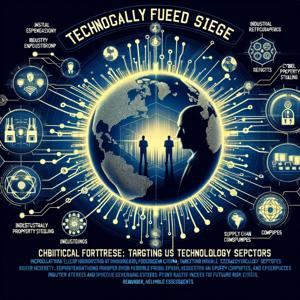
According to Microsoft’s threat intelligence and the FBI’s recent joint advisories, Chinese state-backed groups like Volt Typhoon and APT31 have ramped up phishing and living‑off‑the‑land attacks against US cloud, semiconductor, and AI infrastructure providers, aiming not to crash systems but to quietly sit in build pipelines, firmware repos, and developer VPNs. Industry analysts at Mandiant say the goal is persistent access to source code, model weights, and chip design files rather than one‑and‑done data heists.
CrowdStrike’s latest reporting describes new Chinese intrusion sets burrowing into DevOps tools at West Coast AI startups—think GitLab, Jenkins, and artifact registries—to skim proprietary LLM architectures and optimization tricks. One red‑team lead in Palo Alto told CyberScoop that some of the stolen CUDA kernels and model compression techniques line up uncannily with performance claims now coming out of Biren Technology and MetaX in Shanghai.
On the hardware side, Tom’s Hardware and several semiconductor analysts have been talking about what they call “supply‑chain ghosting”: Chinese‑linked actors targeting smaller EDA plug‑in vendors and third‑party verification shops that work for big US chip designers. The aim is to exfiltrate fragments of 3‑ and 5‑nanometer reference flows, then recombine them to support Beijing’s homegrown “Manhattan Project” to break the EUV barrier, which outlets like TokenRing have dubbed China’s bid for full semiconductor sovereignty.
CyberNews and former intelligence officials warn that this isn’t just about stealing blueprints; it’s about mapping who builds what, where. By compromising logistics software, smart factory controllers, and even telematics in US‑bound equipment, Chinese operators can profile the entire life cycle of critical chips—from fab to cloud data center—and identify pressure points for future coercion.
Strategically, experts at think tanks in Washington and London are blunt: the line between economic espionage and national security is gone. Stolen AI models accelerate China’s domestic “sovereign AI” push, while stolen chip know‑how shortens the time to parity with US foundries. That means any breach at a Seattle AI startup or an Austin chip design house is no longer a niche corporate problem; it’s a shift in the global balance of compute power.
Looking forward, most cyber leaders expect more supply‑chain attacks, more insider recruitment, and heavier use of AI‑generated phishing tailored from massive data sets like the Salt Typhoon telecom haul described by The American Spectator. The smart money in Silicon Valley is doubling down on zero trust, code‑signing everything, and treating build systems as crow
This content was created in partnership and with the help of Artificial Intelligence AI.



 View all episodes
