This is your Silicon Siege: China's Tech Offensive podcast.
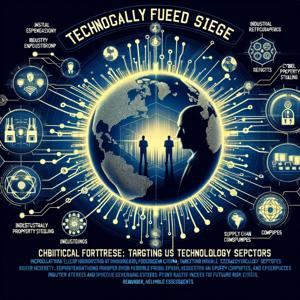
Hey listeners, I'm Ting, your go-to gal for all things China cyber chaos and hacking hijinks. Buckle up, because the past two weeks have been a wild ride in what's I'm calling the Silicon Siege—China's relentless tech offensive on US turf. Picture this: I'm huddled in my San Francisco apartment, screens glowing with alerts, as Beijing's hackers drop bombs on our tech backbone.
It kicked off hard around March 11th, when the ODNI's Annual Threat Assessment slammed China as the top cyber bully, pre-positioning malware in US critical infrastructure for espionage and future disruptions. They're not just peeking; they're embedding for wartime takedowns, targeting everything from power grids to chip fabs. Then bam—on the same day, Trio-Tech International, that California chip-testing powerhouse with ops in Singapore and China, got ransomware-slammed. They shrugged it off at first, but by March 18th, stolen data leaked everywhere, exposing semiconductor secrets that feed automotive and computing giants. Supply chain nightmare fuel, right? Hackers encrypt files, exfiltrate goodies, and poof—your burn-in tests are Beijing's playground.
Fast-forward, Pro Publica exposed how Chinese state-sponsored creeps breached Microsoft's GCC cloud—yep, the "secure" one Biden-era DOJ bigwigs like Melinda Rogers greenlit back in 2020. Hackers snagged emails from the Commerce Secretary and our China ambassador. Geoffrey Cain from Tech Integrity Project nailed it: Microsoft's Beijing lab alumni built sanctioned surveillance tech, and they co-authored AI papers with Chinese military unis. Industrial espionage on steroids, folks—PLA Unit 61398 vibes from that 2015 DOJ indictment, now hitting semis like Fujian Jinhua's $8.75 billion Taiwan heist in 2018.
IP theft? China's sucking up $600 billion yearly, per USITC chatter, via spies in our military and hacks on Motorola trade secrets versus Hytera. Jorge L. Contreras from University of Utah says USITC's distracted by domestic patent fights instead of banning PLA-linked gear. Strategic implications? ODNI warns a Taiwan clash means cyber chaos shredding US transport and semis—global econ tanked, markets panicked.
Experts at RSAC today are dissecting China's Typhoon groups—Palo Alto Networks and Meta pros say disrupt, deter, defend with AI shields. Future risks? China's AI cyber ops will amp autonomy, but without oversight, it's boom goes the oversight. We're talking pre-positioned nukes in the cloud, listeners—USITC needs an IP threat squad yesterday.
Whew, Silicon Siege is just heating up. Stay vigilant, patch those vulns, and thanks for tuning in—subscribe for more cyber spice! This has been a Quiet Please production, for more check out quietplease.ai.
For more http://www.quietplease.ai
Get the best deals https://amzn.to/3ODvOta
This content was created in partnership and with the help of Artificial Intelligence AI.



 View all episodes
